"penetrate and destroy the opposing side’s combat support structures and strategic supply routes," the Thai military said, describing the aims of Operation Sattawat in December 2025.
Operation Yuttha Bodin (July 2025)
On July 24, 2025, after Cambodian BM-21 rocket strikes killed at least 11 Thai civilians and one soldier, Thailand launched Operation Yuttha Bodin. The operation was a coordinated air-and-land assault intended to defend Thai sovereignty, retaliate against Cambodian military actions, and reduce Cambodian military capability. The Royal Thai Air Force (RTAF) flew 28 strike sorties during the five-day campaign, focusing on the contested area adjacent to Thailand’s Surin province and Cambodia’s Oddar Meanchey province.
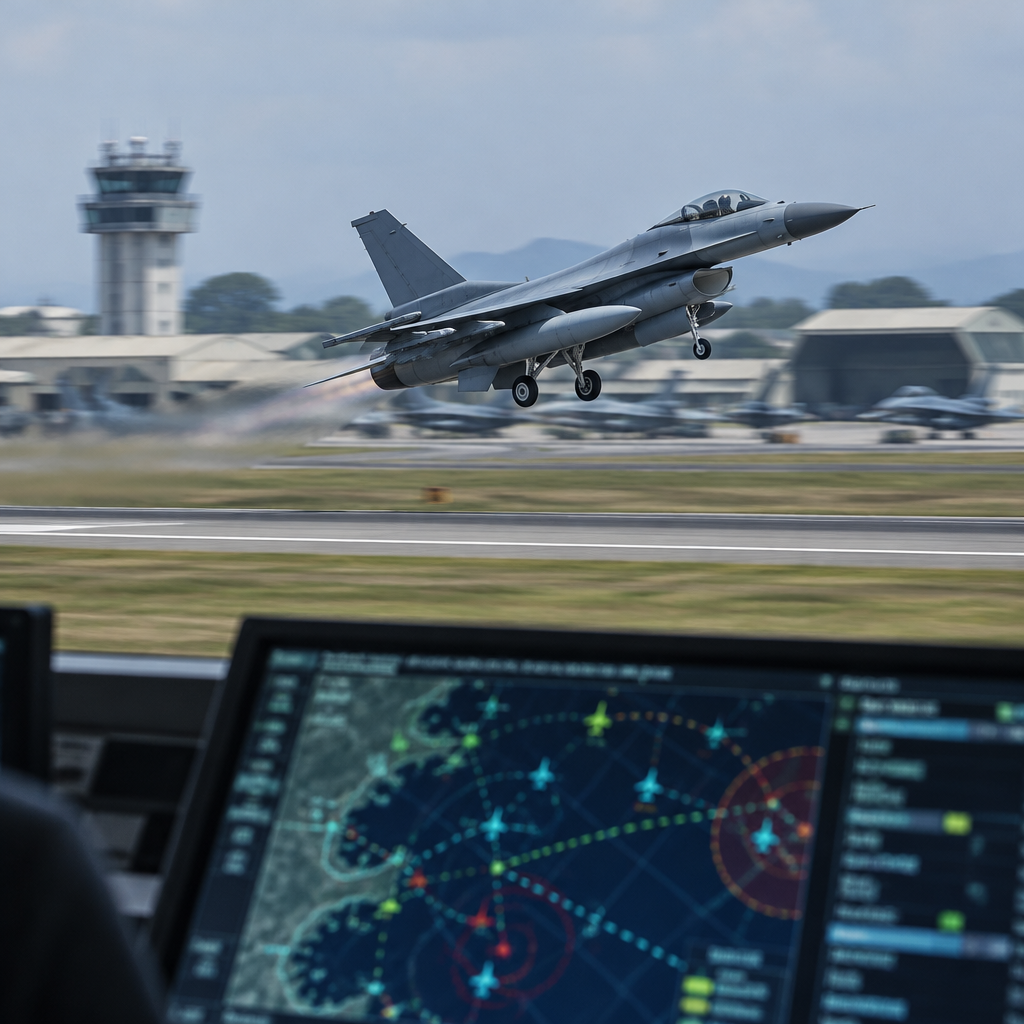
On day one the RTAF dispatched two missions totaling 10 strike sorties against Royal Cambodian Army (RCA) command posts and positions around the Ta Moan Thom temple area. The RTAF operated under a joint tactical plan with Army Commander Gen. Pana Klaewplodthuk as overall joint force commander; the RTAF’s Air Command and Control System (ACCS) held control of air assets and responded to Royal Thai Army requests for support.
Operation Sattawat (December 2025)
In December, the Thai military resumed large-scale air operations under Operation Sattawat, expanding target sets to the entire length of the shared border. The RTAF targeted RCA command-and-control, drone control facilities, weapons and ammunition depots, logistics and equipment, and executed both frequent close air support and selected deep strikes. On December 24 Thai fighters penetrated as far as 100 kilometers into Cambodia’s Battambang Province to hit a weapons depot — an operation described in the reporting as a notable extension of range and scope compared with July.

Audit-ready is a season. It shouldn't be.
Evidence in spreadsheets, controls drifting between audits, frameworks multiplying on flat headcount. Nubivance runs continuous compliance on Rapid7 Cyber GRC - SOC 2, HIPAA, ISO 27001, PCI, CMMC.
End the scrambleAssets, munitions, and networked ISR
The RTAF committed a broad mix of crewed and uncrewed platforms. Strike aircraft included F-16s from 1 Wing and 4 Wing, JAS39 Gripens and Saab 340 Erieye AEW&C and Saab 340 ELINT from 7 Wing, F-5TH and T-50THs from 21 Wing, and deployments from bases including Korat, Surin, Takhli, Ubon Ratchathani and Don Mueang. The 702 Squadron’s Erieye aircraft provided continuous day-and-night airspace management and deconfliction through the ACCS at Wing 6 Don Mueang.
Uncrewed systems were heavily employed: Aerostar BP and Dominator XP UAS, DP-20 MALE UAS, and indigenous KB-5E and KB-10G long-range loitering munitions and one-way attack drones (OWADs). Targeting pods used included the Litening-III (Gripen and F-5TH) and Sniper ATP (F-16 and TA-50TH). The RTAF reported using a domestic datalink, the Link-T, to coordinate C2 nodes, ISR assets, and strike aircraft.
Weapons dropped included more than 30 tons of munitions in July: Mk. 82 500-lb GPBs, laser-guided 500-lb Lizard-III and/or GBU-12 PGMs, Mk. 84 2,000-lb GPBs, AGM-65 Maverick missiles, and the Korean GPS-guided glide-bomb (KGGB), used in combat for the first time. The RTAF’s supply of guidance kits and weapons is diversified across U.S., Israeli and South Korean sources, with domestic production of Mk. 82 variants noted in the reporting.
Tempo, targeting, and sortie evidence
During July the RTAF flew two to three combat missions daily, typically two-ship formations, with larger formations on the opening day. The reported total of 28 strike sorties likely understates activity: photographic evidence of mission markings showed an F-16B with 63 bombing mission markings; T-50THs with 32 and 34 Mk. 82 markings; an F-5TH with 20; and a Gripen with seven GBU-12 markings. The RTAF also carried out supporting sorties — defensive counter-air, airspace surveillance, reconnaissance, electromagnetic monitoring and airlift — that were not always publicly tallied.
ISTAR collections were used to locate ground-based air-defense threats and enemy dispositions before strikes. The 7 Wing’s Saab 340 ELINT worked to establish the RCA’s electronic order of battle along axes opposite Ubon Ratchathani, Buri Ram, Surin, Si Sa Ket, Sa Kaeo and Chanthaburi provinces, while Aerostar, Dominator and DP-20 UAS provided reconnaissance and battle-damage assessment.
Opposition, losses, and air-defense threats
The RTAF sustained very limited losses. The Thai military lost at least two aircraft in December: a DP-20 UAV on December 17 for an unspecified reason, and an Aerostar BP UAV reportedly shot down over Cambodia’s Banteay Meanchey Province on December 21. Cambodian forces possessed Chinese-made KC-1 medium-range surface-to-air missile systems and the QW-3 MANPAD but — according to the reporting — had no fast-jet air power and posed little opposition to RTAF operations. The report nevertheless notes the persistent danger of VSHORAD/SHORAD systems and explosive-armed small drones, including “pop-up” threats to attacking aircraft and forward bases.
What this means for the Thai military, Southeast Asian policymakers, and procurement leaders
- The Thai military: The campaign demonstrated the RTAF’s ability to integrate crewed and uncrewed assets, employ precision munitions, and centralize air control via ACCS and Link-T for joint operations — capabilities the RTAF exploited to meet stated objectives while sustaining limited losses.
- Southeast Asian policymakers: The operations widened geographically from a localized border area in July to strikes across the whole border in December, underscoring how tactical escalations can rapidly become regional security concerns tied to reach, ISR and strike integration.
- Procurement leaders: The use of non-U.S. precision kits, South Korean KGGB glide-bombs, and indigenous KB-series OWADs highlights a diversification strategy that the report links to resilience against potential external arms restrictions.
The July and December clashes were, in the words of the report, a "trial by fire" for the RTAF: a near-comprehensive test of its combat aircraft, sensor suites and uncrewed systems, and a practical demonstration of a networked, multi-domain air campaign carried out with limited attrition. Whether those capabilities will affect deterrence along the border or shape future procurement and operational planning remains a central, concrete question left by the record of these operations.