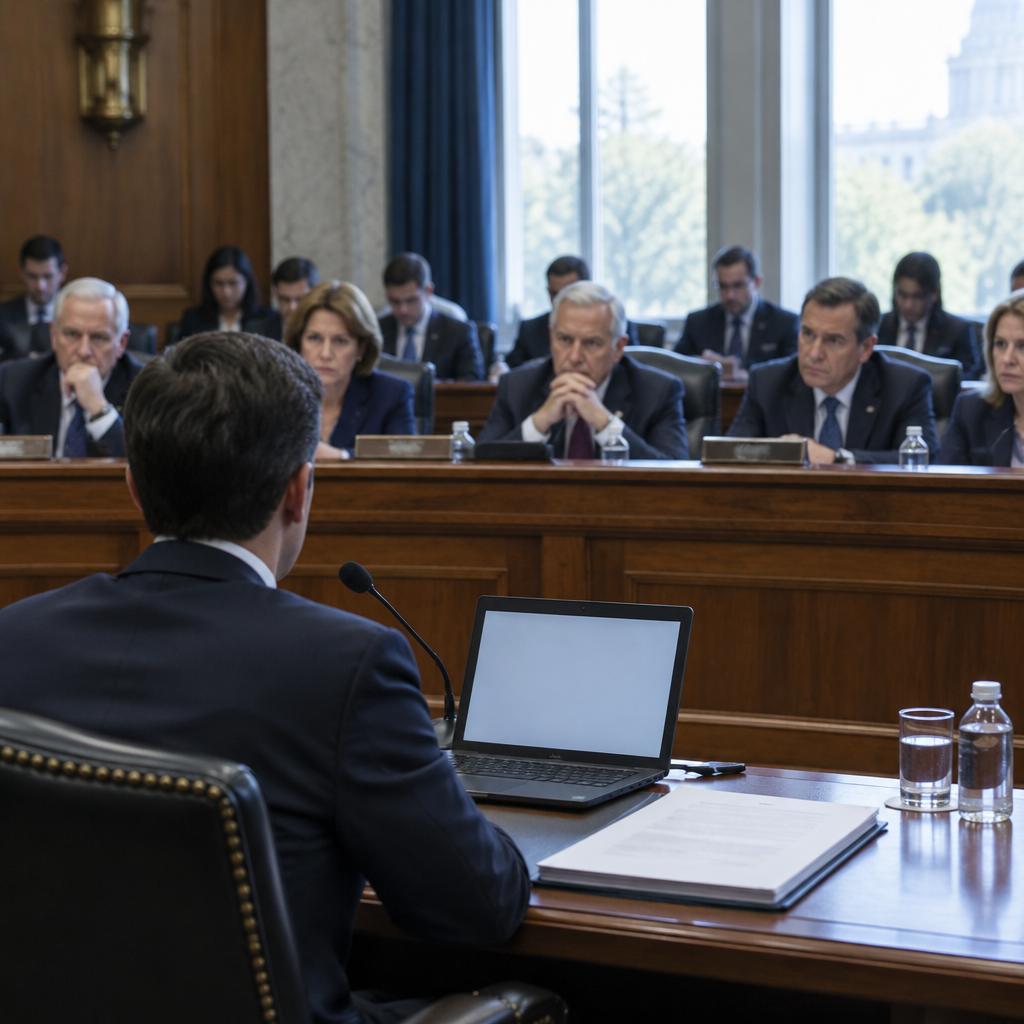
What is at stake is control of the Republican leadership on the House Armed Services Committee — and whether that leadership will sustain the panel’s traditionally bipartisan approach at a moment when the incoming Democratic chairman is weighing investigations into the Pentagon.
Rep. Mike Rogers' decision not to seek a waiver
Rep. Mike Rogers of Alabama has said he will not seek a waiver to remain the top Republican on the House Armed Services Committee. Rogers’ decision creates an open contest for the GOP’s lead slot on the committee, removing an incumbent advantage and forcing House Republicans to choose a new representative to serve as their principal counterweight on military and defense policy matters.
Trent Kelly and Ronny Jackson: a contest shaped by service and presidential ties
The vacancy has produced a two-way contest between Rep. Trent Kelly of Mississippi and Rep. Ronny Jackson of Texas. Both candidates, the reporting notes, bring military experience and close ties to President Donald Trump. Those biographical facts are shaping perceptions of each candidate’s standing within the Republican conference and among outside observers as the party determines its approach to the panel’s agenda.

Audit-ready is a season. It shouldn't be.
Evidence in spreadsheets, controls drifting between audits, frameworks multiplying on flat headcount. Nubivance runs continuous compliance on Rapid7 Cyber GRC - SOC 2, HIPAA, ISO 27001, PCI, CMMC.
End the scrambleIncoming Chairman Rep. Adam Smith and investigations of the Pentagon
The leadership fight on the Republican side unfolds with Rep. Adam Smith, D-Wash., expected to become chairman of the committee. Smith is considering investigations into Defense Secretary Pete Hegseth and the Pentagon, a set of oversight priorities that will define the committee’s early posture under Democratic control. How Republican leadership responds to those investigations will be a key factor in the hearing schedules, investigative scope, and tone of oversight.
Pressure on the committee’s traditionally bipartisan approach
Breaking Defense’s coverage frames the race as consequential for the committee’s historically bipartisan working style. A change in the GOP lead — and the specific outlook of that new leader — could influence whether members continue to pursue cross-party consensus or adopt a more overtly partisan posture during inquiries into the Defense Department. The incoming chairman’s interest in investigations heightens that tension: the choice of Republican leader will help determine whether those inquiries proceed with broad committee buy-in or with sharper partisan lines.
What this means for the House Armed Services Committee, the Pentagon, and the White House
- House Armed Services Committee: Members will weigh the leadership qualities and alliances of Kelly and Jackson when deciding whether to preserve the panel’s bipartisan norms or to shift strategy in response to oversight priorities.
- The Pentagon and Defense Secretary Pete Hegseth: The scope and tone of anticipated investigations under Rep. Adam Smith will be affected by which Republican assumes the top GOP slot, shaping how quickly and aggressively oversight proceeds.
- The White House and President Donald Trump: With both Republican contenders described as having close ties to President Donald Trump, the outcome offers a potential pathway for presidential influence to intersect with committee leadership decisions, particularly in shaping public messaging and responses to any investigations.
Rogers’ decision not to seek a waiver cleared the way for a contest whose winner will help set the committee’s approach at a sensitive moment of anticipated oversight. The central question now is which candidate — Trent Kelly or Ronny Jackson — will secure the Republican leadership post, and whether that choice will reinforce the House Armed Services Committee’s tradition of cross-party work or contribute to a more adversarial dynamic as investigations into the Pentagon proceed under the expected chairmanship of Rep. Adam Smith.