"The Coyote Block 2 series is already a combat-proven system, with more than 600 kills in the course of operational U.S. military deployments to date."
Raytheon unveils the Coyote Block 2C+RM at AUSA
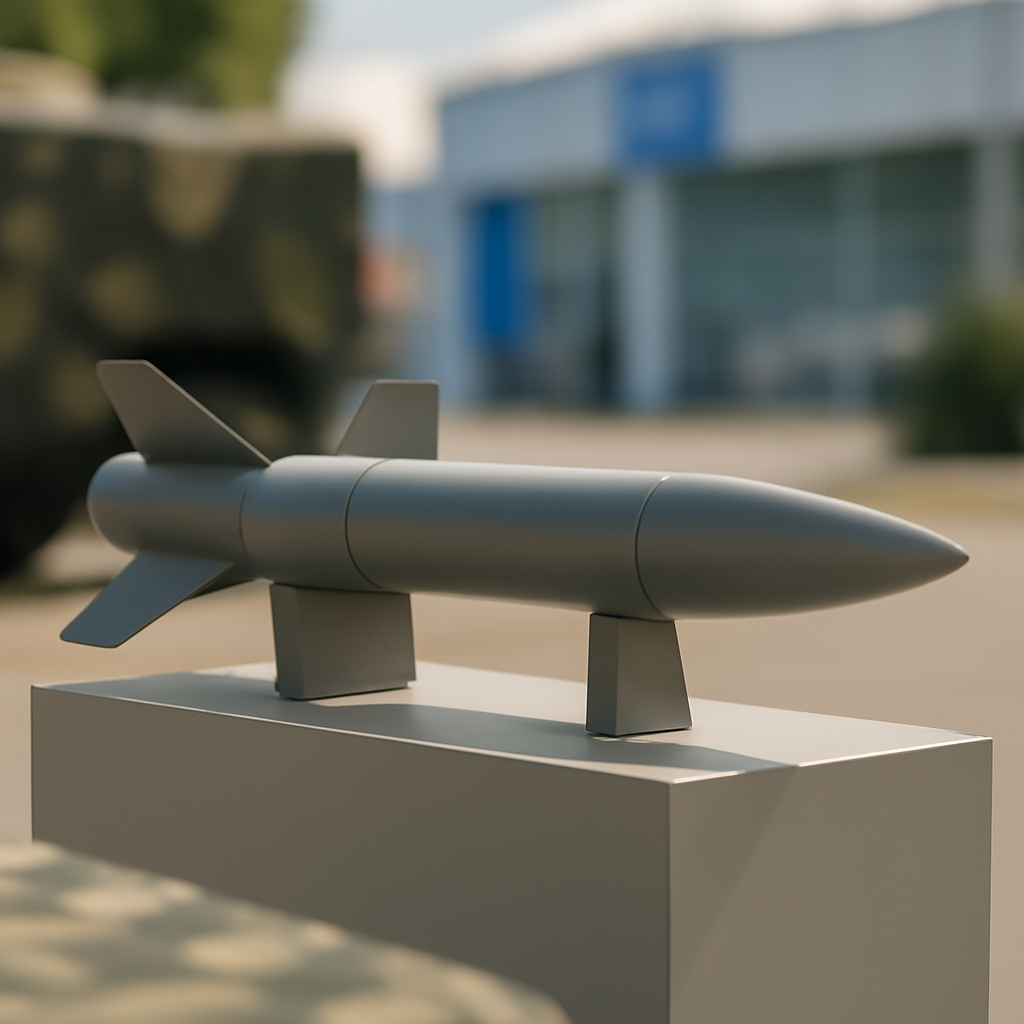
Raytheon (now formally RTX) introduced a new iteration of its Coyote Block 2 counter-drone interceptor — the Block 2C+RM — around the start of the Association of the U.S. Army’s annual convention, a company announcement reported by TWZ said. The headline change is propulsion: the new version replaces the small turbojet that powers existing Block 2 interceptors with a solid rocket motor. Raytheon told TWZ the rocket-powered variant has been in development for about 15 months and has completed three successful live test launches following static test fires of the new motor, which an unnamed subcontractor supplies.
Propulsion swap: turbojet plus booster to sustained rocket flight
Existing Coyote Block 2-series interceptors use a turbojet engine for sustained flight, with a small rocket booster only for launch. The Block 2C+RM replaces that arrangement with a solid rocket motor that provides upgraded propulsion "for faster launch and higher velocity flight," Tom Laliberty, President of Land & Air Defense Systems at Raytheon, told TWZ.
Laliberty declined to provide numeric performance details, saying only that the range difference is "significant" and that velocity improvements affect the interceptor’s "end‑game capabilities." He also confirmed the new version includes an upgraded seeker and warhead, but did not elaborate on specifics for either sensor or lethality changes.

Audit-ready is a season. It shouldn't be.
Evidence in spreadsheets, controls drifting between audits, frameworks multiplying on flat headcount. Nubivance runs continuous compliance on Rapid7 Cyber GRC - SOC 2, HIPAA, ISO 27001, PCI, CMMC.
End the scrambleOperational context: drones, cruise missiles, and cost dynamics
Raytheon frames Block 2C+RM as a response to evolving one‑way attack drones. The company described the upgrade as intended to cover "all types of Class 3 drones." The U.S. military’s Group 3 (Class 3) drones are defined in the reporting as weighing 56 to 1,320 pounds, able to fly up to 18,000 feet and reach top speeds of no more than 250 knots; recent jet‑powered kamikaze derivatives claim top speeds near 270–320 knots and therefore push the upper boundary of that category.
TWZ’s report notes how the line between longer‑range one‑way attack drones and cruise missiles has blurred, and that jet-powered kamikaze types present additional interception challenges. Raytheon positions the rocket‑powered Coyote as moving the system toward the surface‑to‑air missile side of the spectrum by raising speed, range and terminal intercept performance.
Price remains a factor: Coyote has been described previously as a lower‑cost interceptor with an historical unit cost reported around $100,000, while TWZ cited an estimated cost for a Shahed 236 kamikaze drone in the $50,000 range — a dynamic the report flags as relevant when assessing cost curves against expected target sets.
Integration, operators, and program status
The Coyote family is already fielded widely. The U.S. Army is the largest known operator of Block 2-series interceptors and had previously stated plans to buy at least 6,000 between Fiscal Years 2025 and 2029. Army use includes vehicle‑based and palletized versions of the Low, Slow, Unmanned Aircraft Integrated Defeat System (LIDS); the U.S. Air Force has operated fixed‑site LIDS at forward locations; and the U.S. Navy has integrated Coyote launchers on several Arleigh Burke class destroyers, with an annotated image showing an eight‑cell launcher aboard USS Carl M. Levin.
Raytheon said Block 2C+RM is compatible with all existing four‑ and eight‑cell launchers, which can be mounted on vehicles, static ground positions, and ships. The rocket‑powered variant remains in development: Raytheon reported additional tests scheduled into the first half of next year and said the company has "received some government sponsorship as it kind of transitions into the program of record," while the exact structure of follow‑on contracts and formal U.S. military buys remains unclear. Raytheon also indicated it will continue producing jet‑powered Block 2 versions for now. Outside the U.S., contractors are supplying Coyote interceptors to Qatar and Jordan.
What this means for the U.S. Army, the U.S. Navy, and Qatar and Jordan
- U.S. Army: With plans for thousands of Block 2 interceptors already on record, the Army is positioned to evaluate a rocket‑powered variant that claims faster response time and higher terminal velocity; decisions will hinge on the outcome of the scheduled tests and how the Department of War and Raytheon structure program‑of‑record funding.
- U.S. Navy: Naval integration is likely to focus on launcher compatibility and shipboard employment; the Block 2C+RM’s stated fit with existing four‑ and eight‑cell launchers simplifies potential shipboard adoption, pending formal procurement decisions.
- Qatar and Jordan: As known external operators receiving Coyote Block 2 interceptors via contractors, those states can expect future offerings to include both jet‑powered and, potentially, rocket‑powered options if sales follow U.S. program decisions.
The Coyote Block 2C+RM represents a deliberate push toward higher speed and reach for a system the Pentagon and Raytheon say is aimed at modern, higher‑velocity one‑way attack drones. With three successful live tests completed, more scheduled through the first half of next year, and a still‑open procurement path tied to "government sponsorship" and a transition into the program of record, the missile‑like Coyote is now a development to watch for militaries already relying on the Block 2 family and for potential buyers balancing performance against cost.