"We did not buy those aircraft for their dual [nuclear] capability, we bought them for our conversion unit. At the same time, we stated we would get back into the [nuclear] role supporting NATO. The two are separate functions." — Air Vice‑Marshal Jim Beck, Royal Air Force Director Capability and Programs
Air Vice‑Marshal Jim Beck on the F‑35A purchase
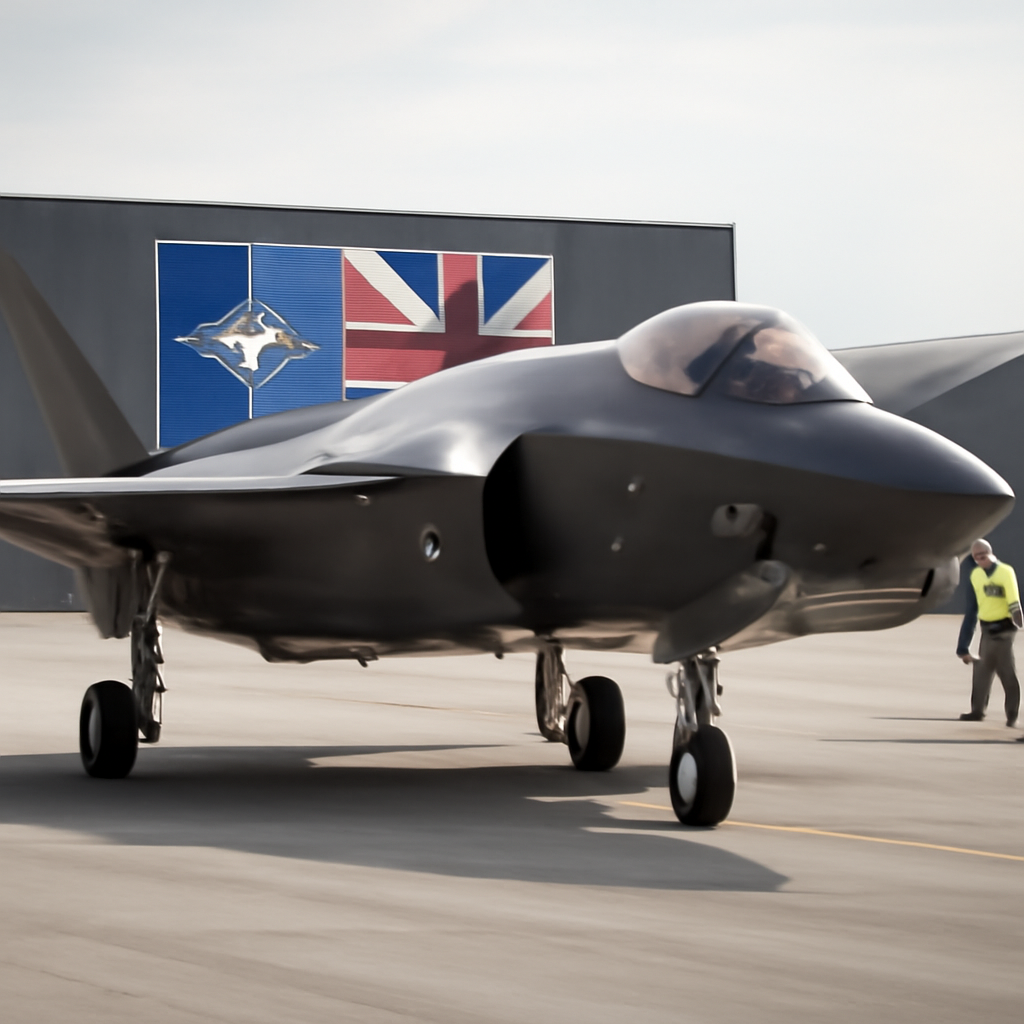
Air Vice‑Marshal Jim Beck made the blunt distinction at the Global Air & Space Chiefs’ Conference in London: the dozen F‑35A aircraft the United Kingdom recently ordered were purchased to support training and conversion, not primarily to equip a standing nuclear strike force. His remarks, reported by Gareth Jennings at Janes, reiterate an RAF posture that places the jets’ day‑to‑day role with the Operational Conversion Unit rather than on immediate nuclear duty.
U.K. Ministry of Defence: 12 F‑35As and the NATO nuclear mission
Last June the U.K. Ministry of Defence announced it would buy 12 F‑35A CTOL fighters and join NATO’s dual‑capable aircraft nuclear mission, noting the F‑35A could be armed with U.S.‑owned B61‑12 nuclear gravity bombs — a capability the F‑35B cannot field because of its smaller weapons bays. The ministry framed the move as "the biggest strengthening of the U.K.’s nuclear posture in a generation" and said the purchase complements the Existing sea‑borne deterrent.

This site is the portfolio.
OSINTSights runs on Cloudflare Workers, D1, R2, and Vectorize, with an AI pipeline on Hetzner ARM. Nubivance designed, built, and operates it. We do the same for clients.
See what we build207 Squadron, training use, and the tradeoffs with STOVL skills
The RAF has said the 12 F‑35As will be used "day‑to‑day" on 207 Squadron, the Operational Conversion Unit (OCU). The ministry argued this choice reduces operating cost — the F‑35A is cheaper to operate and brings a saving of 25 percent per aircraft versus the F‑35B — and extends airborne training time because the A variant carries more fuel and requires fewer maintenance hours. Those factors, the RAF said, will improve pilot throughput to frontline squadrons and free F‑35Bs for carrier deployments.
The tradeoff is explicit: F‑35As cannot train for short‑takeoff/vertical‑landing (STOVL) operations. The RAF intends to mitigate that by using simulators for STOVL instruction while keeping more F‑35Bs available for the Queen Elizabeth‑class carriers.
RAF Marham basing, vaults, and operational constraints
The new F‑35As are due to be based at RAF Marham in eastern England, yet the site’s suitability for storing U.S. nuclear bombs is unclear. Some reports indicate the underground weapons vaults that existed during the Cold War at Marham have been dismantled or filled in. That raises the prospect — previously speculated — that nuclear‑armed aircraft might have to use nearby RAF Lakenheath, where there is evidence the United States has returned nuclear bombs to the U.K. in recent years.
Beyond hard‑infrastructure questions, the nuclear‑sharing arrangement itself places operational limits on a British nuclear strike role: the program provides access to U.S.‑owned weapons but requires U.S. and NATO approval for their use, and U.K. dual‑capable jets would not provide the sovereign deterrent offered by the Royal Navy’s ballistic missile submarines.
Budget pressure, capability shortfalls, and competing programs
The 12 F‑35As are part of the U.K. core buy rather than an addition: the Ministry of Defence still expects to procure 138 F‑35s over the program lifetime. To date, 48 F‑35Bs have been delivered; the government is committed to buying 15 more F‑35Bs and the 12 F‑35As for delivery by 2033. Shortfalls in numbers have already forced reliance on U.S. Marine Corps F‑35Bs to make up aircraft counts on carrier cruises.
Financial tradeoffs are acute. The ministry faces a requirement to spend more than $83 billion over the next four years on nuclear‑powered submarine programs. Separately, a report late last year concluded that a history of "cost‑cutting" across the U.K. F‑35 program "has caused significant problems in its use," degrading capability, aircraft availability, and value for money. The F‑35A’s refuelling receptacle is incompatible with the U.K. Voyager tanker fleet; adding a probe could be possible but would likely make sense only if the U.K. bought many more A variants. Meanwhile, the F‑35A also competes with the Global Combat Air Program and the Tempest concept as procurement priorities evolve.
How the Royal Air Force, NATO, and U.S. partners will assess this
- Royal Air Force: The RAF will treat the 12 F‑35As primarily as a training and conversion asset on 207 Squadron, using the variant’s longer endurance and lower maintenance burden to sustain pilot throughput while keeping F‑35Bs available for carrier operations.
- NATO: Alliance planners retain the option to draw on U.K. participation in nuclear sharing — but the program’s requirement for U.S. and NATO approval and the modest number of A‑models mean the U.K.’s contribution would likely be surge‑oriented rather than a continuous, sovereign air‑delivered deterrent.
- U.S. partners: The United States remains a central enabler under the nuclear‑sharing arrangement; U.S. decisions about storage, force posture, and approvals will shape whether British F‑35As can play an operational nuclear role from U.K. soil.
The RAF’s recent clarification reframes the dozen F‑35As as pragmatic training assets first and potential nuclear participants second. With numbers small, infrastructure questions at RAF Marham unresolved, and competing budget demands — notably the multi‑billion‑dollar submarine program and capability shortfalls in the F‑35B fleet — the pathway to a meaningful, standing U.K. dual‑capable air mission would depend on further purchases, basing work, and political decisions in London and among NATO and U.S. partners.