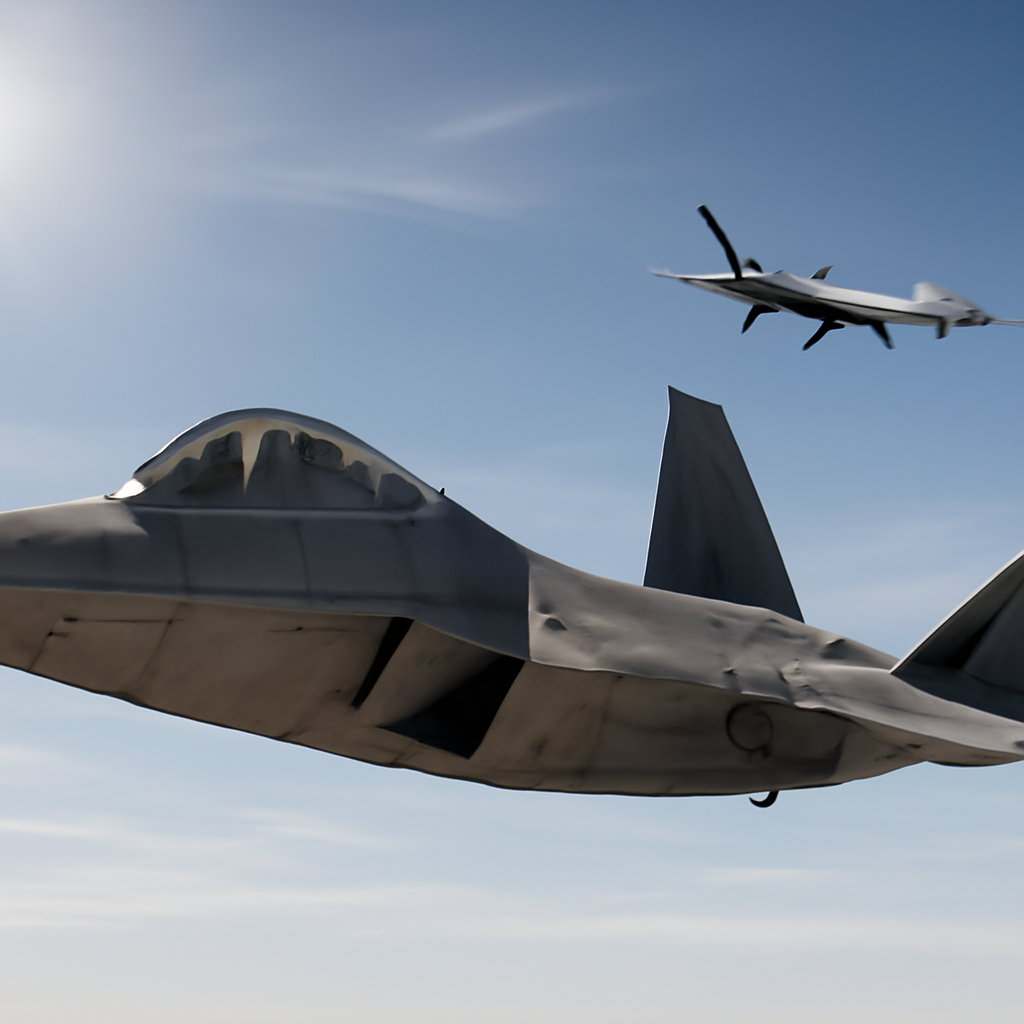
Russia’s New Battlefield: AI, Lasers, and the Quest for Military Dominance
In a move that signals a decisive shift in military doctrine, Russian President Vladimir Putin has set his sights on integrating advanced technology—chiefly unmanned systems, artificial intelligence (AI), and laser weaponry—into the core of Russia’s defense strategy. Following a high-level meeting of the Russian military-industrial commission on April 23, Kremlin officials confirmed sweeping changes, indicating that modern warfare is on the cusp of transformation under Moscow’s ambitious new blueprint.
The announcement, first reported by Defence Blog, comes at a time when military powers around the globe are recalibrating their strategies in response to rapid technological evolution. For Russia, a nation that has historically prided itself on adapting its military posture to emerging threats, this push towards incorporating AI and directed-energy weapons represents both a continuation of its long-standing emphasis on military innovation and a bold leap into uncharted operational territory.
Historical context is indispensable to understanding this shift. Over the past few decades, Russia has invested in numerous high-technology projects—ranging from hypersonic missiles to advanced air defense systems—in a bid to counterbalance the technological edge traditionally held by Western militaries. Now, with unmanned systems gaining traction across military establishments worldwide and AI heralded as the next frontier of warfare, Putin’s directive can be seen both as a response to perceived global advancements and as an internally driven effort to modernize outdated infrastructure.
Current developments indicate that the Kremlin is not merely preparing for incremental upgrades but is rethinking the architecture of its armed forces. The orders issued by President Putin are intended to accelerate research, production, and deployment efforts, ensuring that systems like autonomous drones and laser defense platforms become operational sooner rather than later. While the exact specifications or deployment timelines remain classified, the strategic recalibration underscores a belief that future conflicts will not be won by conventional means alone, but by leveraging cutting-edge technological capabilities.
The implications of these changes are profound. In the world of modern warfare, where cyber-attacks and precision strikes have already redefined engagement rules, the introduction of AI and laser technologies could upend traditional military balances. Analysts in the defense community note that such technologies promise faster decision-making on the battlefield—an edge that might compensate for any numerical or conventional force disadvantages. Moreover, integrating AI could revolutionize command and control systems, making them more adaptive in real-time combat scenarios.
Adding perspective from the interdisciplinary realm of military strategy, experts at the RAND Corporation have long stressed that the convergence of AI and directed energy weapons is not merely a technological upgrade but a paradigm shift. Although RAND’s studies focus on the broader trends affecting global arms development, they underscore that leaders in the field view these investments as critical to maintaining strategic deterrence. As nations like the United States and China pursue similar technology enhancements, Russia’s renewed focus highlights a competitive urgency that may spur a new arms race, with significant geopolitical ramifications.
Another dimension of the story is the economic impact. The defense industry, a longstanding sector in Russia, now faces the challenge of modernizing production lines and reallocating resources from traditional systems to new technology platforms. This realignment is fraught with risks, not least of which are the difficulties inherent in integrating AI algorithms into systems where reliability and security are paramount. Despite these challenges, Russia appears ready to invest heavily in research and development, possibly forging new public-private partnerships that mirror trends seen in other technological sectors worldwide.
As observers examine these developments, many conclude that the move reflects a deeper strategic reassessment on Moscow’s part. By prioritizing systems that promise higher operational tempo and reduced human risk—attributes particularly prized in modern conflict—Russia is laying the groundwork for an era in which warfare becomes as much about information and processing power as it is about traditional kinetic force. This strategy may well tilt the balance in regional power dynamics, prompting neighboring states and global powers to ponder their own technology curves.
Looking ahead, one must ask what the long-term effects of this strategic shift might be. Will the accelerated integration of AI and laser systems transform Russian military doctrine to the extent that it changes the calculus of international security? Given the rapid pace of technological change, policymakers and defense strategists on all sides are likely to watch these developments with a mix of anticipation and concern. The race is on—not just in arms development, but in the quest for operational superiority in a digital age where data and decision-making speed are as crucial as firepower.
In the final analysis, the Kremlin’s new focus on AI, unmanned systems, and laser weaponry encapsulates the broader global trend toward high-tech warfare. It reminds us that modern geopolitics is as much about the control of information and algorithms as it is about physical dominance on the battlefield. With nations around the world grappling with unprecedented technological challenges and opportunities, Russia’s recalibrated approach is a stark illustration of how the future of combat may be defined not by the size of an army, but by the edge provided by innovation. The stakes are high: in this new era, the ultimate measure of power may well be the ability to harness technology faster and more effectively than one’s rivals.