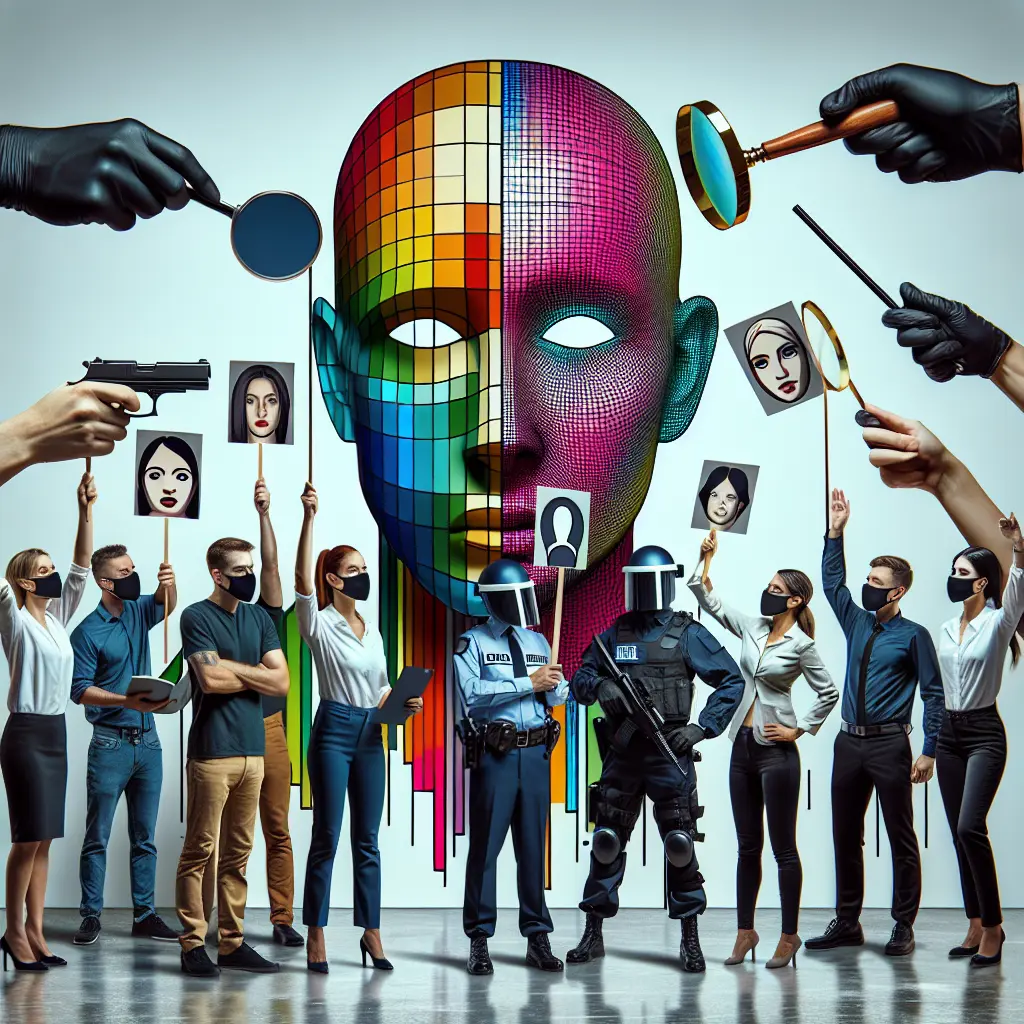
Facial Recognition in London: A Controversial Strategy Draws Fire from Privacy Advocates
As the sun set over the historic streets of London, a quiet yet contentious battle loomed between privacy advocates and law enforcement. The Metropolitan Police have embraced live facial recognition (LFR) technology with high hopes for crime reduction, but critics argue that the initiative has turned into an expensive and ineffective venture. With 1,000 arrests linked to LFR since its implementation, questions arise: Is this cutting-edge technology truly enhancing public safety, or is it a costly misstep that infringes on civil liberties?
The Metropolitan Police introduced live facial recognition in 2020, claiming it as a necessary tool to combat rising crime rates in the capital. Supported by an initial investment of nearly £3 million, police officials maintained that LFR could help identify suspects more efficiently than traditional methods. Yet, privacy advocates view this strategy as an unwarranted invasion of personal space—a breach of the right to anonymity in public areas.
Despite being hailed as a progressive policing method, the results from LFR deployments have raised eyebrows. Critics contend that only a fraction of arrests—estimated around 20%—resulted in convictions. This has led to accusations that the vast resources allocated to LFR might be better spent elsewhere, on initiatives that yield more tangible benefits for public safety.
The backdrop to this debate is the increasing global concern over surveillance technologies’ encroachment on personal freedoms. Data released by London’s police force reveals a broader pattern: LFR has been deployed at various major events and locations but has shown inconsistent efficacy. In fact, studies indicate that the technology often struggles with accuracy rates for minority groups, raising concerns about racial bias and misidentification.
Currently, many city residents remain skeptical. In a recent poll conducted by YouGov, approximately 60% of respondents expressed apprehension about LFR use by police, citing fears over privacy breaches and the potential misuse of personal data. The juxtaposition between ensuring security and safeguarding civil liberties continues to dominate discourse surrounding policing in the digital age.
Moreover, several influential organizations have voiced their disapproval. Liberty, a leading human rights advocacy group in the UK, issued a statement arguing that relying on facial recognition technology poses “significant risks” without demonstrating substantial benefits for public safety. They contend that it undermines trust between communities and law enforcement agencies.
Experts agree that while technology can enhance policing efforts, its deployment must come with strict oversight and accountability measures to protect citizens’ rights. Dr. Michael Ainsworth from the University College London’s Centre for Digital Creativity posits that “a clear legal framework must be established before fully embracing such invasive technologies.” Without rigorous checks and balances, there’s potential for misuse that could erode public trust.
Looking ahead, it is crucial for lawmakers and police officials to heed these warnings as they navigate the complexities of modern surveillance tools. With increasing scrutiny from civil rights groups and growing public wariness toward invasive technologies, there could be significant shifts in policy concerning facial recognition usage in coming months. Policymakers are expected to re-evaluate regulations governing such technologies amid mounting calls for transparency and accountability.
The ongoing tension between technology’s promise of enhanced security and its implications for personal freedoms poses difficult questions about the future of policing in urban environments like London. As society grapples with these dilemmas, one must ask: Can we find a balance that preserves public safety without compromising our fundamental rights? In an era where every glance may be scrutinized by algorithms designed to predict criminality, vigilance in defending civil liberties remains paramount.



