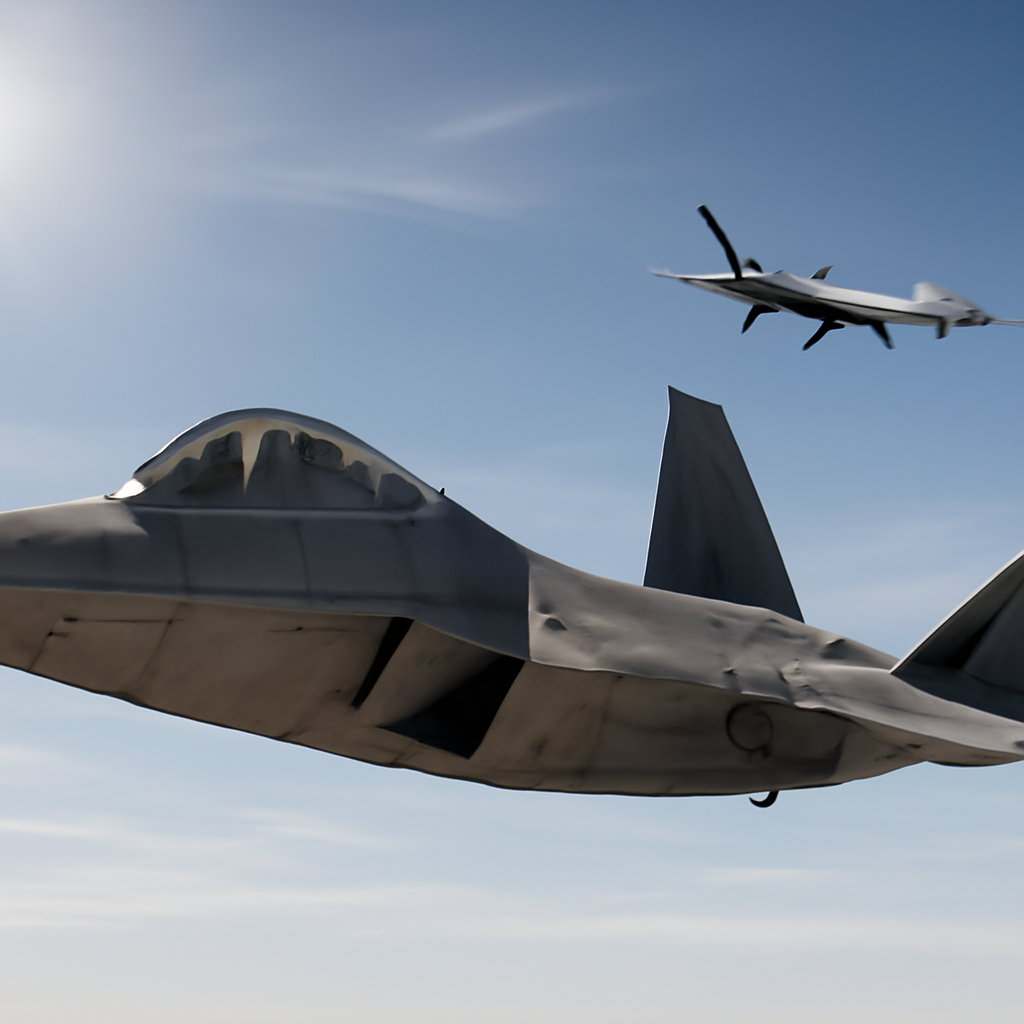
"Following the signing of the contract between the Armed Forces Support Inspectorate and the contractor, the first prototype of the armed [M28] will undergo modifications to equip the aircraft with gun armament," Maj. Gen. Ireneusz Nowak, the inspector of the Polish Air Force, said at a panel on air superiority.
Poland’s decision and the immediate program
Poland has confirmed work is underway to modify its PZL M28 Skytruck twin‑turboprop utility aircraft for a counter‑drone role. The program follows a signed contract between the Armed Forces Support Inspectorate and an unnamed contractor; the initial step will be conversion of a first prototype to accept gun armament, according to Maj. Gen. Ireneusz Nowak.
Poland already operates roughly two dozen M28s, primarily for transport duties, and PZL Mielec—based in Poland—began production of the M28 in the early 1990s with limited manufacturing continuing to this day. The decision responds in part to recent operational examples and to a recognized vulnerability in Poland’s airspace after a September incursion of around 20 unarmed military drones.
How Ukraine’s Antonov An‑28 shaped the plan
The Polish move is explicitly tied to the reported success of a Soviet‑era Antonov An‑28 variant in Ukraine. That An‑28, reportedly modified by civilian volunteer crews, has been used as an airborne counter‑drone platform: initially fitted with a six‑barrel M134 Minigun that is pintle‑mounted in the cabin door and later adapted to launch interceptor drones.
Reports quoted in the program note that the Ukrainian crew had "already destroyed nearly 150 drones" during air defense missions, and another report referred to "over 150 confirmed kills" for an armed civilian An‑28. The Ukrainian solution uses an externally mounted infrared camera turret and night‑vision goggles (NVGs) to acquire targets, and exploits the aircraft’s high‑wing layout and STOL capability to operate from shorter forward strips.

The cyber insurance questionnaire just landed. Now what?
SOC 2, HIPAA, insurance renewals - someone has to own security strategy. Nubivance provides fractional CISO leadership without the full-time salary.
Get a security leadWeapons and sensors under consideration
Poland is weighing several armament and sensor options already demonstrated or discussed in recent reporting. The An‑28 in Ukraine employed the M134 Minigun, a Gatling‑type weapon that fires roughly 3,000–6,000 rounds per minute (about 50–100 rounds per second). The Ukrainian aircraft was subsequently adapted to carry and launch interceptor drones such as the P1‑Sun.
Maj. Gen. Nowak also mentioned other platforms being prepared for counter‑drone missions: the Polish Army’s forthcoming AH‑64E Apache Guardian attack helicopters and the AW149 combat support helicopter. The AW149 is being adapted to use European 70mm rockets with laser guidance and will be fitted with guns. Separately, Nowak said the U.S.‑made Advanced Precision Kill Weapon System (APKWS) laser‑guided 70mm rockets will be integrated on Polish Air Force F‑16 fighters and FA‑50 light combat aircraft, and noted APKWS could also be a potential option for the M28.
Air‑defense context: Narew, Wisła, aerostats and AEW&C
The M28 initiative is being developed inside a broader modernization of Poland’s air‑defense architecture. Poland plans to introduce new systems procured under the Narew (short‑range) and Wisła (medium‑range) programs by 2032. The country has also acquired two Saab 340 airborne early warning & control (AEW&C) platforms under a crash program, and is planning a tethered aerostat‑based airborne early warning system intended primarily to detect multiple tiers of drones, as well as helicopters and lower‑slower flying crewed aircraft. The aerostat network is designed to provide persistent look‑down surveillance across the eastern border.
What this means for the Polish Air Force, Polish Army aviation, and NATO partners
- Polish Air Force: The M28 conversion would add a lower‑cost, gun‑armed option for engaging one‑way attack drones and saturated small‑UAS attacks, complementing higher‑end missile and fighter responses.
- Polish Army aviation (AH‑64E, AW149): Attack and support helicopters are being positioned to contribute in the counter‑drone role; the AW149’s adaptation for laser‑guided rockets and guns explicitly links Army aviation to the same mission set.
- NATO partners: The emergence of a NATO air arm fielding modified utility turboprops for counter‑drone operations adds a new operational model for ally cooperation and burden‑sharing in layered air defense, particularly in contested forward areas where STOL capability matters.
At this stage the program remains formative: the first prototype will be modified to accept gun armament, and Nowak said other undisclosed aircraft will also be used in a similar role. The Polish initiative is notable for taking a field‑proven, low‑cost airborne counter‑drone approach—demonstrated in Ukraine—to the NATO theater, while integrating the effort into broader investments in sensors, interceptors and mid‑tier air‑defense systems.
Source: https://www.twz.com/air/drone-hunting-m28-skytruck-in-the-works-for-poland