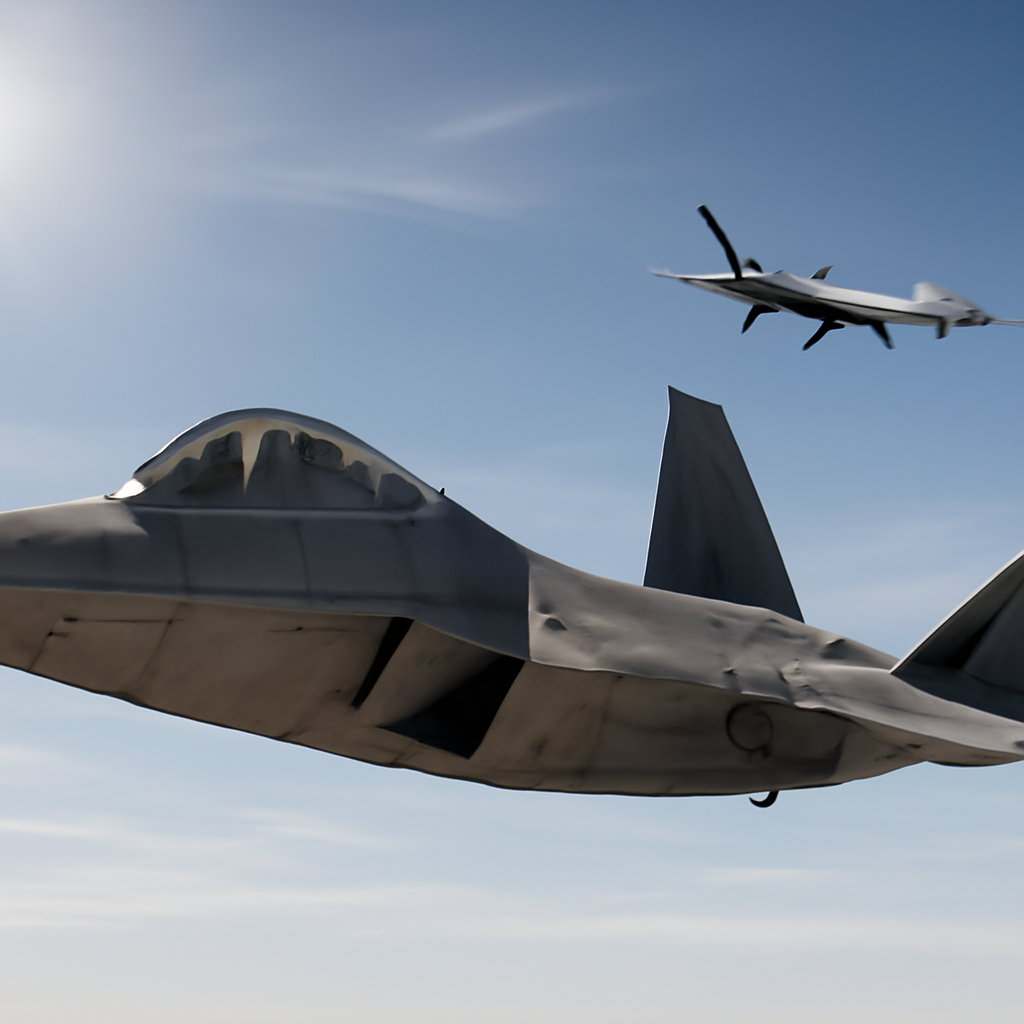
What does a field of cheap, commercial drones in the hands of non-state actors look like when it is no longer a distant headline but a possible reality on Papua New Guinea’s doorsteps? An article on The Strategist raises that exact dilemma: Papua New Guinea needs to prepare for the threat posed by cheap, commercial drones, and that warning is cast against the backdrop of non-state drone warfare in the Sahel.
From the Sahel to the South Pacific: a pointed analogy
The Strategist draws attention to “cheap, non-state drone warfare in the Sahel” as a cautionary example. That framing treats the Sahel not as a closed case study but as a signal: low-cost, commercially available unmanned aircraft have been used by non-state actors in one region, and the dynamics observed there warrant study elsewhere. The article uses that comparison to argue that Papua New Guinea should take steps now, rather than later, to confront a similar threat if it emerges locally.
Alliance ties and geographic proximity heighten stakes
The piece notes two concrete factors that shape the strategic picture for Papua New Guinea: Australia’s defence cooperation with PNG is formalised into an alliance by the Pukpuk treaty, and the two countries are geographically proximate. Taken together—according to the article—those facts mean the issue is not purely national for Papua New Guinea. The argument implies that Australia’s partnership and closeness to PNG make the island state’s preparedness a matter of mutual concern.

Audit-ready is a season. It shouldn't be.
Evidence in spreadsheets, controls drifting between audits, frameworks multiplying on flat headcount. Nubivance runs continuous compliance on Rapid7 Cyber GRC - SOC 2, HIPAA, ISO 27001, PCI, CMMC.
End the scrambleWhy the warning matters: several perspectives
- Policy perspective: The article suggests that a sovereign government advised to “prepare” faces choices about doctrine, investment and cooperation. For Papua New Guinea, the recommendation to prepare carries implications for defence planning and for how an allied partner interprets shared risk.
- Security-cooperation perspective: Because the Pukpuk treaty formalises defence cooperation between PNG and Australia and because the countries are proximate, the article frames drone threats to PNG as an issue that resonates beyond PNG’s borders. That linkage is presented as a reason for shared attention and potentially coordinated responses.
- Comparative perspective: By pointing to the Sahel’s experience with cheap, non-state drone use, the article urges policymakers and technical communities to study the modalities, vectors and consequences that emerged elsewhere, and to consider whether similar patterns could appear in the South Pacific.
What to watch and what to ask next
The Strategist’s piece leaves readers with practical questions rather than definitive prescriptions. If cheap commercial drones can be repurposed by non-state actors—as the Sahel example prompts us to consider—then Papua New Guinea’s stated need to prepare opens a set of follow-on inquiries about readiness, alliance coordination, and technology adaptation. Given the article’s emphasis on both the Sahel example and the formal Australia–PNG link via the Pukpuk treaty, the underlying prompt is simple: who will take responsibility for anticipating and mitigating these risks, and how?
Is preparation for low-cost, non-state drone threats a matter for a single state to shoulder, or does proximity and treaty-based cooperation mean it must be shouldered together? The article urges leaders and technical communities in both capitals to reflect on that question now, rather than later.