“Only three air forces on Earth still fly actual heavy, long‑range strategic bombers: the USAF, the Russian Aerospace Forces, and the PLAAF.” That observation from the record frames a small, telling piece of equipment policy: China’s air force trains bomber crews not always by flying frontline heavy bombers, but by turning transport airframes into cost‑saving stand‑ins.
Why the PLAAF converted transports into the HYJ‑7
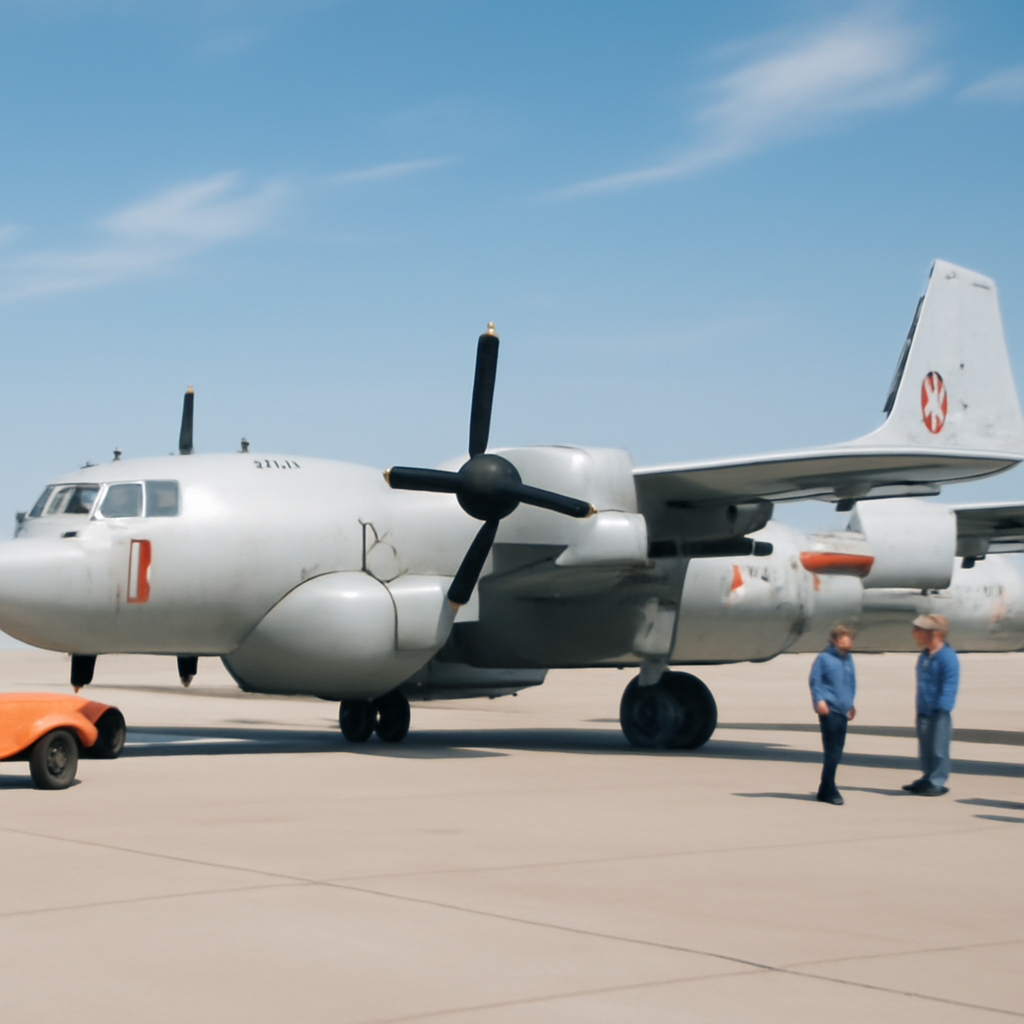
The PLAAF’s approach to bomber training took a distinctly frugal turn in the late 1990s. Rather than allocate scarce flight hours on heavy platforms, the force converted Xian Y‑7-100 transports into HYJ‑7 bomber trainers and later imported An‑34s for the same role. The conversion created a three‑man trainer with a pronounced bombing‑compartment bulge and ten wing bomb bays designed to approximate the workflow of a bomber crew without flying a full‑size strategic bomber.
Design and intent of the HYJ‑7 as a bomber substitute
The HYJ‑7 is presented as a pragmatic, low‑cost training solution. The source describes the project as “creative frugality,” and specifies concrete features: a three‑man crew, a large bombing compartment bulge, and ten wing bomb bays. The stated intent is straightforward — give crews a platform on which to learn which switches and procedures matter when operating crewed bombers — but the source is candid that “nobody outside the PLAAF has any clue how effective the HYJ‑7 really is as a bomber substitute.”

Audit-ready is a season. It shouldn't be.
Evidence in spreadsheets, controls drifting between audits, frameworks multiplying on flat headcount. Nubivance runs continuous compliance on Rapid7 Cyber GRC - SOC 2, HIPAA, ISO 27001, PCI, CMMC.
End the scrambleEngines, supply, and the Russia connection
The PLAAF’s experimentation with cheap conversions did not eliminate reliance on imported components. The reporting notes Russian D‑30KP‑2 engines in service with Chinese bombers and trainers and cites a March 2011 industry bulletin from NPO "Saturn" confirming delivery of the final installment under a contract to supply 55 D‑30KP‑2 engines through 2012. That bulletin records a series of earlier deliveries in 2009 and 2010 and says the contract included technical support within the warranty period. Sergei Popov, identified as the commercial director of NPO Saturn, is quoted saying it was “a great honor to successfully complete the work under this contract” and expressing a desire for “an early extension of the Russian‑Chinese cooperation. In particular, the continued supply of engines to China, the D‑30KP‑2.”
How the HYJ‑7 fits into a broader PLAAF bomber effort
The HYJ‑7 exists amid visible investment in the PLAAF’s bomber capability. Reporting from China.org.cn cited Jane’s Defence Weekly saying the PLAAF had received 15 H‑6K bombers; the H‑6K is described as an updated medium bomber that can carry cruise missiles under its wings, maneuvers more deftly than its predecessor, and requires a smaller crew. The H‑6K reportedly has a combat radius of 3,500 km and — when paired with Changjian‑10 cruise missiles of 1,500–2,000 km range — can extend reach to 4,000–5,000 km, ranges the source says are sufficient to reach Okinawa, Guam and even Hawaii from China’s mainland. The source also documents training activity: a January 2015 photo caption describes an aggressor H‑6K practicing a low‑level penetration bomb run against a PLAAF anti‑defense brigade during a confrontational drill, and earlier reporting details low‑altitude mass‑bombing exercises and related high‑risk training topics such as pelagic attack, maritime extra‑low bombing, mass bombing in formation and maritime mine‑laying, with Li Dashan (political commissar of the regiment) noting the “high demands and risks” of that training.
What this means for the PLAAF, regional defense planners, and Russian suppliers
- The PLAAF: The HYJ‑7 program signals a desire to expand crewed‑bomber proficiency while managing costs. Converting transports enables more frequent practice of crew procedures and formation drills without the flight‑hour expense of full heavy bombers.
- Regional defense planners and analysts: The combination of HYJ‑7 training, active H‑6K deployments, and reported ranges for the H‑6K and Changjian‑10 missiles reshapes how planners must account for persistent bomber‑crew competence and reach. The source cites analysts’ calculations about required combat radii to reach Taiwan, southwestern Japan and Guam, and presents the H‑6K plus missile combination as meeting those length requirements.
- Russian suppliers and logistics planners: The documented deliveries of D‑30KP‑2 engines and the explicit commercial interest in extending supplies underline Beijing’s continued operational dependence on imported powerplants for some bomber and trainer types — a dependence NPO Saturn publicly framed as a successful contractual partnership.
The picture that emerges is neither purely innovative nor purely provisional. The PLAAF’s HYJ‑7 embodies a calculated tradeoff: cheaper airframes and simulated payloads to maintain crew skills, alongside continued investment in modernized bombers such as the H‑6K and reliance on imported D‑30KP‑2 engines. The practical question the source leaves hanging — and one it explicitly records — is how closely hours in a converted transport mirror the demands of flying a true heavy bomber. Until the PLAAF publishes rigorous comparative results, that assessment remains the PLAAF’s to make.