"The China Maritime Studies Institute’s China Maritime Report series remains one of the most consistently valuable resources for anyone tracking China’s maritime development," the China Defense Blog wrote, recommending the latest study.
China Maritime Report #55, by Joshua Arostegui
China Maritime Report #55, titled "Loading the Well Deck: The PLA Navy’s Maturing Role in Projecting Joint Ground Forces," is the latest installment in the China Maritime Studies Institute’s long-running series. Joshua Arostegui authored the study, which the recommending blog highlights as continuing CMSI’s tradition of disciplined methodology, heavy reliance on primary Chinese-language sources, and the academic rigor associated with the U.S. Naval War College.
Central Military Commission is refining the logistics backbone
Arostegui’s report focuses on how the Central Military Commission is refining the logistics backbone that supports China’s amphibious forces. The study frames those refinements as central to a maturing capability for maritime expeditionary operations, arguing that changes at the logistics level underlie broader operational shifts in how ground and naval elements are integrated for projection tasks.

Audit-ready is a season. It shouldn't be.
Evidence in spreadsheets, controls drifting between audits, frameworks multiplying on flat headcount. Nubivance runs continuous compliance on Rapid7 Cyber GRC - SOC 2, HIPAA, ISO 27001, PCI, CMMC.
End the scrambleType 071 LPD singled out as a focal point
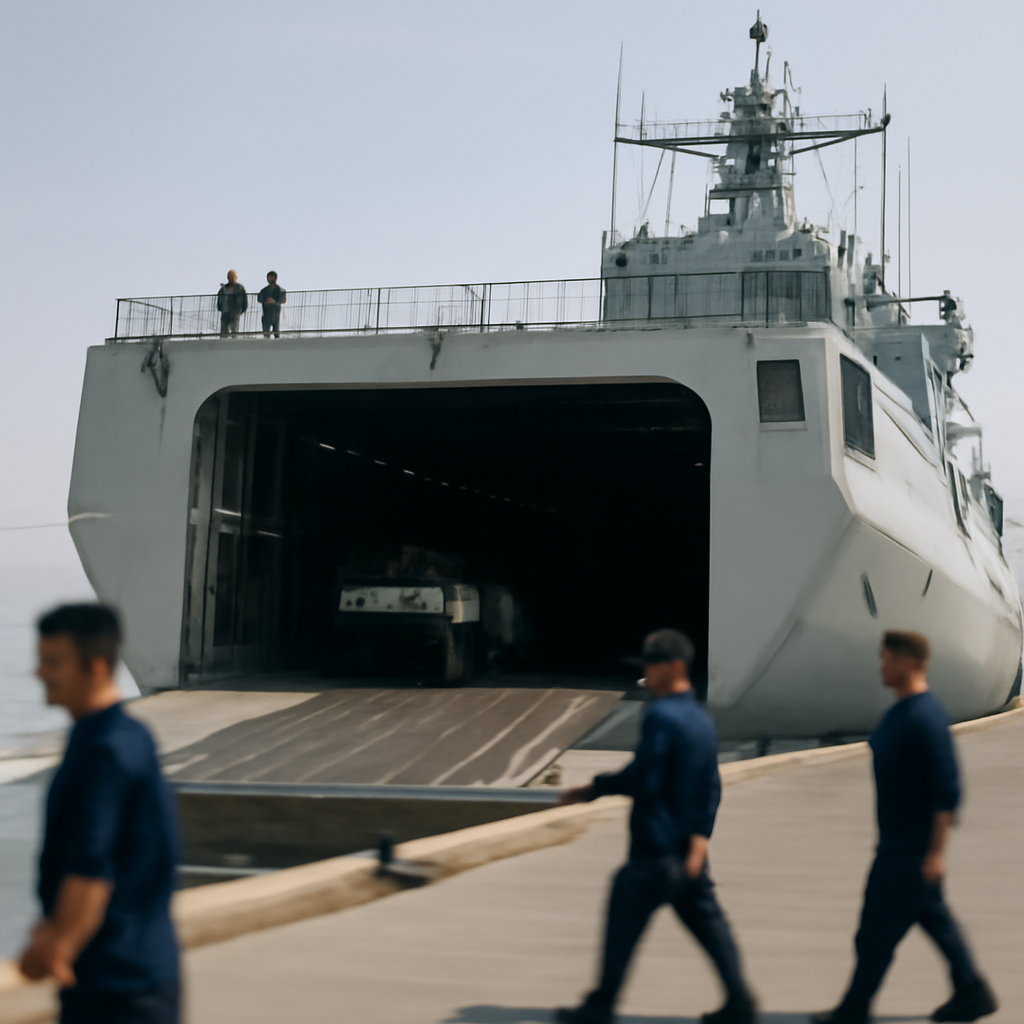
The report pays particular attention to the Type 071 landing platform dock (LPD). Arostegui treats the Type 071 as a linchpin of the logistics and expeditionary architecture the CMC is developing: it is a recurring subject in the study’s analysis of how amphibious forces organize, move, and sustain joint ground elements from sea to shore. The title's reference to "Loading the Well Deck" underscores the report’s emphasis on shipborne logistics and the practical mechanics of embarking and disembarking forces and materiel.
Recent foreign joint exercises serve as benchmarks
Arostegui uses recent foreign joint exercises as empirical touchstones to measure progress. The report evaluates those exercises not as curiosities, but as deliberate benchmarks—comparisons against which the PLA’s evolving techniques, procedures, and logistical arrangements can be judged. In the blog’s summary, these exercises are presented as useful yardsticks for assessing how far maritime expeditionary logistics have come.
A pattern-driven portrait of integration and sophistication
Taken together, the study presents a pattern-driven analysis that, according to the recommending blog, "paints a clear picture of a PLA steadily improving its maritime expeditionary logistics, integrating ground and naval elements with increasing sophistication." The report is framed as holistic: it connects individual developments—platform use, logistical procedures, and exercise performance—into a broader narrative about the PLA’s trajectory in amphibious and expeditionary capability development. The recommending blog calls the work "another excellent CMSI contribution" and "essential reading for anyone following the evolution of China’s amphibious and expeditionary capabilities."
How the Central Military Commission, the PLA Navy, and amphibious units will watch and act
- Central Military Commission: The report identifies the CMC’s refinement of logistics as a deliberate effort; the CMC's role in adjusting the logistics backbone is presented as the driver of the broader program of capability maturation.
- PLA Navy: The Navy is treated as the operational manager of shipborne platforms such as the Type 071 LPD, central to projecting joint ground forces from sea into contested littoral areas.
- Amphibious units: The study portrays these forces as the immediate beneficiaries and testers of the logistics changes, using foreign joint exercises as benchmarks to measure whether operational and sustainment concepts are meeting expectations.
Joshua Arostegui’s report, as summarized by the China Defense Blog, is notable for its methodical sourcing and its focus on the often-overlooked mechanics of projection: logistics, platforms, and measured exercises. For readers tracking the evolution of China’s amphibious and expeditionary capabilities, the study assembles discrete developments into a coherent, evidence-oriented argument about steady improvement and greater integration between sea and land forces—an argument the blog describes as both rigorous and essential.
Read the original recommendation and link to the report here: https://china-defense.blogspot.com/2026/06/china-defense-blog-recommends-china.html