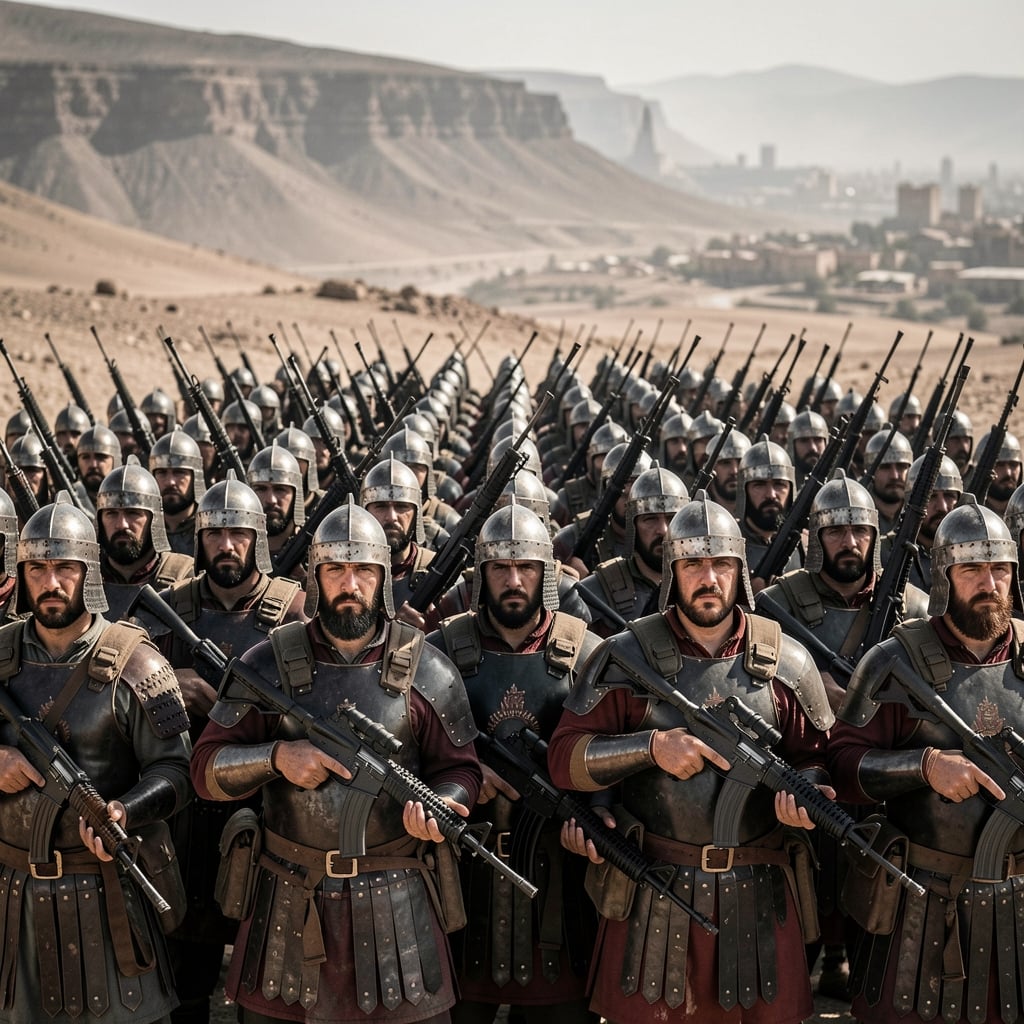
What does it mean when one of the world's most closely watched armed forces returns to a formation that conjures images of ancient battlefields? "Well, they finally went and did it," the blog China Defense reported — and with that line it signaled a striking change in how some PLA units are being presented and equipped.
The observable change
According to the China Defense blog, the PLA is now marching in formations that "look unmistakably like a phalanx": long pikes, tight ranks, and "a wall of shields up front." The post contrasts this with prior imagery of PLAN infantry, which the blog says had been armed with shorter polearms designed "for flexible formations and brutal melee work."
What the shift looks like, in practical terms
- The new formation is described as a compact, linear formation built around long pikes and frontal shields.
- By contrast, the previously observed force elements used shorter polearms that favor mobility and close-quarters engagement.
- The blog asserts a clear tactical preference for one approach in a specific environment: "on open ground, nothing beats the raw stopping power of a heavy pike block."

This site is the portfolio.
OSINTSights runs on Cloudflare Workers, D1, R2, and Vectorize, with an AI pipeline on Hetzner ARM. Nubivance designed, built, and operates it. We do the same for clients.
See what we buildWhy this matters — perspectives to consider
From a tactical and equipment-design perspective, the reported change highlights competing trade-offs between mobility and massed stopping power. Shorter polearms and looser formations prioritize flexibility and close action; a dense pike block prioritizes cohesion and a defensive frontal capability on open terrain. The blog frames the latter as delivering "raw stopping power," a quality that matters when a formation's intent is to hold ground against a direct advance.
For planners and policymakers, the appearance of a tight, shielded pike formation raises questions about intent and training emphasis. If the imagery on display reflects a deliberate choice rather than a one-off exercise, it suggests a willingness to practice and showcase methods that favor concentrated, disciplined formations in certain environments.
Observers and potential adversaries will read the same imagery and draw their own lessons. A force that trains and displays heavy pike blocks signals a capability oriented toward close, collective defensive action on open ground; opponents may adjust tactics, equipment, or force posture in response.
What to watch next
The blog's description is specific about equipment type and formation style but stops short of explaining doctrinal change, scale, or operational context. Future indicators to monitor include whether these pike-and-shield formations appear repeatedly in public drills, whether they are integrated with other arms and support elements, and whether training guidance or official materials reflect a sustained emphasis on dense, open-ground formations.
For now, the immediate fact is plain and provocative: the PLA is being shown in tight, phalanx-like ranks armed with long pikes and a shielded front, whereas prior imagery centered on shorter polearms and more flexible formations. As the blog put it, on open ground a heavy pike block offers undeniable stopping power — but whether that power represents a new persistent feature of force employment, or a single stylistic or historical exercise, remains to be seen.
How the rest of the world interprets and adapts to that image may tell us more than the image itself.
https://china-defense.blogspot.com/2026/04/theyve-finally-done-it-pla-is-now.html