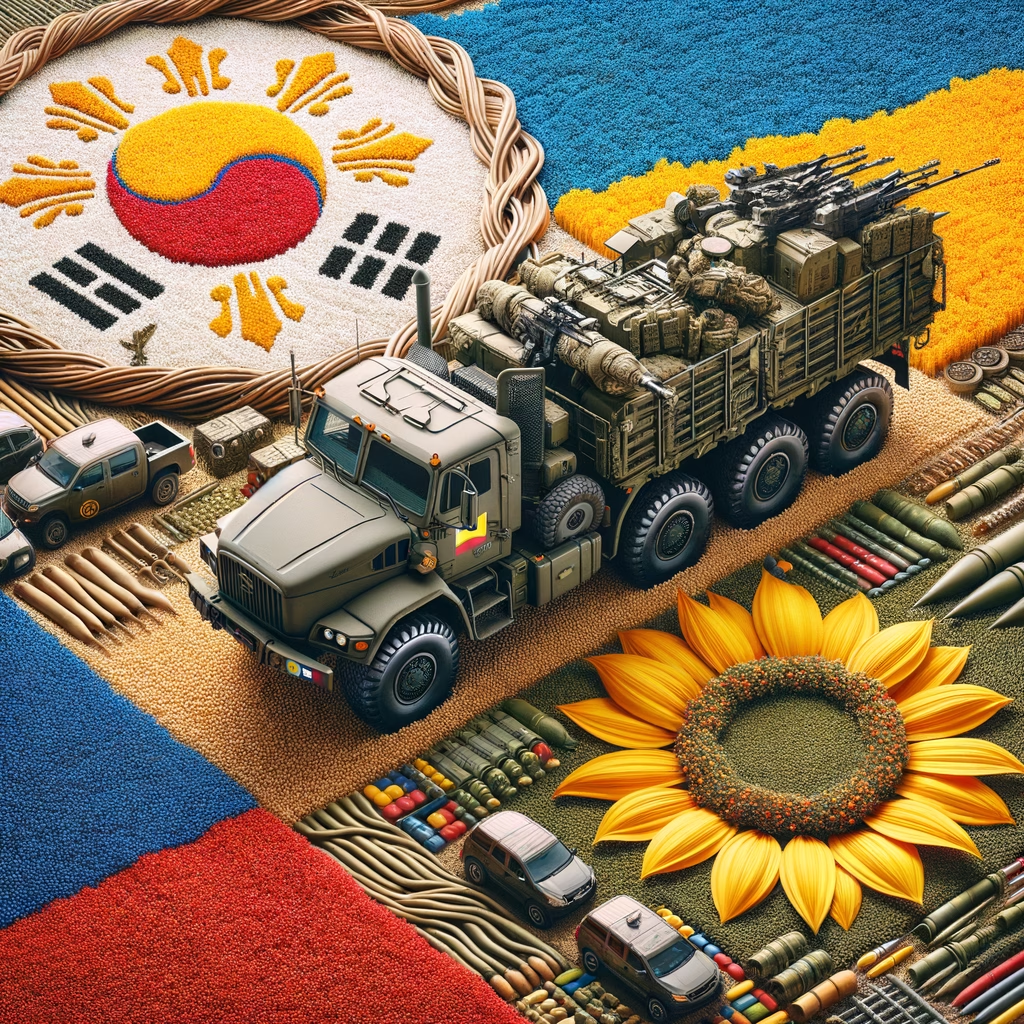
When the Philippine Army recently inked a contract to acquire Daewoo Novus 6×6 military cargo trucks, it joined Ukraine in adopting a South Korean platform that is quietly reshaping the logistics backbone of diverse armed forces. But why are nations on opposite sides of the globe turning to a single supplier for such a critical component of their combat support operations? And what does this shift say about the evolving dynamics of military procurement and interoperability in today’s complex geopolitical landscape?
At first glance, military cargo trucks might seem a mundane element of defense capability compared to jets or missiles. Yet these vehicles play a vital role in mobility, sustainment, and tactical flexibility. The Daewoo Novus 6×6, built by South Korea’s Daewoo Commercial Vehicle Company, offers an 8-10 ton payload capacity, robust off-road performance, and proven reliability—qualities that appeal to armies confronting varied operational challenges.
In Ukraine’s ongoing conflict, marked by the imperative to rapidly transport troops, ammunition, and humanitarian aid across difficult terrain, the Daewoo trucks have become a key asset in combat support operations. Ukrainian defense officials have noted their durability under fire and ease of maintenance as decisive advantages amidst supply chain uncertainties. Similarly, the Philippine Army, which recently awarded a contract to acquire these trucks through a domestic contractor, views the acquisition as a strategic modernization step to bolster its logistical capabilities amid regional security challenges in Southeast Asia.
“Reliable military transport is the linchpin of operational effectiveness,” said Colonel Rodrigo Cortez, logistics officer for the Philippine Army, in a recent interview. “The Daewoo trucks provide a balance of payload, maneuverability, and cost-efficiency that aligns well with our terrain and mission requirements.” This view is echoed by experts who emphasize that medium tactical vehicles like the 6×6 Daewoo Novus strike an optimal balance between capability and affordability for mid-tier military forces.
From a broader perspective, the choice of South Korean-made vehicles also signals shifting patterns in defense supply chains. South Korea’s defense industry has rapidly evolved from domestic focus to becoming an international supplier of combat and support vehicles, leveraging competitive pricing and robust technology. For countries like the Philippines and Ukraine, which face budget constraints and operational urgency, South Korean military trucks represent a pragmatic solution amidst traditional suppliers’ longer lead times and higher costs.
Technologists appreciate the engineering behind the Daewoo Novus platform—featuring a modular chassis, enhanced suspension systems for rugged terrain, and relatively straightforward electronics integration, which simplifies maintenance and interoperability with existing communications gear. Defense analyst Maria Velasquez notes, “The platform’s adaptability allows it to serve multiple roles—from troop transport to mobile command centers—making it a versatile tool for modern armies facing diverse threats.”
Policymakers in both Manila and Kyiv understand that beyond the tactical advantages, these acquisitions symbolize deepening defense ties with South Korea and diversification of military suppliers. For the Philippines, this aligns with efforts to reduce dependency on traditional partners amid a complex regional security environment influenced by the South China Sea disputes. For Ukraine, it demonstrates resilience and a drive to rapidly equip forces from multiple international sources to sustain operations against a large-scale adversary.
However, not all perspectives are uniformly positive. Some defense observers caution that integrating a foreign platform requires substantial training, supply chain adaptation, and potential interoperability challenges with existing equipment—issues that can create short-term hurdles. Additionally, adversaries may take note of enhanced logistical capabilities and adjust tactics accordingly. But these risks appear manageable compared to the operational gains perceived by both armies.
Ultimately, the Philippine and Ukrainian forces’ decision to field South Korean-built military trucks underscores a fundamental truth of modern warfare: logistical agility can be as decisive as firepower. As the fog of global conflict thickens, and budgetary and geopolitical pressures mount, militaries are compelled to find innovative, cost-effective solutions that keep their forces moving, sustained, and ready.
In a world where the battlespace is increasingly defined by speed and supply lines, can traditional military powers afford to overlook the humble cargo truck? Or will these South Korean workhorses become the quiet champions of tomorrow’s conflicts?