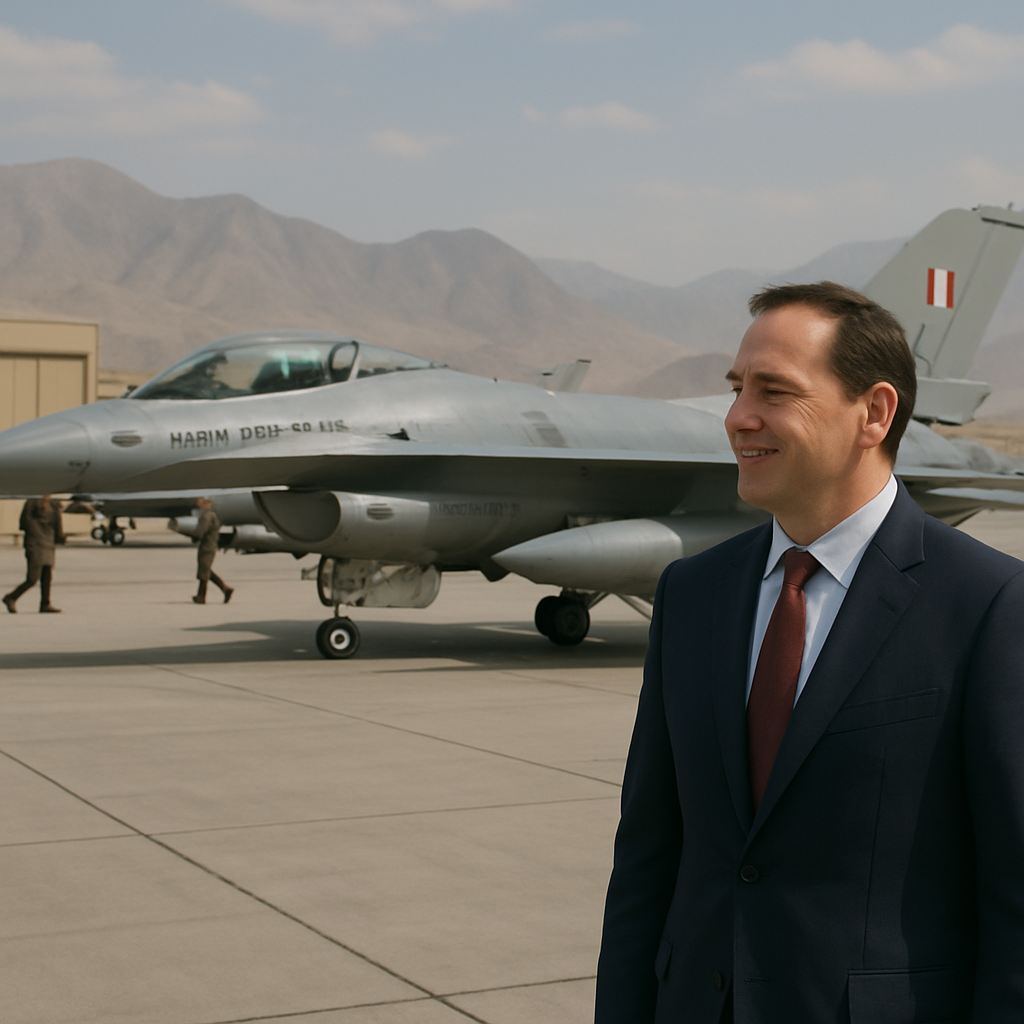
"Peru’s choice of the F-16 underscores the aircraft’s unmatched operational performance and combat record," Lockheed Martin's Mike Shoemaker said as the company hailed what it calls a concluded sale of 12 F-16 Block 70 fighters to Peru.
Lockheed Martin's claim and the contract details
Lockheed Martin issued a press release stating Peru has selected and signed a contract for 12 F-16 Block 70 aircraft. A company spokesperson reiterated the claim on April 24, 2026. The Peruvian Ministry of Economy formally announced a first payment of $462 million for the jets. Lockheed framed the selection as a modernization of Peru’s fighter fleet; the Peruvian Air Force originally requested a fleet of 24 primary combat aircraft, and it remains unclear whether Lockheed will manufacture the remaining 12 if the initial contract proceeds.
The disputed timeline in Lima: April signings, a postponement, and a technical ceremony
Peru’s internal handling of the process shows a complicated chronology. In early March, interim President José María Balcázar Zelada signed a decree designating the fighter project a "military secret," restricting public disclosures. According to a lengthy post by the US Embassy in Lima, on April 14 Lockheed Martin was informed in writing of its selection and a technical signing was scheduled for 7:00 a.m. with a ceremonial signing at 5:00 p.m. on April 17. Peruvian national public radio then broadcast that the signing had been postponed, and Balcázar publicly said he lacked authority to make the deal, arguing it would be poor practice for a transitional government to commit such a large sum to an incoming administration.
The embassy alleges a technical signing between authorized parties did take place on April 20 "with full awareness from the highest levels of the Peruvian government," and press reports indicated that Peruvian Ministry of Defense officials participated in some version of a signing even as the political dispute unfolded.

The cyber insurance questionnaire just landed. Now what?
SOC 2, HIPAA, insurance renewals - someone has to own security strategy. Nubivance provides fractional CISO leadership without the full-time salary.
Get a security leadDiplomatic friction: the US Embassy and Ambassador Bernie Navarro
The US Embassy in Lima has been an active narrator of the sequence. Ambassador Bernie Navarro publicly criticized Lima's apparent postponement, suggesting the Peruvian government was dealing with the United States "in bad faith" and warning that Washington would use "every available tool to protect and promote the prosperity and security of the United States and our region." The embassy cautioned that "the same package will not be available in a couple months, or even a couple of weeks," citing increased supplier costs and competing interest from other countries.
Navarro later issued a more definitive statement saying Peru "honored its commitment" and calling the announced acquisition "a milestone in our 200-year history," adding that the first aircraft are expected to arrive in Peru by 2029–2030.
Political turnover, ministerial resignations, and the electoral calendar
The dispute coincided with notable political turbulence. On April 12 Peru held general elections; a run-off is scheduled for June 7 and the new president is to be sworn in on July 28. The incoming elected president will be the country's third president this year and its tenth since 2016. Amid the F-16 controversy, Peru's defense and foreign ministers resigned; The Associated Press reported the resignations were directly tied to Balcázar’s posture, and that Defense Minister Carlos Díaz wrote in a resignation letter that pausing the purchase "could compromise" Peru’s security. New defense and foreign ministers have since been sworn in.
What this means for the Peruvian Air Force, Lockheed Martin, and US diplomacy
- Peruvian Air Force: The service sought 24 primary combat aircraft; an initial contract for 12 would modernize part of the fleet but leave open whether the original requirement will be fulfilled. The timing of deliveries—first jets expected 2029–2030—creates a multiyear horizon for capability changes.
- Lockheed Martin: The company is treating the deal as won and has publicized the selection and contract signature; however, the embassy’s warning that the "same package will not be available" soon highlights commercial and diplomatic risks if Peru's internal politics delay or reverse formal commitments.
- US diplomacy: The ambassador’s public threat to use "every available tool" and his subsequent insistence that Peru "honored its commitment" indicate a high-profile U.S. interest in ensuring the transaction proceeds, and signal that Washington views program continuity and timely payments as critical to the bilateral relationship.
The facts on paper are clear and the facts in practice remain unsettled. Lockheed says a contract was signed and Peru’s Economy Ministry has recorded a $462 million payment; Peru’s interim president publicly questioned his authority to finalize the deal, two ministers resigned, the US Embassy described both a postponement and a subsequent technical signing, and the ambassador signaled both warning and vindication. With national elections, ministerial turnover, and a diplomatic public push converging in real time, the key question is not whether the F-16 Block 70 is technologically capable or whether Lockheed wants the sale—but whether Peru's incoming political leadership will accept the payments, the schedule, and the commercial terms before supplier costs and competing buyers reshape the offer.