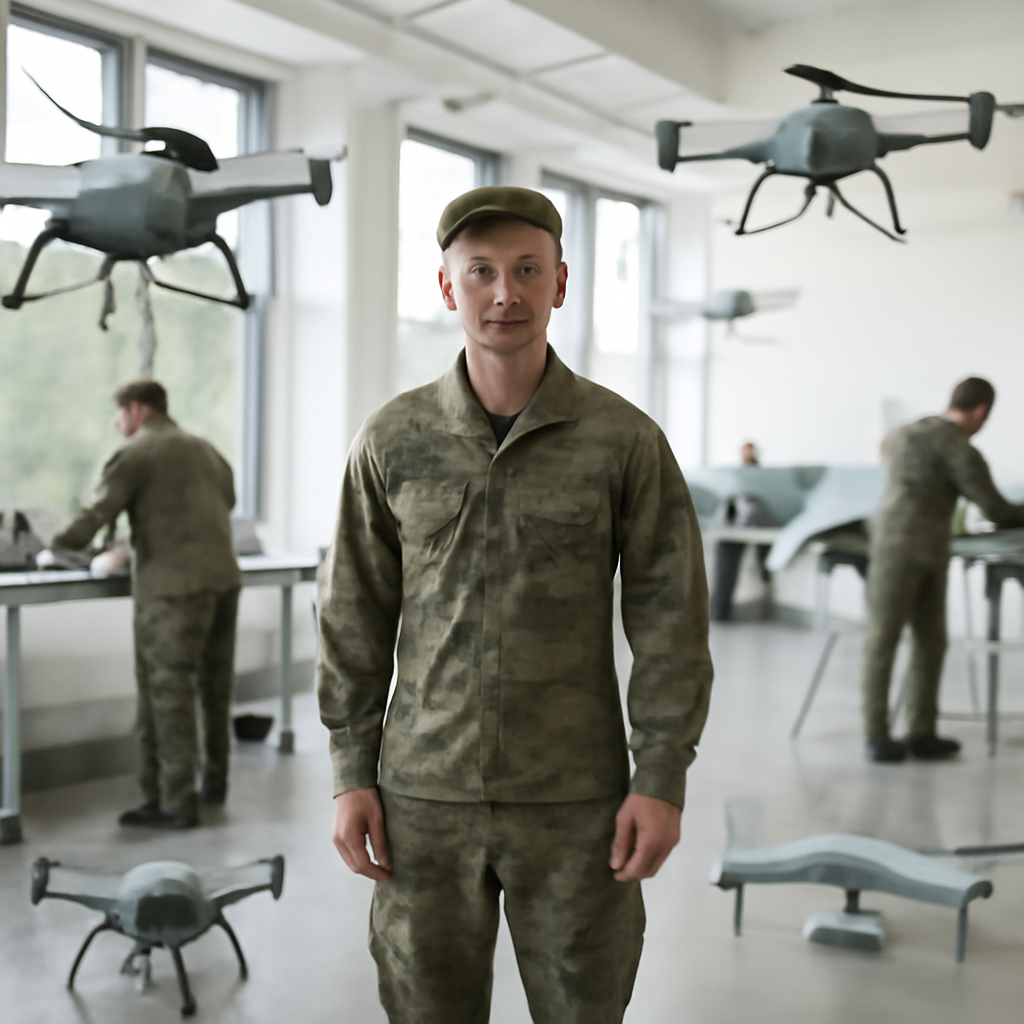
$54.6 billion — a near 24,000 percent jump in one year — is the Pentagon’s bet that autonomous swarms will be central to future conflict, an amount that retired general and former CIA Director David Petraeus called the “largest single commitment to autonomous warfare in history.”
Replicator Initiative’s procurement failures
The Defense Department dissolved the Replicator Initiative in late 2025 after the program “rushed to procure specific, ready-built drone platforms” that suffered persistent technical problems, struggled to integrate with existing command-and-control systems, and proved too expensive and slow to manufacture at scale. Replicator also ran into procurement paralysis: the Pentagon’s vetting found many systems unfinished or purely conceptual, and the effort failed to procure software capable of orchestrating and commanding massive swarms. Lacking a dedicated line-item budget, Replicator was forced into constant reprogramming, and Congress pushed back over a lack of transparency on long-term lifecycle costs.
How DAWG’s $54.6 billion is structured
In the wake of Replicator’s collapse, the department absorbed the effort into the Defense Autonomous Warfare Group (DAWG). Originally allocated $225.9 million in the fiscal year 2026 budget, DAWG’s FY27 funding request from the White House is $54.6 billion — prompting the Pentagon to redesign how those dollars will flow. Only $1 billion of the request is in the standard, highly restricted base budget. The remaining roughly $53 billion has been placed into a flexible future reconciliation pot that gives DAWG up to five years to obligate funds.
The Pentagon frames this split as operational risk management: by avoiding a single-year scramble to obligate billions, DAWG can incrementally allocate money as autonomous technologies mature, prioritize procurement, operations, maintenance, training, and sustainment in the near term, and then scale toward active manufacturing lines while trying to avoid overproduction.

The cyber insurance questionnaire just landed. Now what?
SOC 2, HIPAA, insurance renewals - someone has to own security strategy. Nubivance provides fractional CISO leadership without the full-time salary.
Get a security leadSoftware-first posture and Shield AI’s Hivemind for LUCAS
DAWG marks an architectural shift from Replicator’s hardware-first buys to a software-first approach. Acting Pentagon Comptroller Jules Hurst calls DAWG a “pathfinder,” embedded with private tech firms and live-testing “orchestration tools for autonomy” while providing real-time combat feedback. That software emphasis is visible in the selection of Shield AI to integrate its Hivemind AI pilot software into the military’s new Low-Cost Uncrewed Combat Attack System (LUCAS). DAWG’s priority is to develop sophisticated orchestration software that can be flashed onto inexpensive drone frames, rather than locking funds into a single airframe design.
DoD Directive 3000.09, Congress, and the oversight problem
Lawmakers are already raising alarms about policy readiness. The Pentagon’s foundational AI-weapons policy, DoD Directive 3000.09, mandates “appropriate levels of human judgement,” a requirement that critics say is ill-suited to a scale where orchestration could involve thousands of autonomous systems simultaneously. The source explicitly warns that human-in-the-loop oversight becomes a “mathematical impossibility” at that scale. Beyond policy, the Pentagon faces a doctrinal shortfall: integrating thousands of autonomous systems into a joint force that lacks established doctrine for swarm warfare is a major logistical and operational challenge.
How Defense Secretary Pete Hegseth, U.S. Southern Command, and Congress are positioned
- Defense Secretary Pete Hegseth has moved to create a dedicated Sub‑Unified Command for Autonomous Warfare, signaling an intent to give DAWG institutional teeth rather than let it remain a pilot program.
- U.S. Southern Command has established its own autonomous warfare command and will work closely with DAWG to identify expertise and capabilities needed for operations.
- Congress remains skeptical: lawmakers pushed back on Replicator over lifecycle-cost transparency and are now anxious that DoD Directive 3000.09 is unequipped for large-scale autonomous deployment, while the FY27 $54.6 billion request must still navigate a complicated and uncertain reconciliation process.
DAWG represents a structural course correction: where Replicator was ad hoc and hardware-heavy, the Pentagon is seeking a permanent, software-focused funding line and an institutional home for autonomous warfare. But the source is explicit that funding and execution are different problems. The $54.6 billion request will test whether the department can convert an unprecedented financial commitment into workable software, doctrine, oversight mechanisms, and supply chains — and whether Congress will approve the political mechanism that unlocks the funds. In short, success will be measured less by the size of the pot and more by whether the military can safely and effectively integrate these algorithmic tools into the realities of joint operations.