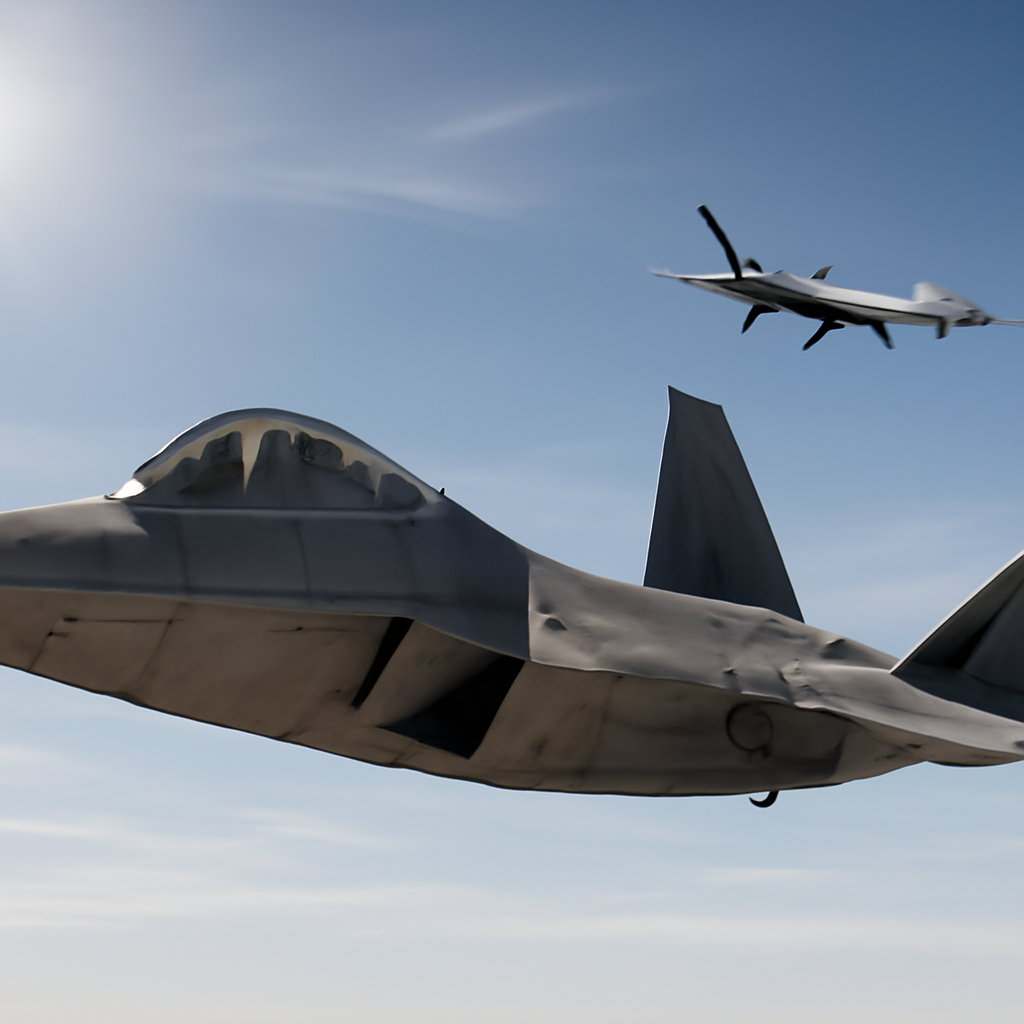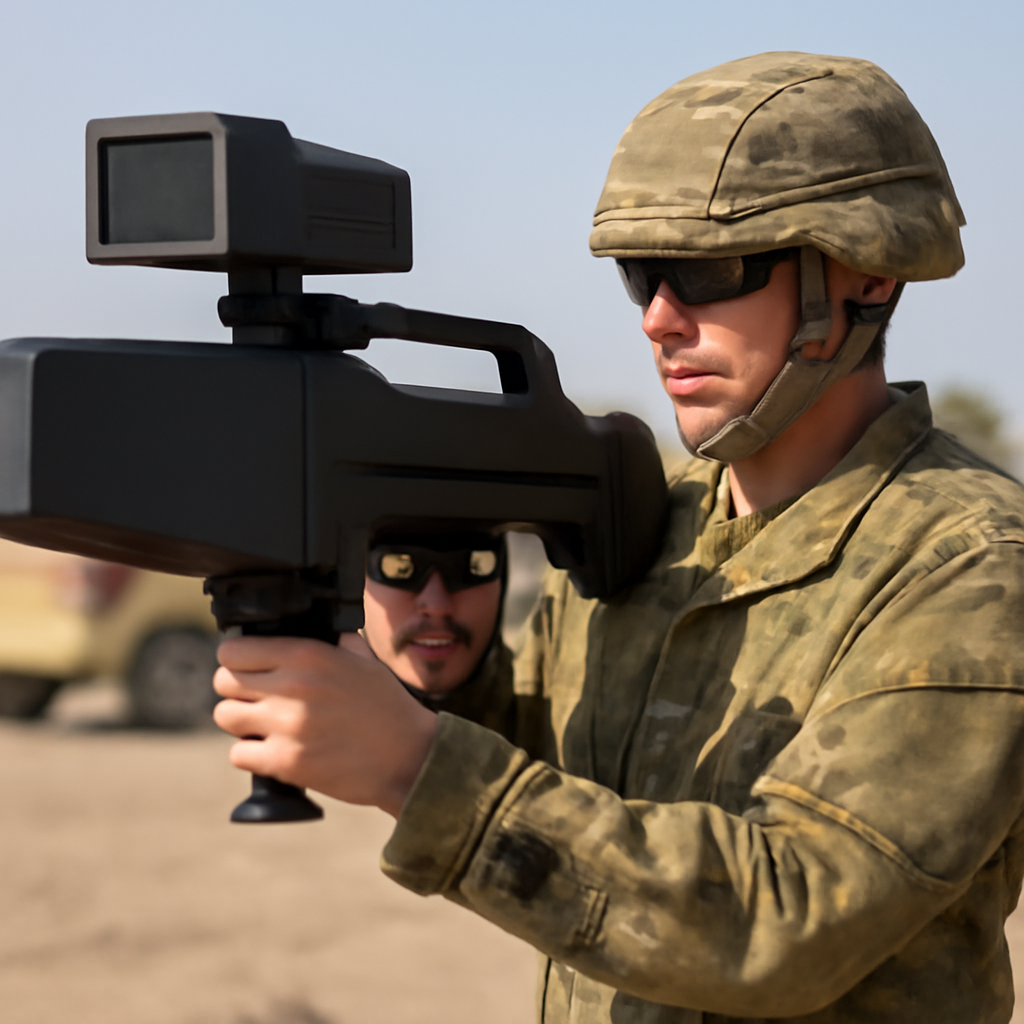
"Drones are the defining threat of our time," Army Brigadier General Matt Ross, director of the Pentagon’s Joint Interagency Task Force 401 (JIATF-401), told lawmakers — a blunt assessment that prefaced a landmark procurement decision.
JIATF-401 and the $500 million, three‑year award
The Pentagon’s JIATF-401 has awarded Perennial Autonomy a three‑year contract with a $500 million ceiling to supply AI‑enabled counter‑drone systems across the US military. The award, the largest single counter‑drone contract the Pentagon has issued to date, sits inside the broader Drone Dominance initiative — a $1.1 billion program launched in December 2025 to equip US forces with cheap, disposable drones. Ukrainian companies were invited to participate in Drone Dominance, and a separate US‑Ukraine memorandum is being drafted to route Ukrainian drone technology into joint ventures on American soil.
Merops interceptor, Bumblebee ISR, and Hornet midrange strike drones
The contract covers three platforms: the Merops interceptor drones, Bumblebee ISR quadcopters, and Hornet midrange strike drones. Perennial’s Merops was developed specifically for Ukrainian forces — the company was originally launched by Eric Schmidt as Project Eagle — and the system has downed thousands of Russian one‑way attack drones over the past two years in Ukraine. All three Perennial systems are already deployed with US forces operating in CENTCOM, where they are being used to counter Iranian Shahed one‑way attack drones in the Gulf theatre.

The cyber insurance questionnaire just landed. Now what?
SOC 2, HIPAA, insurance renewals - someone has to own security strategy. Nubivance provides fractional CISO leadership without the full-time salary.
Get a security leadCost arithmetic and the procurement logic
Cost comparisons lie at the centre of the acquisition. Army Secretary Daniel Driscoll told lawmakers the Merops currently costs roughly $15,000 per unit, while a Shahed costs between $30,000 and $50,000. That gap, officials say, turns the calculus of air defence on its head: an expendable interceptor that costs thousands creates a cost‑positive intercept for the defender, a reversal from scenarios where high‑priced surface‑to‑air missiles were expended against low‑cost attack drones.
Perennial is not the only low‑cost option in contention. Ukrainian-built alternatives cited in the contract discussion include the STRILA at $2,300 per unit and the P1‑SUN, which won Drone Dominance’s initial competition. Those lower price points, the reporting notes, lack Merops’ CENTCOM‑scale track record, leaving procurement decisions to balance price, tested operational performance, and scalability.
CENTCOM deployment, Prince Sultan losses, and Ukraine as a testing ground
The contract validates a procurement model in which systems tested at scale in Ukraine’s four‑year air war against Russian Shaheds are acquired for use in other theatres without the multi‑year development cycles that historically governed US defence procurement. The Pentagon’s turn to Ukrainian solutions followed heavy equipment losses during the Iran war: the US lost over $1.3 billion in equipment at Prince Sultan Air Base in Saudi Arabia — including an E‑3G Sentry airborne early warning aircraft and KC‑135 tankers — before deploying Ukrainian counter‑drone technology. The Pentagon also deployed Ukraine’s Sky Map acoustic detection platform at Prince Sultan, with Ukrainian officers training American warfighters on the system.
What this means for the Pentagon, Ukrainian firms, and CENTCOM
- For the Pentagon: the $500 million contract accelerates a shift toward low‑cost, attritable interceptors as part of the Drone Dominance program and operationalizes a procurement model that privileges battle‑tested, rapidly scalable solutions over multiyear development cycles.
- For Ukrainian firms and partners: the award opens commercial and legal channels — including a draft US‑Ukraine memorandum and manufacturing partnerships in Europe — to move wartime innovations into sustained production; Perennial, for example, has opened manufacturing operations in Germany through a partnership with Twentyfour Industries.
- For CENTCOM and regional forces: Merops, Bumblebee, and Hornet are already in use in the Gulf theatre to counter Iranian Shahed drones, and recent activity includes a separate $5.2 million contract for the Bumblebee V2 awarded in January and Army testing of the Hornet midrange strike drone in March.
The facts in the record point to an active, near‑term reordering of how the US military approaches counter‑drone defence: a high‑value contract to a company that proved its systems in Ukraine, parallel investments in complementary detection tools like Sky Map, and a procurement program explicitly designed to field cheap, expendable platforms. The single largest counter‑drone award to date, the Perennial contract also sets the stage for competition inside NATO procurement, where Merops now competes alongside Ukrainian alternatives such as STRILA and P1‑SUN.
Three concrete developments will be decisive next steps spelled out in the reporting: the drafting and finalisation of the US‑Ukraine memorandum to channel Ukrainian technology into joint ventures, the ramp‑up of Perennial’s European manufacturing with Twentyfour Industries, and NATO‑level procurement choices between tested platforms and lower‑priced newcomers. Which path defence planners choose will determine whether intercept economics remain in favour of attritable drones — or revert to the high‑cost intercept model that this contract explicitly rejects.