The Pentagon is seeking $21 billion in emergency funds to replace strike weapons and air-defense interceptors already used in the war with Iran, officials told Congress as renewed hostilities entered an 11th day on July 21, 2026.
Senate Appropriations Committee hearing: Hegseth and Caine explain the request
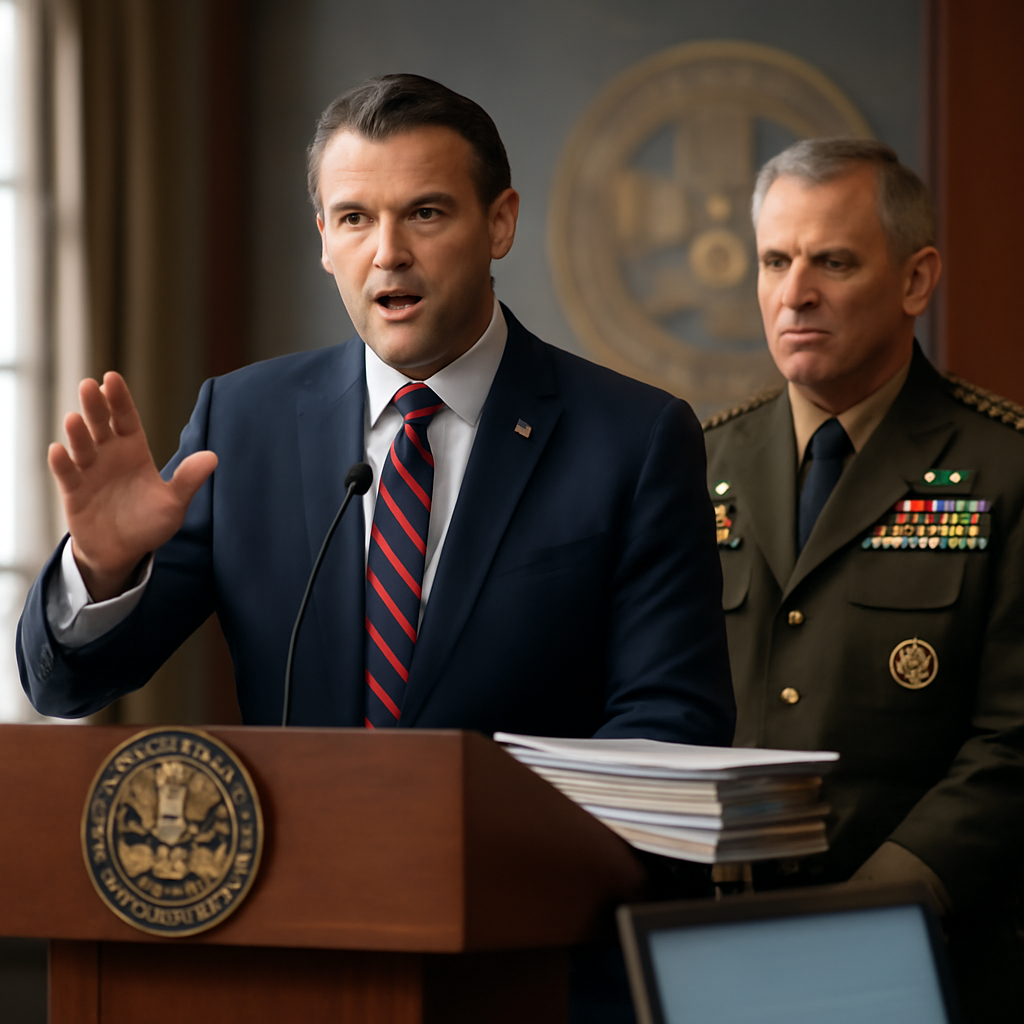
War Secretary Pete Hegseth and Joint Chiefs Chairman Dan Caine appeared before the Senate Appropriations Committee to justify a nearly $90 billion supplemental budget the White House submitted last month. The administration’s request includes $67.1 billion to address “operational costs incurred by the Department of War (DoW) during OEF [Operation Epic Fury], including funding for military personnel and readiness expenses, operational costs to rebuild stocks expended by DOW, classified programs, and other key expenses,” the White House stated. The largest single line item in that submission is $21 billion to rebuild munitions stocks expended in the conflict, including systems such as Patriot air-defense interceptors.
Supply constraints and readiness trade-offs
An official told The Washington Post that “the expansion of U.S. operations will be limited by dwindling stockpiles of air defense and long-range munitions and constraints on the ability to surge more troops and aircraft into the area because of battle damage.” The Washington Post also reported, citing four current and former officials, that the funding crunch is already forcing the Pentagon to limit training and maintenance that underpin military readiness. The Department of Defense is shifting money from large-scale training and facility maintenance to pay for the ongoing war in Iran, a move highlighted publicly in social posts and echoed by senior leaders in testimony to Congress.

The cyber insurance questionnaire just landed. Now what?
SOC 2, HIPAA, insurance renewals - someone has to own security strategy. Nubivance provides fractional CISO leadership without the full-time salary.
Get a security leadRegional attacks, ship strikes, and U.S. casualties
On July 21, Jordanian air-defense systems “intercepted and shot down three Iranian missiles targeting the Kingdom’s territories,” the Jordanian military said, adding the operation resulted in no human injuries or material damage. Jordan’s Muwaffaq Salti Air Base has been “particularly hard hit,” and an attack there previously killed three U.S. troops; 1st Lt. Tyler James Feehan, 25, of Ewa Beach, Hawaii, and Pvt. Isabella Gonzales, 19, of Carrollton, Texas, have been identified while officials continue to identify the remains of a third servicemember. The Pentagon also announced that Sgt. Michael Emmanuel Swinton, 30, of Fayetteville, North Carolina, was killed in action during a controlled detonation of a downed One‑Way Unmanned Aerial System on July 19, 2026, at Erbil Air Base; that incident is under investigation.
Kuwaiti officials reported repeated Iranian strikes on power and water desalination plants that caused fires and took generating units out of service as a precaution. Bahrain activated civil defense sirens after further attacks; the Islamic Revolutionary Guard Corps claimed it struck an Amazon data center in Bahrain via the IRGC-connected Tasnim news agency, a claim TWZ said it could not independently verify.
Maritime attacks have been concentrated in the Strait of Hormuz: three tankers were struck on July 20–21 and, through July 20, TWZ tallied 37 tankers attacked in the Strait — 16 crude oil tankers, 19 oil products tankers, two LNG carriers, and seven additional ships that could not be identified. Separately, Houthi declarations of a Bab al‑Mandeb Strait blockade prompted commercial reactions: a Cosco Shipping vehicle carrier reportedly turned around in the Gulf of Aden, and multiple vessels already in the Red Sea diverted rather than cross toward the Bab al‑Mandeb.
Leadership posture: threats against Pickaxe Mountain and escalating rhetoric
President Donald Trump renewed threats to strike the heavily fortified Iranian facility known as Pickaxe Mountain, saying in a July 21 press appearance that “we’ll be hitting that area very probably pretty soon. There’s not a thing they can do about it... we’ll be hitting that area pretty soon, and very heavily.” He added that reports Iran may be storing centrifuges there “doesn’t mean anything unless they have the material” and that “we follow the material.”
At the White House, Secretary Hegseth told reporters, “Iran’s been given every opportunity to negotiate, to show that they’re reasonable on the Strait of Hormuz—but if they’re going to shoot at commercial shipping, then we’re going to hit them, as the president said, 10 times harder. Every night, we’re degrading them further and further.” The administration’s posture sits alongside diplomatic efforts: the Times of Israel reported that Iran’s Interior Minister Eskandar Momeni began meetings with mediators in Pakistan as diplomats seek to salvage the collapsed interim deal between Iran and the United States.
What this means for the Pentagon, Jordan, and commercial shippers
- Pentagon: faces a choice between replenishing high-cost interceptors and long‑range strike munitions — hence the $21 billion request — and maintaining routine training and facility upkeep, which the Department of Defense has already begun to reprioritize.
- Jordan: continues active air‑defense operations and post‑strike engineering responses at bases such as Muwaffaq Salti; the country must balance defensive measures with political and humanitarian consequences after base attacks that produced U.S. casualties.
- Commercial shippers and carriers (including firms like Cosco named in tracking reports): are already diverting routes around the Red Sea and Gulf bottlenecks, increasing voyage times and creating a risk calculus that could further disrupt regional energy and commercial flows while the conflict continues.
The $21 billion munitions line item has become the immediate arithmetic of this war: it quantifies a replenishment need even as leaders signal a willingness to intensify strikes and diplomats pursue limited off‑ramps. Domestic political pressure, rising energy prices tied to Strait of Hormuz disruptions, and the operational limits described by Pentagon officials will shape whether Congress approves the supplemental and how the conflict evolves in the coming days.