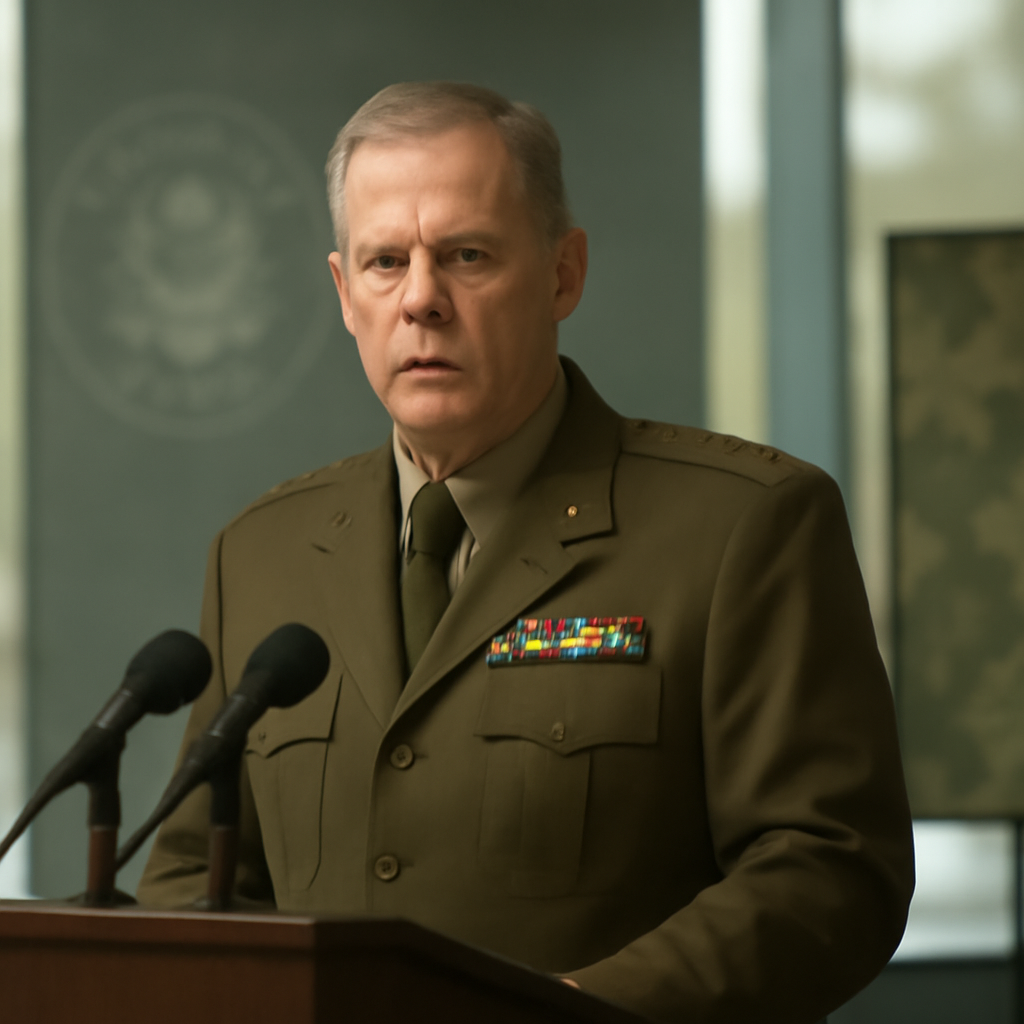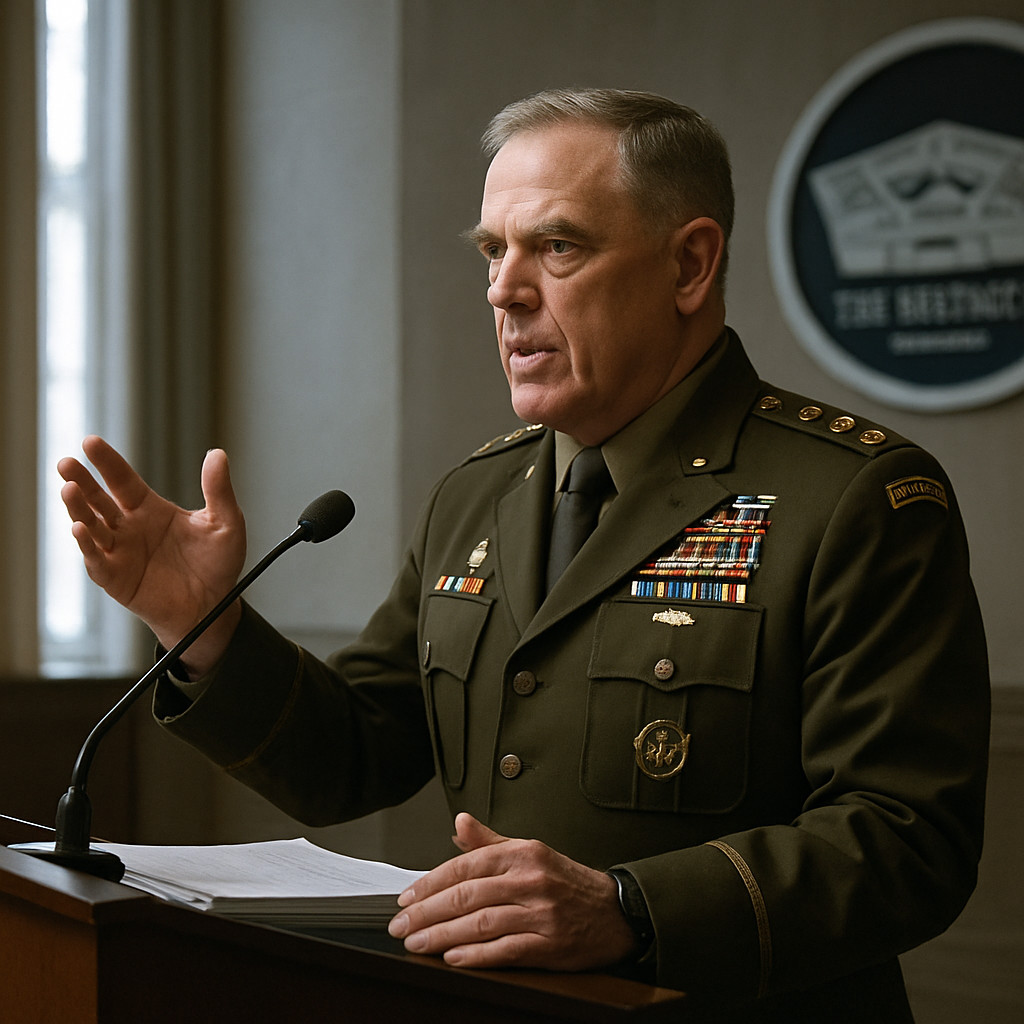
"Most of that is munitions," Jules "Jay" Hurst said, placing a $25 billion price tag on two months of military operations against Iran — a figure the Pentagon presented to a skeptical Congress as it prepares a supplemental budget request.
Jules "Jay" Hurst on the $25 billion estimate
Speaking to the House Armed Services Committee, Hurst — who is performing the duties of the Pentagon comptroller — told lawmakers the $25 billion total covers two months of operations and that "most of that is munitions." He added that part of the total reflects operations and maintenance and equipment replacement, and said the department will "formulate a supplemental bill through the White House" once it completes a "full assessment of the cost of the conflict."
Hurst also addressed an earlier public figure: he had previously described the first week of the war as costing roughly in the “ballpark” of a reported $11.3 billion, and at the hearing he explained that "the most intense phase of the conflict was obviously the beginning, that’s when most of the munitions were used."
Defense Secretary Pete Hegseth’s public defense
Defense Secretary Pete Hegseth confirmed the $25 billion number during the hearing, saying the outlay was "worth" it to stop Iran's nuclear weapon ambitions. When Rep. Ro Khanna, D-Calif., asked whether the estimate included base damage, munitions expenditures and equipment losses, Hegseth said, "That number right now reflects the total cost that we’re seeing," and deferred any detailed accounting to the comptroller for adjustments.
Hegseth also faced questions about recent personnel moves, including the firing of the Army’s 41st Chief of Staff Gen. Randy George and Secretary of the Navy John Phelan; Hegseth repeatedly declined to give a direct rationale and said it was time for "new leadership and new direction" in both cases.

This site is the portfolio.
OSINTSights runs on Cloudflare Workers, D1, R2, and Vectorize, with an AI pipeline on Hetzner ARM. Nubivance designed, built, and operates it. We do the same for clients.
See what we buildLawmakers and outside analysts voice skepticism
The $25 billion figure met immediate skepticism from members of Congress and outside analysts. Rep. George Whitesides, D-Calif., said he found it "frankly pretty surprising" that an earlier media report suggested a supplemental could total $200 billion — a figure Hegseth did not dispute in March — and Hurst told lawmakers that the $200 billion estimate was "not accurate" and that the department "doesn’t have an estimate for the cost of the supplemental yet."
On social media, Kelly Grieco, a senior fellow at the Stimson Center, wrote that "This can’t be the full bill," citing a recent Center for Strategic and International Studies report that placed key munitions costs between $17 billion and $25 billion. Grieco added that confirmed platform losses — specifically naming E-3s, radars, KC-135s and F-15s — would add "at least another $5 billion," before counting operational costs and base damage.
How the FY27 budget debate framed the hearing
The hearing occurred against the backdrop of the administration’s fiscal 2027 plan to spend $1.5 trillion on the Pentagon: $1.15 trillion in the base budget request plus an additional $350 billion proposed in a forthcoming reconciliation bill. Republicans broadly expressed support for the request and emphasized munitions procurement; Chairman Mike Rogers, R-Ala., highlighted a $70.5 billion line to buy missiles and warned that "our global munition stockpiles are low" and industrial capacity is limited.
Committee top Democrat Rep. Adam Smith from Washington pushed back on scale, questioning whether the increased spending would be well spent and urging greater attention to how funds are allocated as much as how much is requested.
How House Armed Services Committee members, the Pentagon comptroller, and the defense industrial base will respond
- House Armed Services Committee members: Expect continued scrutiny on the composition of the $25 billion figure, with follow-up questioning on whether the number includes munitions, platform losses and base damage; a Senate hearing on Thursday was flagged as the next forum for debate.
- The Pentagon comptroller (Jules "Jay" Hurst): Will lead the department’s effort to produce a formal supplemental request "once we have a full assessment of the cost of the conflict," and to reconcile earlier week-one estimates with the two-month total.
- The defense industrial base: Faces pressure to scale munitions production and address "very little industrial capacity" concerns highlighted during the hearing, particularly if procurement lines such as the $70.5 billion missile buy proceed as planned.
The public record from the April hearing leaves two concrete near-term steps: the Pentagon will complete a "full assessment" of war costs to inform a supplemental budget request, and department leaders will face a Senate session where bipartisan skepticism about the figures is expected. The department also disclosed administrative updates: after criticism from defense appropriators, Hegseth acknowledged $400 million in previously withheld Ukraine funds had been released "as of yesterday," and Hurst explained the delay was tied to a legal review because the money was not delegated under the Ukraine Security Assistance Initiative.
Updated details from the hearing were added on 4/29/26 at 4:47 pm.