"Because if you're going to sustain maneuver, you've got to have high energy thrust to get out of the way of threats…to look at threats to get out of the way of debris." Jim Bridenstine delivered that line while describing why his company is taking a leap from Maryland to Tulsa — and why a Midwestern test stand matters as much as a factory floor.
Quantum Space’s Tulsa bet: satellites, thrust, and a 2027 flight
Quantum Space, a Maryland-based company, is building its first satellite and simultaneously planning a large manufacturing facility in Tulsa. The decision is driven not by tax breaks or proximity to finance, but by a local capability: a hypergolic test stand in Oklahoma that will be owned and operated by Agile Space Industries for in-space propulsion testing.
“Those are the thrusters that we're going to use on Ranger and they're going to be tested there at the hypergolic test facility,” Quantum Space CEO Jim Bridenstine told Defense One. Ranger, which Bridenstine described as able to "maneuver quickly in orbit using technologies currently under development," is scheduled to fly in 2027. Bridenstine also said the company already has a government customer for the Ranger Prime satellite.
Bridenstine framed the capability in operational terms: sustained maneuver requires “high energy thrust” to evade threats and debris, and Ranger will use thrust at “levels and capabilities that others in the market don't have.” That thrust, he emphasized, must be tested — hence Tulsa.
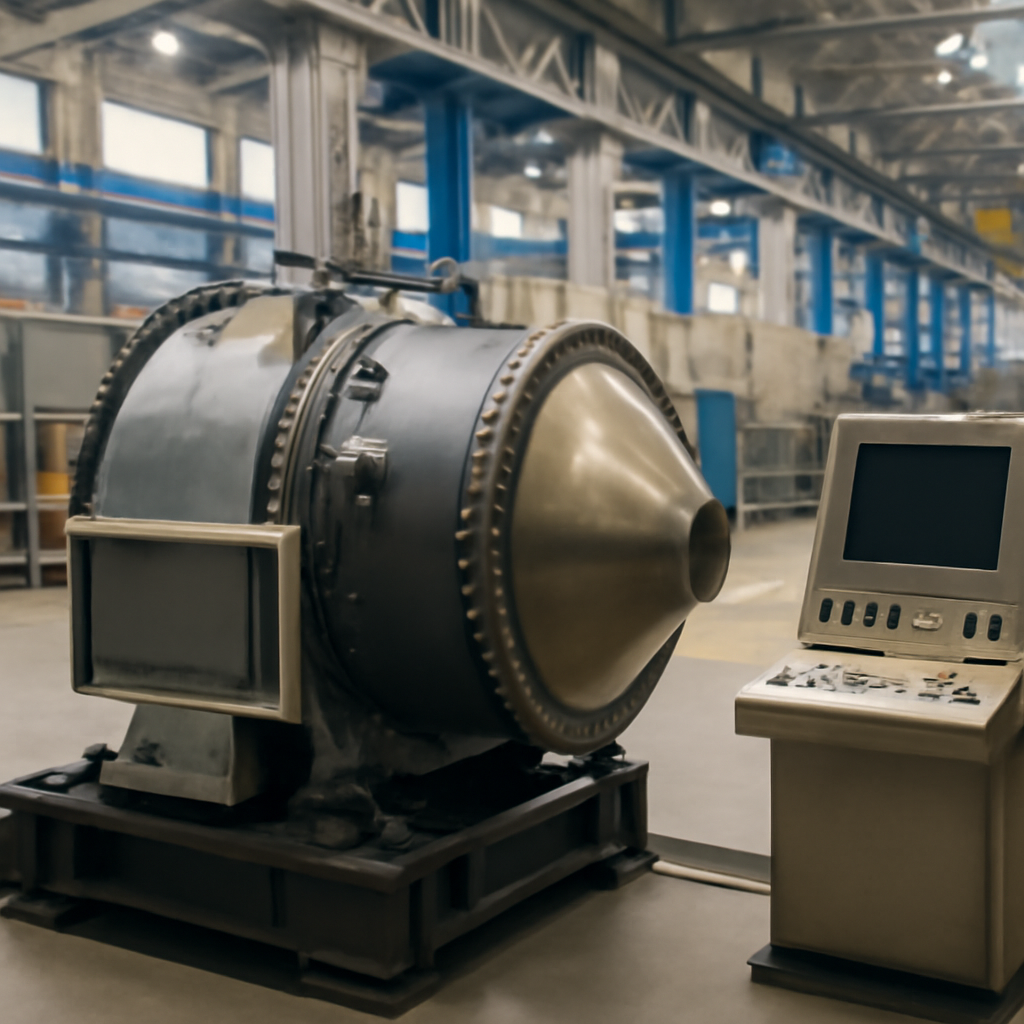
Agile Space Industries’ hypergolic test stand: a specific facility driving site selection
The presence of the hypergolic test stand — explicitly tied to Agile Space Industries — is central to Quantum Space’s site choice. The source states the stand “will be owned and operated by Agile Space Industries” and that it is “for in-space propulsion.” In short: the test fixture is not an abstract capability but a named asset that aligns directly with Ranger’s propulsion requirements.
For a spacecraft designed to move fast and intentionally in orbit, access to a local hypergolic test facility changes the calculus on where to build, how to iterate systems, and how rapidly to move from prototype to flight hardware.

Audit-ready is a season. It shouldn't be.
Evidence in spreadsheets, controls drifting between audits, frameworks multiplying on flat headcount. Nubivance runs continuous compliance on Rapid7 Cyber GRC - SOC 2, HIPAA, ISO 27001, PCI, CMMC.
End the scrambleMichael Cadenazzi: steer private capital toward the “dirty” tiers
Michael Cadenazzi, the Pentagon’s industrial policy chief, used the Special Competitive Studies Project’s annual AI Expo to argue that private capital should flow beyond soft, high-return ventures into heavy industry and supply-chain basics. “We'd love for industry to invest in the lower tiers of the supply chain. There are a lot of things that are dirty and explosive and made of metal, that are not exciting investments and aren't going to generate your 60 percent [rate of] returns,” Cadenazzi said.
He added bluntly: “I can't fire [software-as-a-service] rounds and fight, sorry. Maybe in 80 years or so. Right now, I still need things that are rocket propelled and explode.” Cadenazzi called for investments into minerals and material sciences and for deploying AI “to fine-tune what’s happening on the factory floor, and not worry so much about giving me the next dashboard. I got plenty of dashboards.”
On rare-earths processing, he noted the problem is not only geopolitical dependence but environmental dirtiness: “It's chemicals. There's a lot of waste. And so what we need to do is actually get the next wave of science developed to go ahead and do that in a cleaner way.”
Anduril’s $5 billion Series H and other operational moves
In private-capital news, Anduril raised $5 billion in a Series H funding round led by Thrive Capital and Andreessen Horowitz, and the company is now valued at $61 billion, according to the source. The brief also reports discrete operational tests and personnel moves: an Army medical brigade in the 18th Airborne Corps tested autonomous medical resupply using Soaring’s M25 drones; former Army CIO Leonel Garciga joined Booz Allen Hamilton as a senior executive advisor; and the USS Cleveland (LCS 31), the final Freedom-class littoral combat ship, will be commissioned on May 16, with a livestream available.
What this means for legacy factories, Pentagon procurement, and investors
- Legacy factories and factory managers: Cadenazzi’s remarks point to pressure — and funding opportunity — to deploy AI on production floors that haven’t seen upgrades in decades. The call is for practical automation and process-improvement tools rather than “another dashboard.”
- Pentagon procurement and industrial policy planners: Quantum Space’s choice of Tulsa highlights how government-linked infrastructure (the Agile Space hypergolic stand) can shape where defense-capable firms locate manufacturing and testing. The Pentagon’s appetite for on-orbit maneuver capabilities and its industrial-policy messaging about supply chains create complementary levers.
- Investors and venture capital: The Anduril raise underscores that large pools of private capital remain willing to underwrite defense-oriented startups; Cadenazzi’s plea is for some of that capital to move down the stack into minerals, materials, castings, and other lower-margin but mission-critical capabilities.
Taken together, the items in this brief sketch a simple linkage: site-specific test infrastructure attracts specialized manufacturers (Quantum Space and Tulsa), policy leaders are publicly urging capital toward the gritty foundations of defense production, and capital flows — exemplified by Anduril’s $5 billion round — continue to reshape the supplier base. The immediate markers to watch are Ranger’s planned 2027 flight and whether public and private money shift from dashboards and software to the “dirty” manufacturing that Cadenazzi says the country still needs.