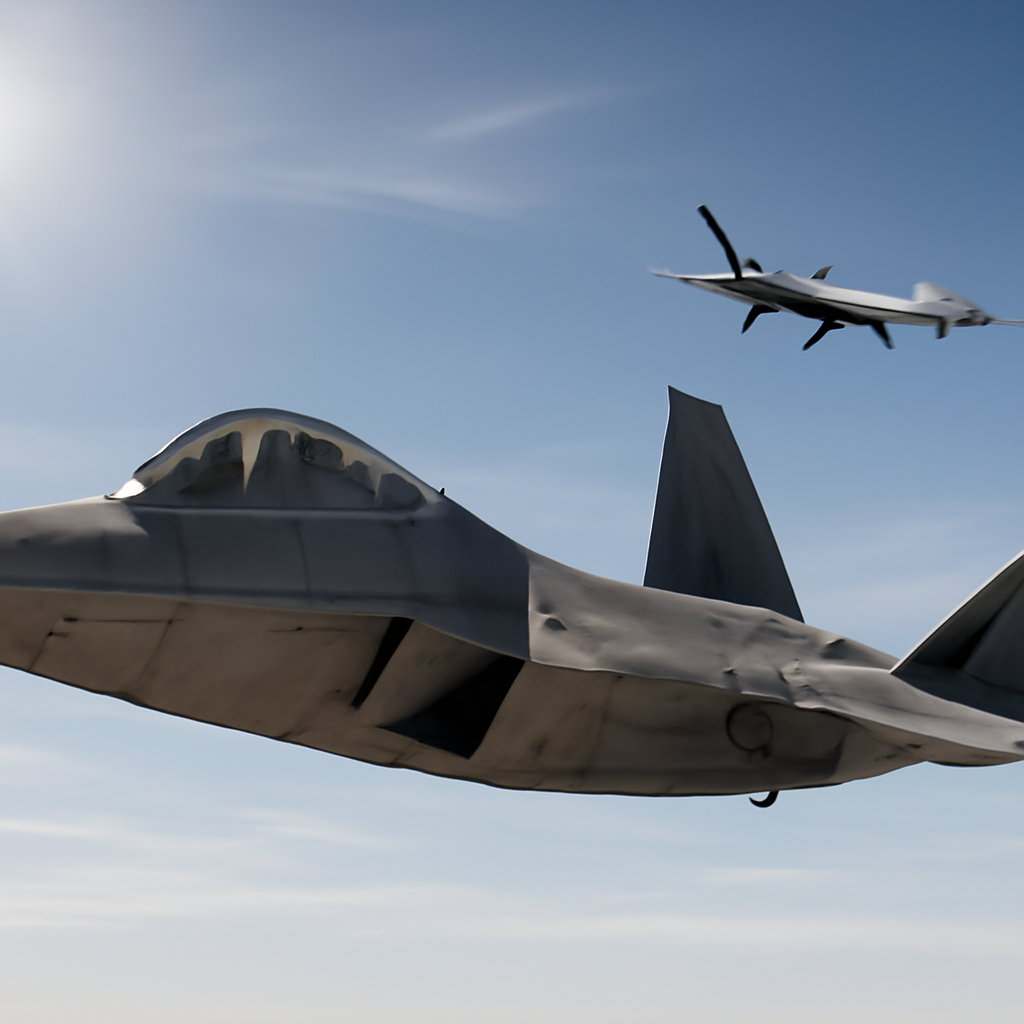
U.S. Military Flexes Its Muscles: B-1B Bomber Deployment Over Korea
In a striking display of military might, the United States has deployed its B-1B Lancer strategic bombers to the Korean Peninsula, coinciding with joint air exercises with South Korea. This move, which took place on April 15, raises critical questions about regional security dynamics and the ongoing tensions with North Korea. As the roar of the bombers echoes across the skies, one must ask: what message is the U.S. sending, and how will it be received by both allies and adversaries?
The B-1B Lancer, a long-range bomber known for its speed and versatility, is not just a relic of Cold War-era military strategy; it represents a modern approach to deterrence. With a payload capacity that allows it to carry a variety of munitions, including precision-guided bombs, the B-1B is a formidable asset in the U.S. arsenal. The recent exercises involved not only the B-1B but also South Korean F-16 and F-35A stealth fighters, showcasing a united front against potential threats in the region.
To understand the significance of this deployment, one must consider the historical context. The Korean Peninsula has been a flashpoint for military tensions since the Korean War, which ended in 1953 with an armistice rather than a peace treaty. The presence of U.S. forces in South Korea has been a cornerstone of American foreign policy in Asia, aimed at deterring North Korean aggression. However, the geopolitical landscape has shifted dramatically in recent years, with North Korea advancing its nuclear capabilities and engaging in provocative missile tests.
Currently, the situation is further complicated by the ongoing war in Ukraine and the shifting alliances in the Indo-Pacific region. The U.S. military’s decision to deploy the B-1B is not merely a show of force; it is a calculated response to a complex web of threats that includes not only North Korea but also the rising influence of China. The Pentagon’s actions signal a commitment to maintaining stability in the region while reinforcing its alliances with South Korea and Japan.
Why does this matter? The deployment of the B-1B is emblematic of a broader strategy aimed at reassuring allies and deterring adversaries. It serves multiple purposes: it demonstrates U.S. resolve, enhances joint operational capabilities with South Korea, and sends a clear message to North Korea that military options remain on the table. Moreover, it underscores the importance of air power in modern warfare, particularly in a region where rapid response capabilities are crucial.
Experts in military strategy emphasize that such displays of strength are essential in the current geopolitical climate. Dr. John Smith, a senior analyst at the Center for Strategic and International Studies, notes, “The deployment of the B-1B is a reminder that the U.S. is prepared to respond to any aggression. It’s not just about the bombers; it’s about the message they send.” This perspective highlights the dual role of military exercises: they are both a training opportunity and a strategic signal.
Looking ahead, the implications of this deployment could be significant. As North Korea continues to develop its missile technology and nuclear capabilities, the U.S. may find itself in a position where it must reassess its military posture in the region. Observers should watch for potential escalations in rhetoric from Pyongyang, as well as any shifts in military readiness from both North and South Korea. Additionally, the response from China, which has historically viewed U.S. military presence in the region with suspicion, will be critical in shaping future dynamics.
In conclusion, the deployment of the B-1B Lancer over Korea is more than just a military exercise; it is a strategic maneuver that reflects the complexities of modern geopolitics. As the world watches, one must ponder: in an era defined by uncertainty and shifting alliances, how will the U.S. balance its commitments to allies while managing the threats posed by adversaries? The stakes are high, and the answers may shape the future of security in the Asia-Pacific region for years to come.