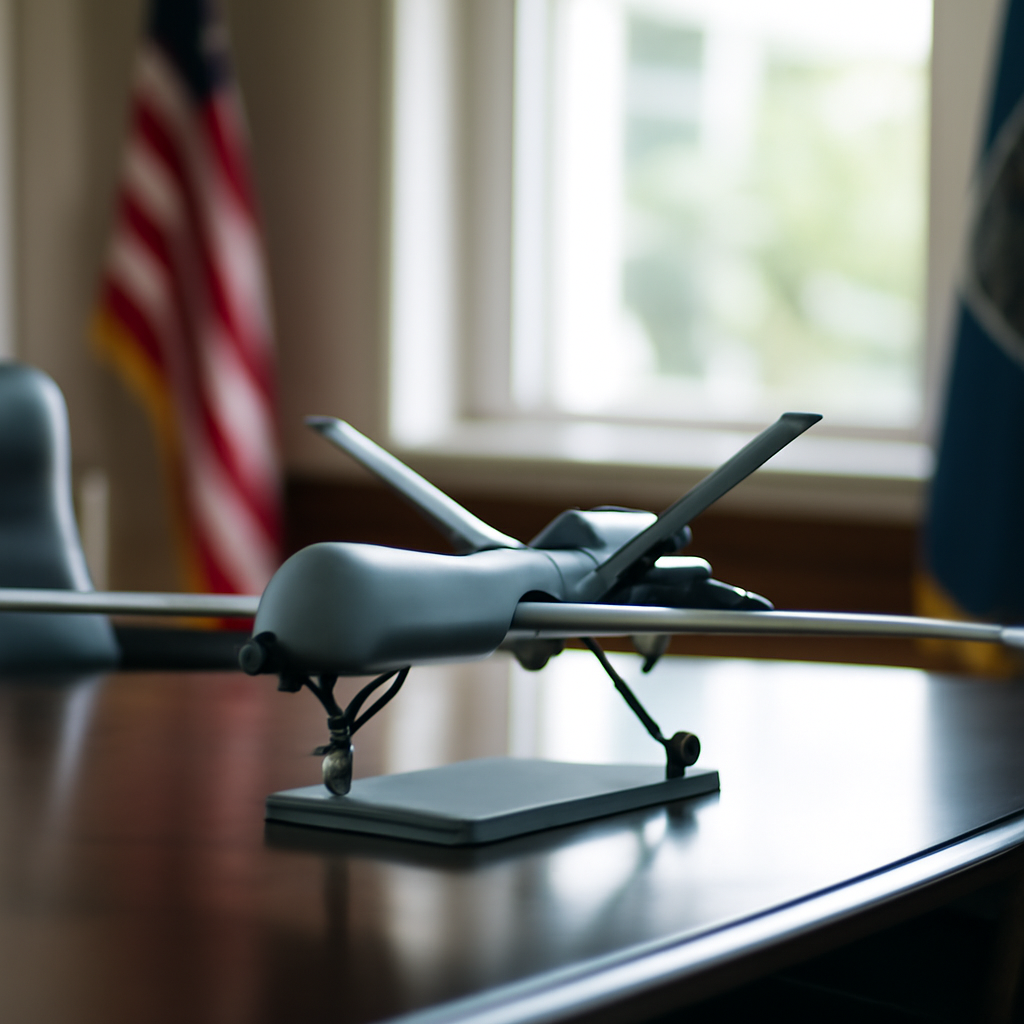
“Unmanned and autonomous systems are a strategic priority” and “essential to maintaining decisive military advantage,” Defense Secretary Pete Hegseth wrote in a memo dated June 29 that was released Wednesday.
DRPM-UxS: a single overseer for all unmanned air, land, and sea efforts
Hegseth’s memo establishes a new senior office — the direct reporting portfolio manager for unmanned offensive and defensive systems, or DRPM‑UxS — to consolidate oversight of the Pentagon’s drone and counter‑drone activities across air, land, and sea domains. The DRPM‑UxS will report directly to the deputy defense secretary and assume responsibility for “all missions, functions, and associated programmatic funding lines currently assigned,” effective immediately, the memo states.
Programs and organizations folded under the DRPM‑UxS
The memo names specific organizations and efforts that will sit inside the new portfolio. Joint Interagency Task Force 401 (JIATF‑401) and the Defense Autonomous Warfare Group (DAWG) will be “dual‑hatted as elements under the DRPM‑UxS.” The portfolio will also encompass initiatives now run by the Defense Innovation Unit (DIU), military departments, and other components. DIU is designated as the Pentagon’s primary liaison with commercial companies for all “unmanned and autonomous systems programs within the DRPM‑UxS portfolio.”

This site is the portfolio.
OSINTSights runs on Cloudflare Workers, D1, R2, and Vectorize, with an AI pipeline on Hetzner ARM. Nubivance designed, built, and operates it. We do the same for clients.
See what we buildControl of marketplaces, staffing, and program oversight
The memo gives the DRPM authority over existing and future procurement marketplaces where drones and counter‑drone systems are bought, a role similar to marketplaces already operated by the Army and Navy. New marketplaces may only be created with DRPM‑UxS approval. The DRPM’s first tasks include hiring management, legal, IT, contracting staff; creating an organizational chart defining responsibilities and authorities across the portfolio; and cataloging all service and component programs that will fall under the office “to include cost, schedule, resourcing, personnel, industry performance, and operational impacts.” The DRPM must also develop an implementation plan and provide regular progress and program updates to the deputy defense secretary.
Governance: an executive board chaired by the Pentagon’s no. 2
The memo creates an executive board to oversee the new portfolio. The board will be chaired by the deputy defense secretary and include the vice chairman of the Joint Chiefs, the military department heads, and the defense undersecretaries for acquisition and for research and engineering. This governance layer is explicitly tied to the DRPM’s role in steering programmatic funding lines and operational priorities.
Parallels with the Air Force DRPM move and remaining open questions
The reorganization mirrors an Air Force restructuring completed late last year that collapsed several large programs — from the B‑21 to Sentinel and Minuteman III — under a direct reporting portfolio manager for critical major weapons systems. That Air Force change followed the Pentagon’s acquisitions overhaul and placed Gen. Dale White in a Senate‑confirmed seat; Air Force officials said that role helped stabilize programs such as the Sentinel intercontinental ballistic missile, which underwent a Nunn‑McCurdy Act review in 2024 for massive cost overruns. By analogy, the memo suggests Hegseth’s DRPM‑UxS is intended to streamline and speed how the Pentagon and military services buy, develop, and field unmanned systems. The memo does not state whether the DRPM‑UxS will require Senate confirmation, nor does it name who will fill the position.
What this means for the military services, DIU, and commercial vendors
- Military services: Service acquisition and program offices will need to map their unmanned and autonomous efforts into the DRPM‑UxS portfolio, including sharing program cost, schedule, resourcing, personnel, and operational impact data as directed by the memo.
- DIU: The Defense Innovation Unit is assigned the role of primary commercial liaison for DRPM‑UxS programs, positioning DIU as the Pentagon’s conduit to industry for unmanned and autonomous system buys under the new portfolio.
- Commercial vendors and marketplaces: Existing Army and Navy marketplaces remain reference points, but new marketplaces for drones and counterdrone systems cannot be created without DRPM‑UxS approval, concentrating authority over where and how the Pentagon buys these systems.
The memo arrives as the Pentagon accelerates plans to use drones across the services and as some lawmakers have proposed an all‑robotics combatant command. Hegseth’s move centralizes authority and program funding under a single office and a high‑level executive board; it promises faster decision cycles and unified industry engagement, but the memo leaves open who will lead the office and whether the post will be subject to Senate confirmation. Implementation details — the staffing, the portfolio list, and the marketplace rules — will determine how quickly that promise translates into action.