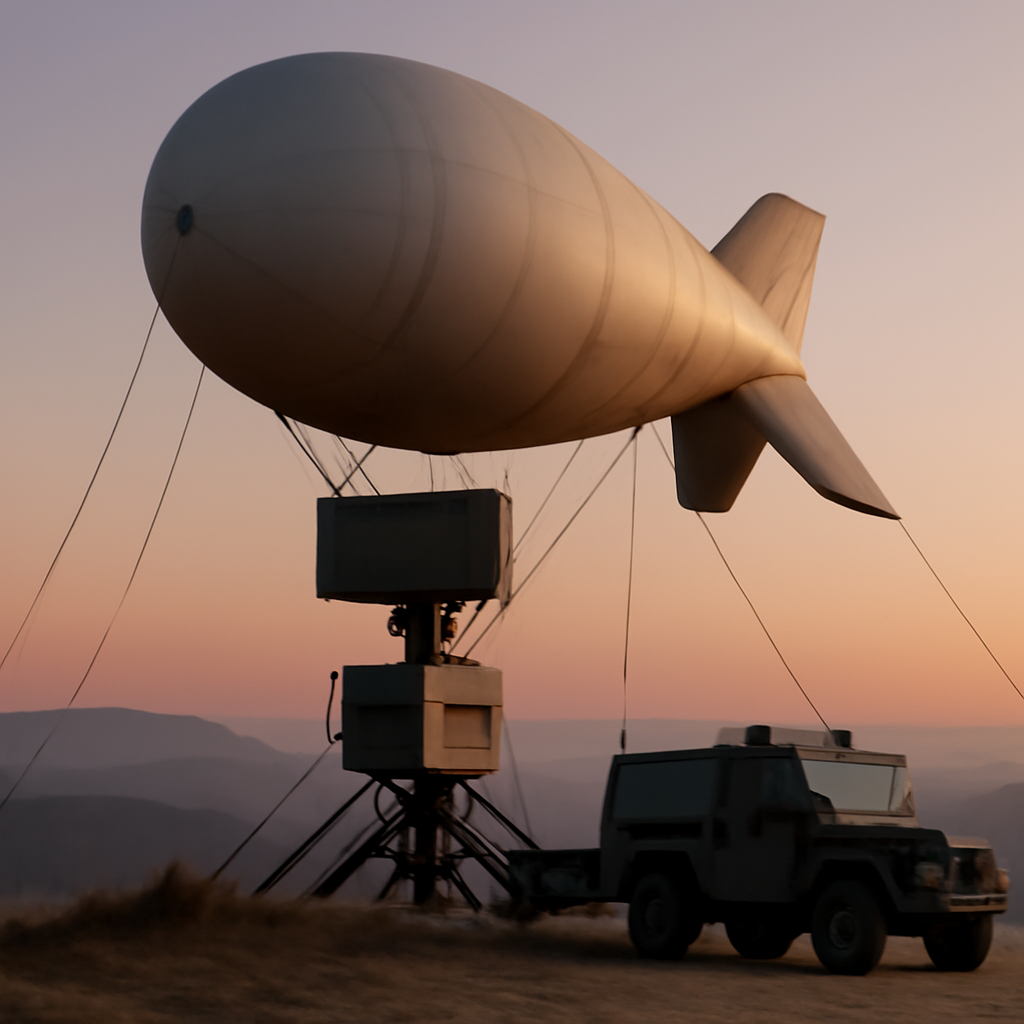
The Pakistan Army Rocket Force Command has publicly test-fired the Fatah IV ground-launched cruise missile with an air-burst warhead, scoring a near‑direct hit on an inflatable decoy of a Gravestone radar associated with the S-400 — the first public demonstration of that warhead configuration in Pakistan’s missile tests.
Fatah IV and the ARFC's scaled-up cruise missile effort
That test was presented on Defence Uncut as evidence of a broader, deliberate industrial logic: NESCOM and the Pakistan Army Rocket Force Command (ARFC) are standardizing inputs across a family of cruise missiles to drive down unit costs and permit higher production tempo. Panelists Bilal Khan and Arslan Khan traced the Fatah IV’s lineage to the Harba naval cruise missile rather than a clean-sheet design, highlighting the removal of TERCOM and DSMAC terrain-matching guidance used in the Babur series in favour of lower cost and scalability. Common components discussed include an imaging infrared (IIR) terminal seeker deployed across the Fatah IV, the Ra’ad air-launched cruise missile, and the Taimur series; a domestically produced miniature turbojet engine; and shared electronic‑countermeasure hardening showcased at IDEAS 2024.
Z-10ME and Pakistan Army Aviation's doctrinal pause
A video showing a Pakistan Army Z-10ME equipped with a millimetric‑wave radar and the ability to launch cruise missiles introduced new capabilities — network integration, top‑attack profiles, and radar‑equipped rotary‑wing operations. Yet no public follow‑on order has appeared more than a year after the platform entered service. The hosts interpreted this less as rejection than as institutional recalibration: Army Aviation is rethinking how attack helicopters fit into a doctrine that may emphasize high‑value, niche roles, manned‑unmanned teaming, and whether attack platforms should serve as command nodes for drone swarms. The panel also suggested the public showcase could be a competitive signal to vendors or leverage to speed the release of other helicopter procurements such as the T‑129 ATAK from Turkey. Underpinning these choices is a persistent fleet‑commonality issue — Pakistan’s mix of Puma transports, Bell 412s, and Mi‑171s complicates sustainment and points toward benefits from shared engine and airframe lineages.

This site is the portfolio.
OSINTSights runs on Cloudflare Workers, D1, R2, and Vectorize, with an AI pipeline on Hetzner ARM. Nubivance designed, built, and operates it. We do the same for clients.
See what we buildJF-17 evolution: Block 3 interim, Block 4 / PFX Alpha as destination
The JF‑17 remains central to the Pakistan Air Force roadmap, but Defence Uncut framed Block 3 as an interim configuration. The panel expects a Block 4 — likely the programme the PAF refers to as PFX Alpha — to deliver the platform’s definitive localization: more domestic avionics, a locally developed airborne AESA radar building on the KLJ‑7A selection, new electronic warfare suites, indigenous sensors, and a new engine reportedly evaluated as the WS‑21. Block 4 would underpin midlife upgrades for Block 2 airframes, while Block 1 examples are likely to be retired because of early design compromises. The hosts noted role specialization is crystallizing: the JF‑17 as the primary strike platform integrating Taimur, Ra’ad, and AZB munitions; the J‑10CE focused on air‑to‑air work, consistent with how Pakistan employed it during May 2025 operations.
PAF training gap — JF-17 as a LIFT and the sequencing question
Arguably the programme’s most consequential choice is not a weapon system but the training ecosystem. The PAF’s future fighter fleet will be almost entirely 4th‑ to 4.5‑generation aircraft with AESA radars, tactical data links, BVR missiles, and precision weapons — yet the basic training fleet remains T‑37s and K‑8 Karakorums. Bilal Khan argued that operational conversion units are forced to teach fundamentals that proper Lead‑In Fighter Trainers (LIFTs) should deliver. The original LIFT requirement called for AESA radar, tactical data link, BVR capability and precision strike; candidates once evaluated included the L‑15B, T‑50, and M‑346. Both hosts suggested a pragmatic alternative: repurpose the JF‑17 as a LIFT variant. That approach would exploit existing airframes, the domestic support base, and NESCOM’s capabilities to field live‑virtual‑constructive (LVC) training, while freeing procurement funds to build simulators and infrastructure. Bilal Khan emphasized sequencing: funds for partial fifth‑generation buys could instead modernize the entire training pipeline.
Link 17, ZDK‑03 AWACS, and third‑party missile guidance constraints
The panel unpacked a technical claim about PL‑15 beyond‑visual‑range missiles: a Chinese industry source suggested PL‑15 can be guided by third parties, but only via China’s XS3 high‑bandwidth tactical data link — a system not exported to Pakistan. The PAF has described its data link architecture as “near real‑time,” language the hosts read as indicating latency limitations for real‑time AWACS‑to‑missile guidance. What the PAF does field is effective interoperability between the ZDK‑03 Karakoram Eagle AWACS and fighters for track handoff and situational awareness; an upgraded Link 17 Skyguard variant improves on earlier Link 17 architecture but does not yet replicate the high‑bandwidth, low‑latency links that would enable networked missile guidance. A reported Chinese package that would include export‑grade high‑bandwidth links — involving 40 J‑35 fighters, the HQ‑19, and the KJ‑500E AWACS — remains a future procurement decision.
What this means for the ARFC, the PAF, and Army Aviation
- ARFC: Continue scaling production and standardizing components — the strategy prioritizes stockpile depth and training usage over immediate pursuit of extreme range.
- PAF: Faces a sequencing choice — invest in a true LIFT and LVC infrastructure or accelerate procurement of advanced fighters and data links that will sit under‑trained aircrews.
- Army Aviation: Is pausing to define doctrine and commonality, weighing single‑type economies against operational flexibility and vendor leverage.
Pakistan’s defence modernization is concrete: missiles are flying, production lines are scaling, avionics are being localized. The unresolved question the panel left on the table is institutional sequencing — whether training pipelines, fleet commonality, and industrial partnerships will be prioritized to turn individual capabilities into coherent operational advantage.
Source: Quwa — "Pakistan’s Defence Modernization Is Accelerating, But Where Is It Actually Heading?"