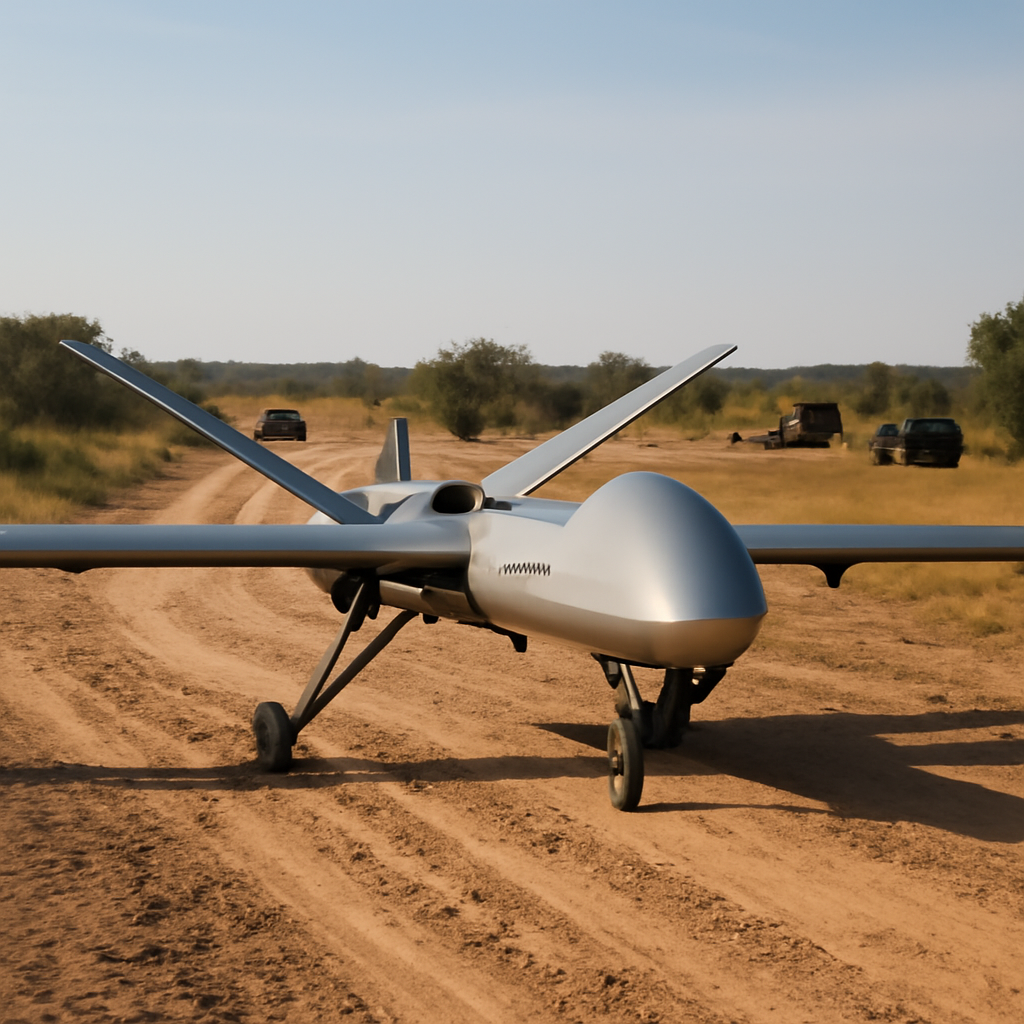
Over 170 JF-17 Thunder aircraft have been produced, and export interest surged after the platform’s combat‑proven performance in 2025. That momentum has provoked a sharper question for Pakistan’s defence planners: will the JF-17 remain a procurement line-item or become the foundation of a domestic aerospace industry?
PAC Kamra’s current footprint and the structural dependency
The programme that produced those 170+ aircraft is already a hybrid: Pakistan Aeronautical Complex (PAC) Kamra manufactures roughly 60% of the JF-17’s airframe — the wings and the vertical tail — but “critical components, tooling, and production knowledge still sit in China,” the reporting notes. Today the engine comes from Russia; the piece says it “will likely come from China tomorrow.” Pakistan’s deeper systems‑integration work is nascent: the Pakistan Air Force’s integration facility was established in 2019, and much of radar qualification, weapons separation testing, and the computational infrastructure for CFD simulations are only now being addressed.
Three international precedents: Türkiye, India, South Africa
The episode compares three countries that faced similar choices and chose divergent paths. Türkiye began by manufacturing parts of the F‑16 under license at Turkish Aerospace Industries (TAI), then built incremental industrial capabilities — alloys, composites, avionics integration, CNC machining — around that programme. That sequence fed indigenous designs: the Hürkuş trainer, the Hürjet advanced trainer, and eventually the KAAN fifth‑generation fighter. India took a different route: Hindustan Aeronautics Limited (HAL) and the defence bureaucracy drove the Tejas programme from an “industrial‑interest‑first” perspective. According to the reporting, the Indian Air Force “never fully bought in,” today wants Dassault Rafale fighters, and the bureaucracy insists on technology transfer, localization, and source code access — a standoff the piece summarizes as both sides being right but stuck. South Africa’s route was built out of necessity under sanctions: Atlas Aerospace used Mirage III and Mirage 5 maintenance and MRO work to expand into airframe modification and avionics integration, and later produced a clean‑sheet redesign, the Cheetah. The common thread: none of these makers started by designing a jet from scratch; each began with someone else’s platform and built an industrial ecosystem around it.

This site is the portfolio.
OSINTSights runs on Cloudflare Workers, D1, R2, and Vectorize, with an AI pipeline on Hetzner ARM. Nubivance designed, built, and operates it. We do the same for clients.
See what we buildAseem’s core thesis: the JF‑17 as Pakistan’s potential F‑16 moment — decades behind
Aseem frames the JF‑17 as the Pakistani analogue of the F‑16 for Türkiye, but cautions that Pakistan is “decades behind.” The reporting attributes Pakistan’s structural dependency to the Pakistan Air Force’s fighting‑force mentality: the PAF chose pragmatism over industrial leadership by delegating development to Chengdu Aircraft Corporation, helping to fund the programme, and securing a “sanctions‑proof” fighter. That pragmatic choice yielded capability but left key industrial inputs external. The piece notes Air Vice Marshal Ghazi signalling additional procurement and links the export surge — “countries from the Middle East to Southeast Asia lining up” — to the jet’s 2025 combat performance. Turning that export and procurement momentum into a sustained industrial base, the authors argue, requires institutional restructuring, targeted investment in tooling and computational infrastructure, and a sequence of purchases by the air force that guarantees industrial demand.
Institutional partners and the investment question: NESCOM, AVIC, and funding
The reporting sketches a concrete pathway discussed in the full episode: strengthen Pakistan’s integration capability, fully localize airframe production, and sequence investments so that industrial inputs grow with assured demand. Organisations named as part of that strategy include NESCOM and potential partnerships with entities like AVIC. The full plan, the piece says, maps investment sequencing and suggests that a 500‑plus JF‑17 lifecycle commitment could alter Pakistan’s industrial calculus. Importantly, the reporting emphasizes that the episode’s answer to “where does the money come from?” does not rely on foreign aid or wishful thinking, implying domestic financing and procurement commitments would be central to any industrialisation push.
How the Pakistan Air Force, PAC Kamra, and NESCOM/AVIC are positioned
- The Pakistan Air Force: sits at the center of the choice — PAF buy‑in and lifecycle procurement commitments would create the demand signal needed to justify industrial expansion.
- PAC Kamra: already produces roughly 60% of the airframe and would be the locus for scaling to full domestic manufacture if tooling, critical components, and production knowledge are transferred or indigenised.
- NESCOM and AVIC (partnerships): are named as actors that could play roles in deeper integration, technology transfer, or joint investment; the plan outlined in the full episode treats them as instruments for addressing capability shortfalls.
The decisive question the narrative returns to is straightforward: will Pakistan treat the JF‑17 as a steady procurement programme that it participates in, or as a platform around which to build something permanent? The story’s prescription is equally simple and hard — secure sustained PAF commitments, sequence investment into tooling and integration, and use export and lifecycle volumes to justify indigenisation. The coming test, the reporting suggests, is whether procurement momentum — signalled by figures such as Air Vice Marshal Ghazi and reinforced by export interest after 2025 — converts into the institutional and financial commitments needed to move Pakistan from assembly partner to aircraft‑builder.