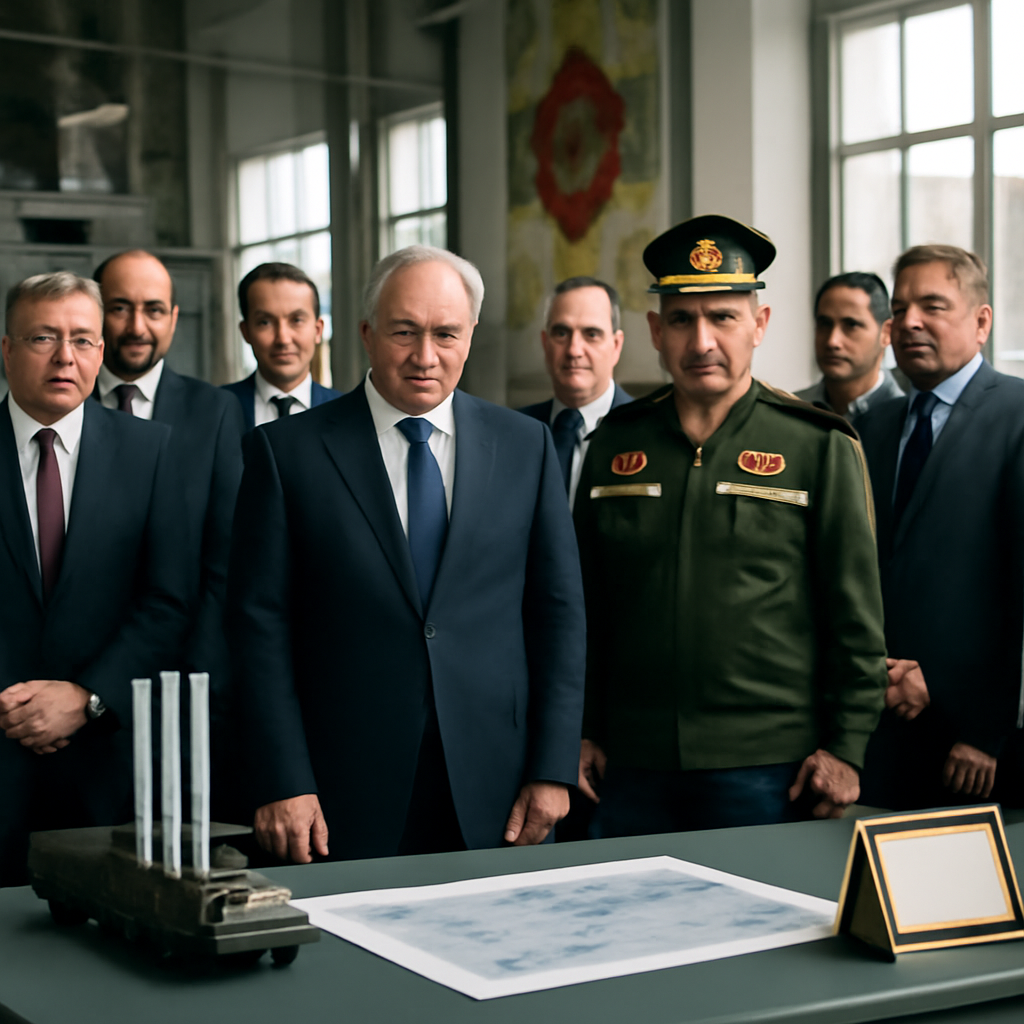
On 02 June 2026, the President of Pakistan, Asif Ali Zardari, promulgated an ordinance establishing the Defence Industrial Production and Regulatory Authority (DIPRA).
The ordinance and its publication in the Gazette
The text creating DIPRA was formalized by presidential ordinance on 02 June 2026 and the full text was published in the Gazette of Pakistan on 03 June 2026. The ordinance establishes DIPRA as a statutory body; the Gazette publication records the formal legal step that brought the authority into being.
Seminar at Pakistan Ordnance Factories (POF) Wah — how officials described DIPRA
At a seminar held at Pakistan Ordnance Factories (POF) Wah on 16 July 2026, an official described DIPRA’s formation as centered on “building a competitive and self-reliant defence industry [that] would contribute to increasing defence exports and support the country’s economic growth.” Local news reports quoting officials who attended the seminar added that the DIPRA will help generate “closer cooperation between government institutions and private industry” and that increased engagement will also lead to a “competitive and self-reliant defence industrial base.”

Audit-ready is a season. It shouldn't be.
Evidence in spreadsheets, controls drifting between audits, frameworks multiplying on flat headcount. Nubivance runs continuous compliance on Rapid7 Cyber GRC - SOC 2, HIPAA, ISO 27001, PCI, CMMC.
End the scrambleRegulatory consolidation: bringing fragmented controls “under one roof”
The ordinance, on its face, aims to consolidate Pakistan’s existing regulations and controls on defence production. The source states those rules and controls are currently spread across different ministries; DIPRA’s stated role is to bring them “under one roof.” That centralization is presented as a structural change intended to reduce fragmentation of oversight and administration for defence production.
Chairman requirement: a statutory link to the armed forces
By statute, DIPRA’s chairman must be either a serving or retired armed forces officer of at least three‑star rank. The ordinance therefore creates a defined, statutory connection between the authority and the armed forces, and — as the source puts it — “thereby creat[es] a solid direct link between the private sector and the armed forces.”
What this means for private industry, government institutions, and the armed forces
- Private industry: Officials who spoke at the POF seminar framed DIPRA as a mechanism to foster “closer cooperation between government institutions and private industry,” and positioned that cooperation as a pathway to a “competitive and self‑reliant defence industrial base.”
- Government institutions: The ordinance is presented as a vehicle to consolidate regulatory authority that is currently dispersed across multiple ministries by bringing rules and controls on defence production “under one roof.”
- The armed forces: The statutory requirement that the chairman be a serving or retired three‑star officer creates an explicit institutional link between the armed forces and the new regulator, embedding senior military involvement in DIPRA’s leadership structure.
The record in the ordinance and the statements made at POF Wah present DIPRA as both a legal and an institutional attempt to reshape how Pakistan governs defence production — consolidating dispersed rules, promising closer government‑industry cooperation, and formalizing a senior military role in leadership. The facts in hand show what DIPRA is set up to do and how its leadership will be chosen; they do not, in themselves, record who will lead the authority or how the consolidation of ministries and rules will be executed in practice. Those steps — appointments, organisational integration, and implementation — remain the next concrete items left to be determined under the statute.
Original story: https://quwa.org/pakistan/market-intelligence/can-pakistans-dipra-support-private-sector-defence-participation/