SUPARCO has placed six satellites since May 2024, completing a constellation that, according to the material released around Pakistan’s May 7 Joint Services Press Conference, underpins an entirely different model of conventional deterrence.
From denial to "deprecation-centric" deterrence
The conflict in May 2025 changed the reference point for Pakistan’s military planning. Where the pre-2025 posture aimed to deny an adversary a clean operation — intercept, blunt, impose cost and hope the crisis ends — the events of May 6–10, 2025 showed denial alone could be followed by further escalation. India’s air-to-air losses on May 6–7 were followed, the source reports, by smart munitions and drones in the days after and by BrahMos strikes against PAF airbases by May 10. The response has been a doctrinal pivot: build the capacity to degrade an opponent’s warfighting infrastructure quickly and at scale, rather than merely to impose cost.
SUPARCO, PRSC-EO3, and the ISTAR layer
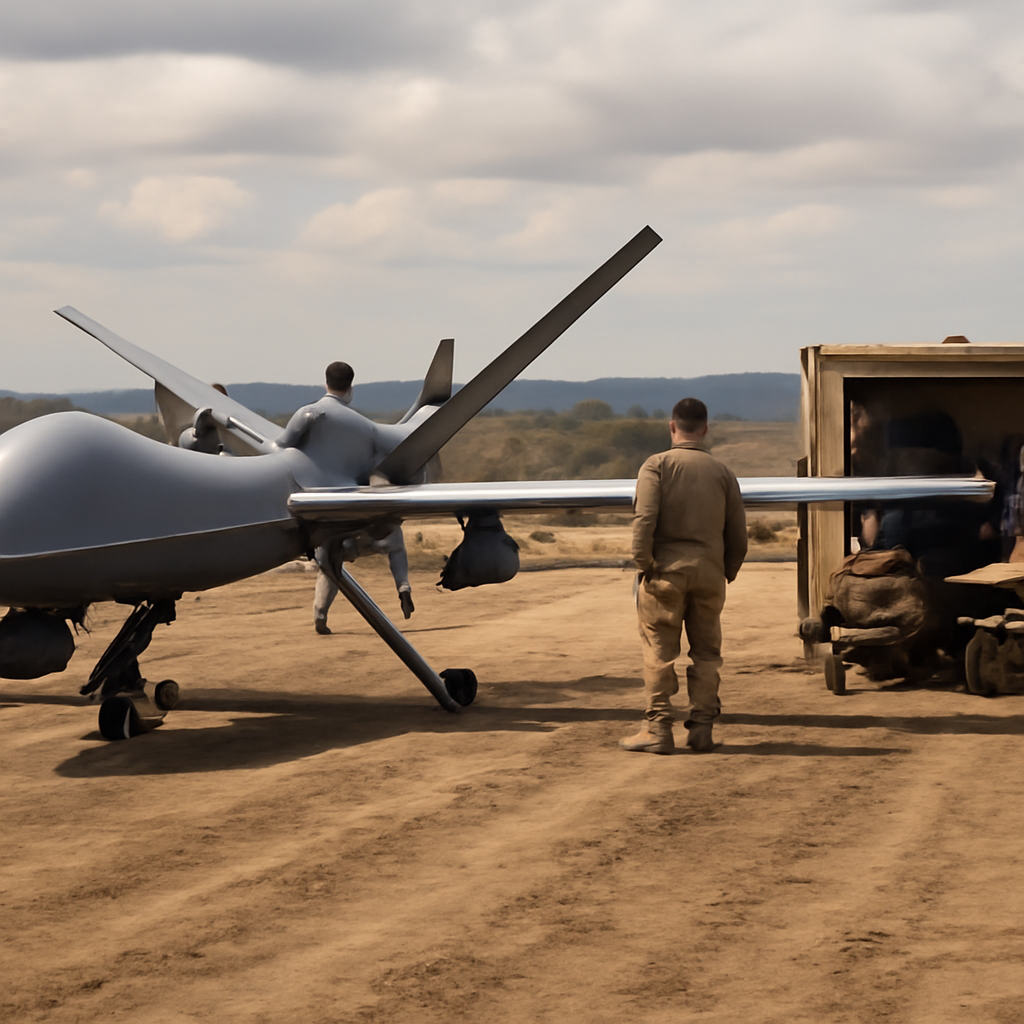
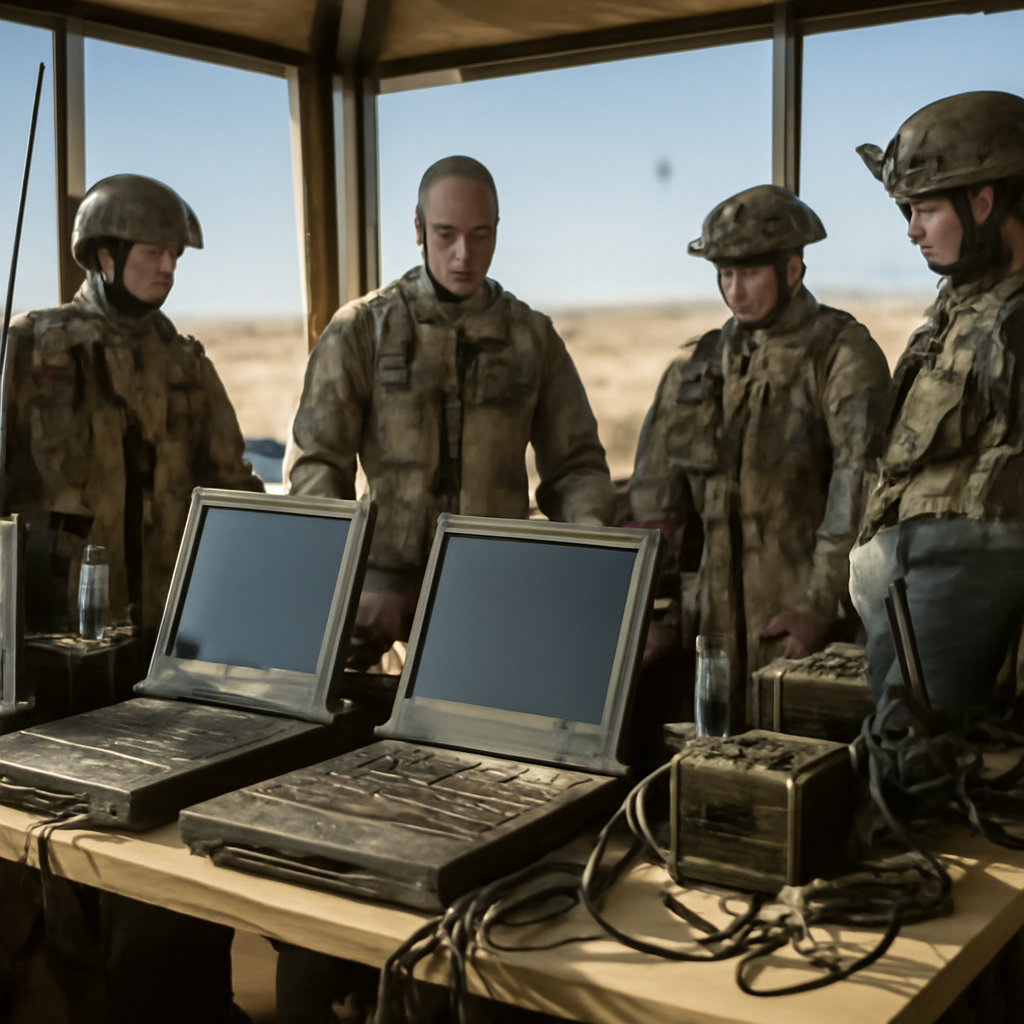
Space and sensing are the linchpins of that pivot. SUPARCO’s PRSC-EO3 completed the PRSC-EOS electro-optical constellation and carries onboard AI for real-time image analysis. The PRSC-S1 is Pakistan’s first known SAR satellite, and HS-1 is a hyperspectral satellite able to detect material signatures that conventional EO cannot. Separately, a $406 million deal with China’s PIESAT will add a 20-satellite interferometric SAR constellation for persistent change-detection. Below orbit, NASTP’s disclosed nine radar programs, airborne early warning work, multi-function air-defence radars, passive sensors such as VERA-NG, and drone-mounted ESM/radar feeds form a fused target-management architecture. The press materials emphasize that this layer “closes the BDA loop,” enabling strike-BDA-restrike cycles without relying on manned overflight of contested airspace.

Audit-ready is a season. It shouldn't be.
Evidence in spreadsheets, controls drifting between audits, frameworks multiplying on flat headcount. Nubivance runs continuous compliance on Rapid7 Cyber GRC - SOC 2, HIPAA, ISO 27001, PCI, CMMC.
End the scrambleArmy Rocket Force Command and the Fatah family
The Pakistan Army has built an independent precision-strike capacity through the newly stood-up Army Rocket Force Command (ARFC). The ARFC fields a family of Fatah-series missiles: Fatah-I (a tactical GMLRS analogue), Fatah-II (a tactical ballistic missile), Fatah-III (a supersonic-cruising missile), and Fatah-IV (a ground-launched cruise missile). Parallel to missiles, state-linked and private producers — GIDS, NASTP, and Woot-Tech — are scaling one-way effectors: Shahed-style loitering munitions, jet-powered loitering munitions treated as low-cost cruise missiles, and Woot-Tech’s SHARDS drone-swarm system for coordinated saturation attacks. The declared layering is deliberate: low-cost effectors to saturate and suppress air defences, followed by Fatah salvos aimed at airbases, logistics, and command nodes, with Fatah-III/IV reaching deeper operational rear areas.
PAF procurement: J-10CE, JF-17, and scalable munitions
The Pakistan Air Force is balancing platform depth and munitions scalability. Air Vice Marshal Ghazi confirmed plans for additional J-10CEs and upgraded JF-17s. In the released material the J-10CE is described as an air-superiority asset — an AESA-equipped platform associated with the PL-15 air-to-air missile and a 1,240 km combat radius — while the JF-17 is being positioned as the mass-strike workhorse, optimized to carry multiple, lighter guided munitions per sortie. The AZB-series of precision-guided bombs and range-extension kits span GPS/INS glide bombs to turbojet-powered variants with IIR seekers, and the Taimoor air-launched cruise missile (ALCM) offers a 500–600 km subsonic standoff option. The declared intent: many platforms delivering many cheaper precision munitions fed by the ISTAR layer.
China’s industrial depth and Pakistan’s stockpile problem
The press materials and related analysis make clear that industrial scale — not merely platforms — will determine whether this posture is credible. The reporting cites assessments that China refines over 85% of the world’s rare earths and produces nearly 90% of high-performance rare earth magnets, and highlights third-party findings that Chinese production capacity for munitions and inputs has surged. Examples included in the material: Russian Iskander output rose dramatically when Chinese ammonium perchlorate supplied 70% of Russia’s imports; Iran received 2,000 tons of sodium perchlorate from China in 2025, which Newsweek estimated could be precursor for roughly 500 ballistic missiles. The implication in the Pakistan briefings is explicit: Chinese inputs and production access could enable Pakistan to scale munitions faster than domestic limits alone would allow.
What this means for the Army, the PAF, and Pakistan’s political leadership
- Pakistan Army: The ARFC’s Fatah family and one-way effectors signal an intent to field an independent, scalable strike force capable of shaping an opponent’s rear-area infrastructure without waiting on air force tasking.
- Pakistan Air Force: The PAF appears to be trading some emphasis on high-end stealth for “quantitative mass” — more J-10CEs for air-superiority and upgraded JF-17s as mass strike platforms carrying AZB-series munitions and Taimoor ALCMs.
- Pakistan’s political leadership: The material acknowledges an unresolved political question — whether leaders have internalized the shift from denial to deprecation as fully as the military planners who have already reoriented procurement and organization.
The narrative from the May 7 disclosures is coherent: a fused ISTAR layer, northern and land-based precision-strike formations, massed one-way effectors, and an attempt to leverage Chinese industrial inputs together form a force designed to “deprecate” an adversary’s ability to sustain operations. The open, explicit question left by the material is not the capability Pakistan is building — the hardware and organizational changes are listed in detail — but whether those capabilities, and the political will to employ them in time, will be sufficient to outpace an adversary’s reconstitution.