“Right from the onset, Pakistan and India collided with the employment of large-scale air power (i.e., 42 PAF fighters walling off 72 IAF aircraft),” the analysis noted — a succinct, specific fact that reshaped Islamabad’s calculations about how future fights will unfold.
May 2025: rapid escalation, urban strikes, and a new operational template
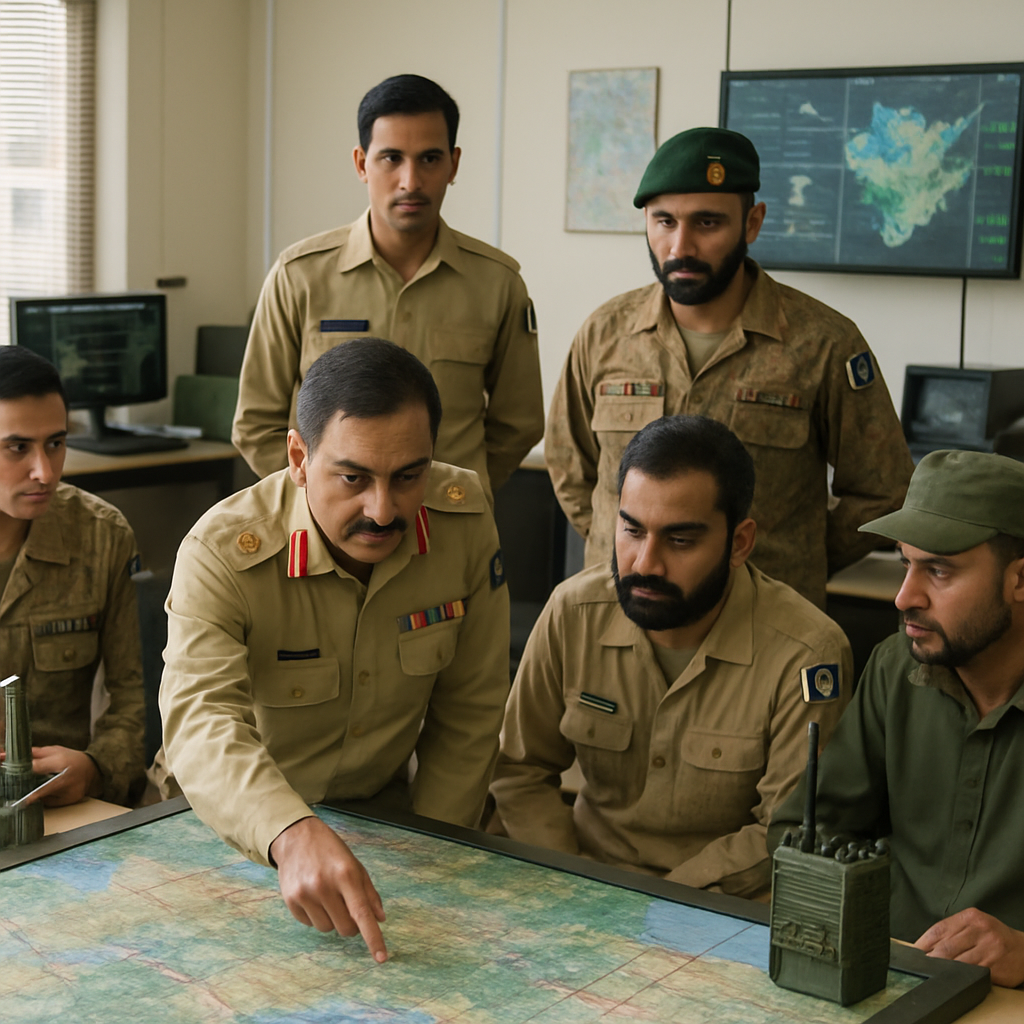
The May 2025 fighting did not resemble Pakistan’s 2019 contingency model. India struck urban targets inside Punjab and continued escalating even after attrition of fighters and other assets; the conflict was “fast‑shifting” and aimed at degrading physical warfighting capacity rather than producing perceptual damage. That operational profile convinced planners that future clashes would be decided on timelines measured in hours rather than days, and that reliance on external de‑escalation — notably US‑led or multilateral intervention — could not be counted on in the same way.
PRSC‑S1, a 20‑satellite InSAR constellation, and IBFMS: ISTAR and BMS at the centre
Faced with limited munitions and a requirement to “make every shot counts,” Pakistan is prioritising intelligence, surveillance, target acquisition, and reconnaissance (ISTAR) well ahead of mass munitions. The procurement and deployment plan centres on a multi‑sensor space layer: the PRSC‑S1 imaging platform, a planned 20‑satellite interferometric SAR (InSAR) constellation, three PRSC‑EO satellites (~1 m EO resolution), and the HS‑1 hyperspectral satellite. The InSAR work is intended to detect millimetre‑level anomalies and feed terrain data into TERCOM/DSMAC guidance, while ELINT, SAR change detection and EO imagery will be fused through battlefield management systems such as the Army’s Integrated Battlefield Management System (IBFMS) to assign strikes and close the BDA loop.

Audit-ready is a season. It shouldn't be.
Evidence in spreadsheets, controls drifting between audits, frameworks multiplying on flat headcount. Nubivance runs continuous compliance on Rapid7 Cyber GRC - SOC 2, HIPAA, ISO 27001, PCI, CMMC.
End the scrambleLoitering munitions, one‑way effectors, and the Taimoor: scaling strike under constraint
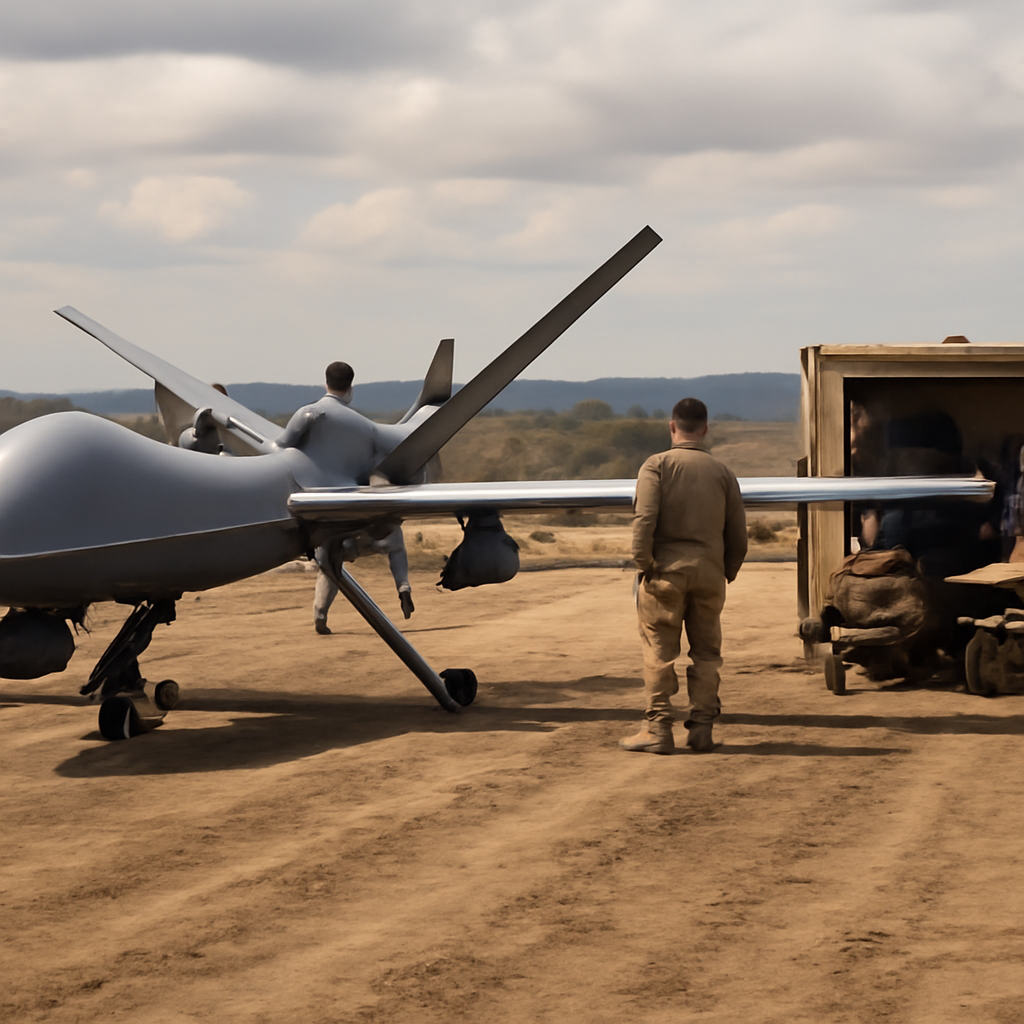
Pakistan’s strategy accepts it cannot match India on volume, and so emphasises strike types that can be produced and fielded at scale within fiscal limits. That includes piston‑powered loitering munitions and jet‑powered one‑way effectors (OWEs) — named examples include the Woot‑Tech HiMark‑25TJ and the GIDS Baaz Delta — which trade lower unit cost for attritable employment. The analysis cites the asymmetric cost logic: OWEs priced in the mid‑five to low‑six figures force defenders to expend interceptors costing $500,000–$2 million each. Parallel work standardises subsystems across cruise missiles: the Taimoor ALCM (600 km domestic range; export‑capped to 290 km) and Fatah‑IV GLCM/Harbah‑NG share INS/GNSS mid‑course, TERCOM/DSMAC and terminal seekers, permitting NESCOM and GIDS to scale production and lower marginal costs.
Fatah‑II family and sanctions constraints on ballistic‑missile scaling
NESCOM’s Fatah‑II (400 km solid‑fuel SSM) is being used as a common rocket core for multiple derivatives — the SMASH (designated P282) ASBM and the Abdali Weapon System (450 km). That single‑platform, multi‑derivative approach is designed for factory‑scale output, unlike older Shaheen systems. But the analysis also identifies industrial limits: Pakistan currently lacks composite‑casing and filament‑winding capabilities that enable weight‑saving range extensions, and US sanctions designated the National Development Complex (NDC) in December 2024 while targetting Chinese suppliers of composite materials and filament‑winding machinery in September 2024 — sanctions that reach precisely the inputs needed for the next stage of missile progression.
J‑35AE as lead ISTAR, JF‑17 and J‑10CE for mass strike
The Pakistan Air Force appears to be rethinking the J‑35AE’s role. Rather than a single‑platform replacement for both legacy long‑range and attack roles, the J‑35AE is being positioned within a system‑of‑systems: a limited number of low‑observable fighters would act as high‑value ISTAR nodes to detect and geolocate SEAD/DEAD targets, then hand off strike execution to larger fleets of JF‑17s and J‑10CEs armed with AZB range‑extension kits, precision guided bombs, and Taimoor ALCMs for scalable conventional strike. This preserves a qualitative edge while accepting that quantity will be supplied by 4+ generation platforms and massed munitions where possible.
SMASH/P282 tests, Sea Sultan plans and Hangor‑class submarines
The Pakistan Navy is integrating the same munitions family into maritime A2/AD. The April 2026 SMASH test from a Babur‑class (MILGEM) corvette was the first known ASBM firing from a corvette and demonstrates how smaller surface combatants can project anti‑ship ballistic effects. The Navy is also preparing to deploy Taimoor from the forthcoming Sea Sultan LRMPA, while an expanding Hangor‑class submarine force — eight boats planned — aims to extend a subsurface deterrent and complicate Indian ASW and logistics calculations in the northern Arabian Sea.
What this means for the Pakistan Army, Pakistan Air Force, and Pakistan Navy
- Pakistan Army (ARFC): Institutionalised the Fatah‑II family and ARFC to pursue factory‑scale conventional rockets, but faces a production ceiling against Quwa estimates that a two‑week high‑intensity fight would need roughly 5,600–7,000+ guided rockets and 200–450+ LACMs.
- Pakistan Air Force: Is likely to acquire relatively few J‑35AEs as lead ISTAR assets while retrofitting and arming JF‑17s for long‑range SOW roles and integrating Taimoor ALCMs as a conventional strike multiplier.
- Pakistan Navy: Is expanding A2/AD with SMASH/P282, naval tests of Taimoor and a growing Hangor‑class submarine fleet to impose standoff costs on adversary naval operations.
Pakistan’s doctrinal pivot is evident and deliberate: with munitions volume constrained, the country is investing heavily in spaceborne sensors, ELINT, BMS integration and a shore‑to‑sea and air‑to‑land family of effectors so that each strike is informed by layered, near‑real‑time data. If the May 2025 conflict rewired planners’ priorities, the record shows they chose to make ISTAR and BMS the connective tissue that decides whether limited stocks produce strategic effect — essentially an attempt to ensure, as the analysis put it, that “every shot counts.”