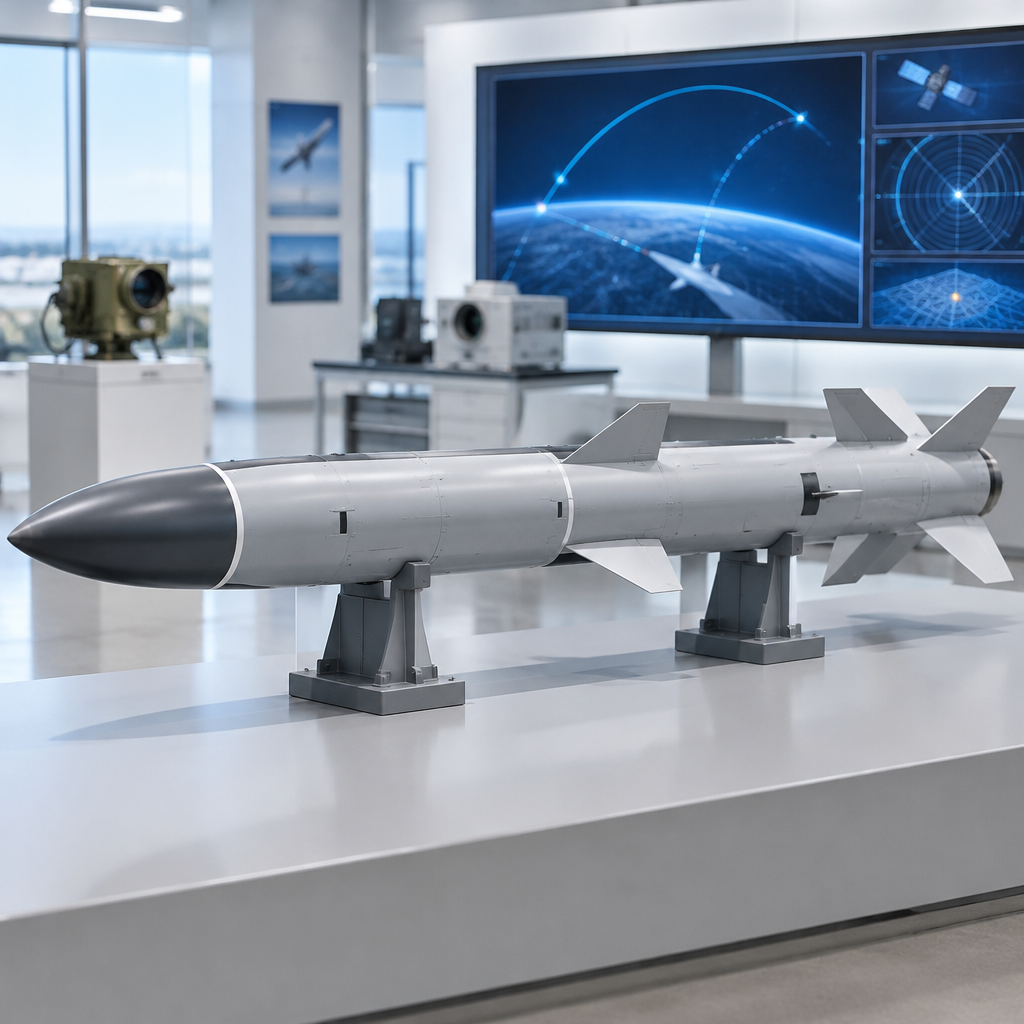
On 06 November, new footage showed a Russian Mi-28N “Havoc” attack helicopter fitted with an air‑launched cruise missile observers identified as the S8000 “Banderol” or the closely related “Dan‑T,” a munition with a published range of roughly 450–500 km.
What the Mi‑28N demonstration changed: a new rotary-wing stand‑off vector
The footage of the Mi‑28N matters because it illustrates a practical expansion of what attack helicopters can do. The Banderol/Dan‑T class of air‑launched cruise missiles (ALCMs) offers hundreds of kilometres of reach—markedly farther than the 15 km reach of the Kh‑38, previously the Mi‑28N’s longest‑ranged weapon. Range for these missiles depends on launch altitude and other factors, but even reduced ranges would give gunships a true stand‑off weapon (SOW) capability. Helicopters can exploit low‑altitude flight, terrain masking and operations from rough or improvised sites—characteristics that make rotary platforms a flexible SOW vector.
China’s Z‑10ME‑02 in Pakistan’s inventory and the fast path to SOWs
Pakistan’s potential path to ALCM‑equipped gunships already includes Chinese systems. At least five Pakistan Army Aviation Corps (PAA) Z‑10ME‑02 helicopters exist in Pakistani hands—one reportedly inducted for service and the remainder undergoing flight testing. A China National Aero‑Technology Import & Export Corporation (CATIC) display image posted by a Chinese blogger stated Pakistan ordered 30 Z‑10MEs, a quantity that aligns with the requirement Pakistan set out when it pursued the T129 deal in 2018.
The Z‑10ME‑02 is manufactured by Changhe Aircraft Industries Corporation (CHAIC) and, the published data shows, is configured to carry SOWs “out of the box,” notably the CM‑501 and CM‑502 families developed with helicopter employment in mind and offered for export. That immediate availability—plus video evidence of a PAA Z‑10ME‑02 fitted with a top rotor‑mounted millimetre‑wave (mmW) radar—indicates acclimation work under way to integrate tracking and ground‑target management for future SOW operations.

Audit-ready is a season. It shouldn't be.
Evidence in spreadsheets, controls drifting between audits, frameworks multiplying on flat headcount. Nubivance runs continuous compliance on Rapid7 Cyber GRC - SOC 2, HIPAA, ISO 27001, PCI, CMMC.
End the scrambleRasoob 250: a Pakistani ALCM built for the Navy that could inform helicopters
Pakistan’s indigenous path centers on the Rasoob 250, revealed earlier in 2024. Global Industrial & Defence Solutions (GIDS)—the sales and marketing arm for Air Weapons Complex (AWC) and other NESCOM entities—said the Rasoob 250 was designed for launch from drones, maritime patrol aircraft and helicopters (the Sea King was named specifically). AWC has developed the Rasoob 250 with the Pakistan Navy (PN) as the primary user, mapping the missile to PN platforms such as the ATR‑72‑based Sea Eagle, Sea King and Shahpar‑3, and to planned procurements including the Sea Sultan long‑range maritime patrol aircraft and the Jinnah‑class frigate.
Weight and performance figures show the Rasoob 250 at about 285 kg with a booster, with a stated range of 350 km—comparable in concept to the Kongsberg NSM but lighter and with a longer claimed range than some peers. Because AWC designed the Rasoob for the PN’s air and surface requirements, the published assessment is that a direct transition to a light attack helicopter like the Z‑10ME‑02 is unlikely without further development. However, the Rasoob programme does provide AWC technical experience in launching ALCMs from slower, lower‑flying platforms that could be adapted over time if the PAA demands it.
Smaller‑class ALCMs: CM‑501/502, AZB‑81LR and the Red Wolf comparison
Not all helicopter‑launched ALCMs are heavyweight designs. The CM‑501 family already offered for export includes variants such as the CM‑501XA (about 70 km range) and the lighter CM‑502KG (about 25 km). These provide an immediate, export‑available route to SOW capability for Z‑10ME‑02s.
AWC is also developing the AZB‑81LR in the 100–125 kg class. Published performance claims for the AZB‑81LR tie range to launch altitude: above 200 km from higher altitudes and 120–180 km from lower altitudes. The US Red Wolf programme—cited in the public record as a comparator—targets a roughly 115 kg ALCM for the AH‑1Z with a 350 km class strike effector planned for the US Marine Corps’ Red Wolf project. The AZB‑81LR’s size and published altitude‑dependent range would make it a plausible fit for lighter rotary platforms if the PAA seeks a 200+ km reach that would fit the Pakistan Army’s growing deep‑strike emphasis.
What this means for the Pakistan Army, the Pakistan Navy, and the Pakistan Army Aviation Corps
- Pakistan Army: ALCM‑armed helicopters would expand the Army’s precision‑strike architecture beyond existing Fatah‑family surface‑to‑surface missiles and OWA loitering munitions, providing a mobile deep‑strike option that could integrate into the Army’s ISTAR networks.
- Pakistan Navy (PN): The PN remains the primary customer for Rasoob 250; its requirement for a common air‑and‑surface anti‑ship cruise missile shaped Rasoob’s size and range, and PN procurement plans (Sea Sultan, Jinnah‑class frigates) are central to Rasoob’s intended employment.
- Pakistan Army Aviation Corps (PAA): The PAA already fields Z‑10ME‑02s capable of carrying CM‑501/502 series missiles and is conducting flight testing and sensor integration (mmW radar). The PAA faces a choice between fielding lighter Chinese SOWs now or seeking adapted indigenous designs (AZB‑81LR variant or a lighter Rasoob derivative) to meet a 200+ km deep‑strike preference.
The footage of the Mi‑28N with long‑range ALCMs has pushed a question into the open: will Pakistan opt for immediate, exportable SOWs for its Z‑10ME‑02s, or pursue indigenous designs that mirror naval requirements and may require adaptation? At least five Z‑10ME‑02s exist in Pakistan today, one is inducted and others are testing; AWC’s Rasoob 250 and AZB‑81LR programmes provide two distinct domestic pathways—one naval‑centric and heavier, the other lighter and more helicopter‑oriented. How Pakistani planners balance those options will determine whether rotary‑wing platforms become a principal vector for long‑range precision fires in the near term.
Source: Quwa — Russia Arms Its Mi-28N Gunship With Cruise Missiles. Will Pakistan Follow?