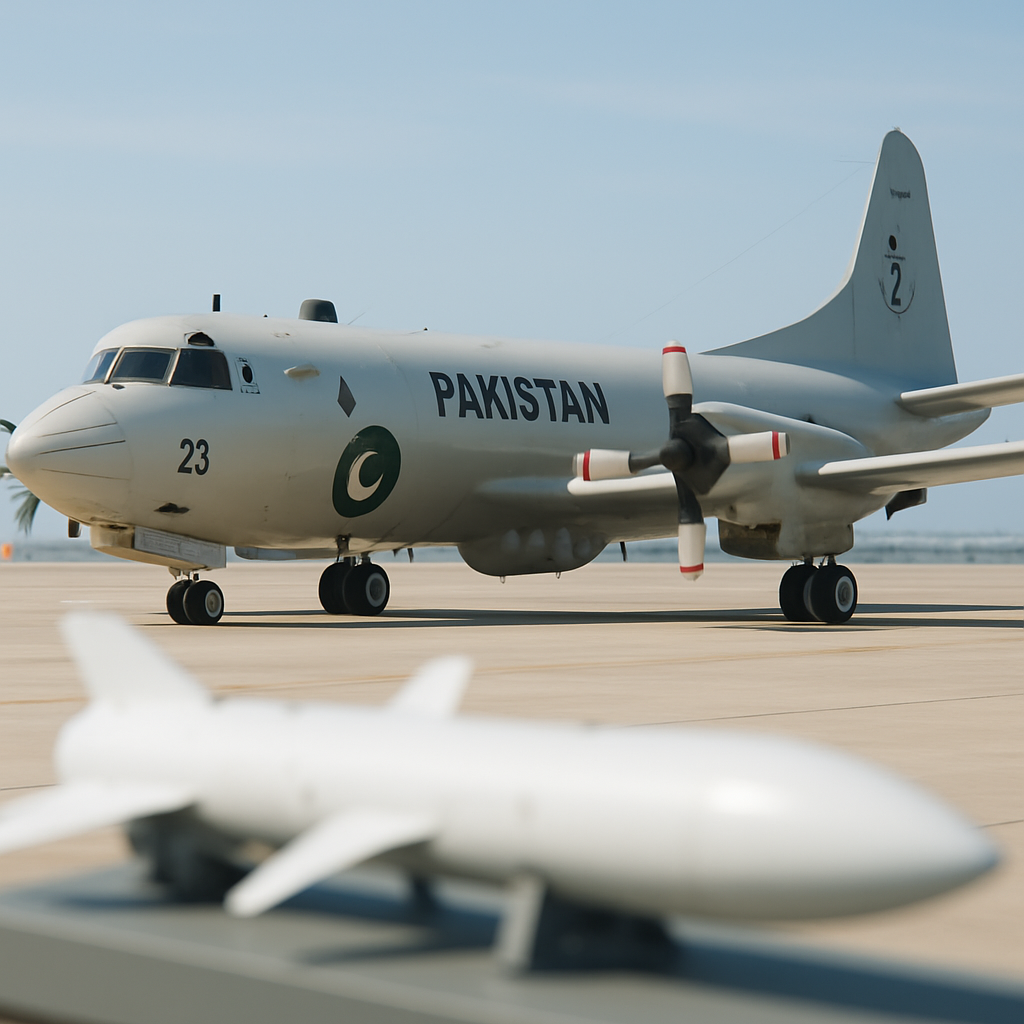
On April 21, the Pakistan Navy tested the Taimoor air-launched cruise missile (ALCM), a precision-strike, stand-off weapon reported to reach 600 km — the latest in a string of indigenous sea-focused weapons the service has been fielding this year.
Taimoor ALCM: extended-range air-launched anti-ship capability
The April 21 test of the Taimoor ALCM gives the Pakistan Navy an air-launched anti-ship strike option with a reported range of 600 km. The source describes the weapon as a precision-strike, stand-off missile able to engage both land and sea targets. That capability complements Pakistan’s existing ship- and submarine-launched anti-ship missiles and is explicitly presented as increasing operational flexibility by allowing strikes on an adversary naval force at extended ranges.
P282 SMASH ASBM: corvettes, maneuvering re-entry, and growing reach
On April 15, the Pakistan Navy tested a ship-launched anti-ship ballistic missile (ASBM) called P282 SMASH — “Supersonic Missile Anti-ship” — from a Babur-class corvette, with a reported range of 450 km. The piece notes this as the first known deployment of the missile on a corvette; an earlier variant was tested from a Zulfiqar-class frigate with a reported range of 350 km. The P282 SMASH reportedly integrates inertial navigation with a terminal-stage targeting mechanism to achieve high precision against both moving maritime and fixed land targets. Its maneuverable re-entry profile and near-vertical terminal attack trajectory are described as enhancing survivability versus modern naval air defenses and increasing the missile’s relevance against high-value surface combatants, including aircraft carriers.

This site is the portfolio.
OSINTSights runs on Cloudflare Workers, D1, R2, and Vectorize, with an AI pipeline on Hetzner ARM. Nubivance designed, built, and operates it. We do the same for clients.
See what we buildDefensive layer: LY-80 (N), loitering munitions, and an unmanned surface vehicle
The Pakistan Navy has also been building a defensive layer alongside offensive strike options. The fleet has integrated the LY-80 (N) surface-to-air missile system, and during a naval exercise in the north Arabian Sea earlier this year it tested those defenses while also employing loitering munitions to destroy surface targets. The Navy for the first time inducted an unmanned surface vehicle (USV), extending autonomous capability into the maritime domain. The article frames the combination of defensive SAMs, loitering munitions, and USVs as a move toward a low-cost, high-volume strike layer paired with survivable defenses — elements that are central to a sea-denial posture.
Layered A2/AD architecture and the logic of deterrence-by-denial
Taken together, these developments are presented as incremental modernization toward a layered anti-access/area denial (A2/AD) architecture. The Pakistan Navy is described as adding multiple strike vectors — land-based missiles, ship-launched ballistic missiles, air-launched cruise missiles, and submarine-launched systems — to complicate an adversary’s ability to operate near Pakistan’s waters. The stated objective is not to control maritime space but to impose costs on a numerically superior adversary and to keep enemy vessels farther offshore, reducing the effectiveness of maritime coercion such as a blockade.
The article explicitly links Pakistan’s approach to “qualitative parity” and a “technological offset” strategy: rather than expanding fleet size rapidly — which it calls an expensive endeavor — Islamabad is focusing on missile systems and indigenous production to raise the operational costs of an adversary’s surface fleet.
What this means for the Pakistan Navy, the Indian Navy, and regional planners
- Pakistan Navy: The combination of Taimoor ALCM, P282 SMASH variants, LY-80 (N), loitering munitions, and a USV is presented as a move to strengthen conventional deterrence by denial; the article also highlights a push for indigenous production to reduce reliance on external suppliers and allow unilateral scaling of these assets.
- Indian Navy: The narrative in the source situates Pakistan’s moves as a response to rapid Indian naval modernization, including induction of modern surface combatants, aircraft carrier capabilities, the BrahMos ALCM and long-range anti-ship systems, and expanding long-range air defenses. The 2025 May crisis is referenced specifically: the Indian Navy deployed at least 36 warships, including the aircraft carrier INS Vikrant, which came within 400 nautical miles of Pakistan’s coast — a deployment the article frames as a catalyst for Pakistan’s sea-denial emphasis.
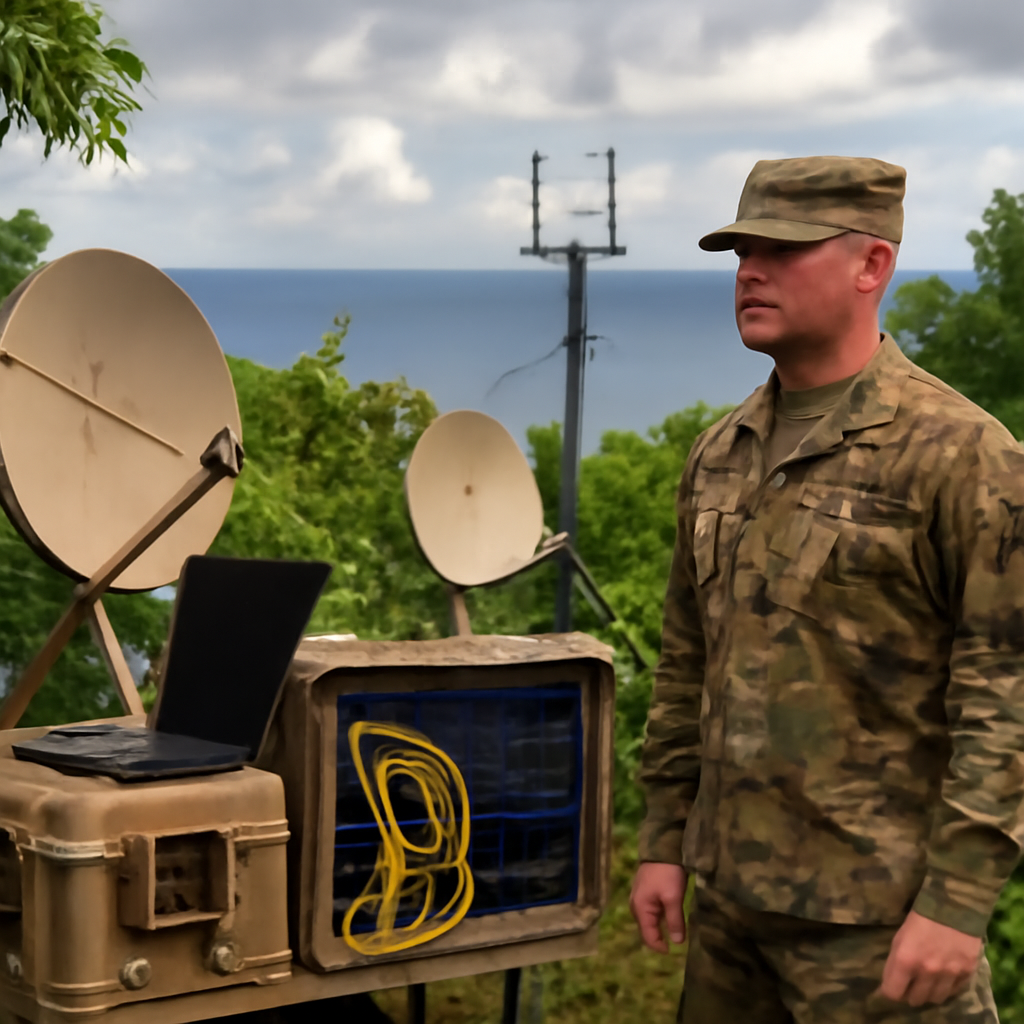
- Regional planners and crisis managers: The article underscores a practical gap that Pakistan must address — targeting infrastructure. It notes the need to increase maritime surveillance and reconnaissance, secure communications networks, and integrate ISR with strike platforms; to that end, Pakistan is inducting Sea Sultan long-range maritime patrol aircraft (LRMPA) to bolster sensor reach and targeting effectiveness.
The sequence of tests and inductions described in the reporting points to a deliberate, two-track effort: expand strike options that can hold ships at risk from greater standoff distances, and build a defensive and autonomous layer to protect those strike assets. The decisive variable the article flags is not the hardware alone but the supporting ISR and secure command networks needed to turn individual weapons into an effective sea-denial architecture — a capability Pakistan is actively seeking to strengthen even as it moves toward greater self-reliance.