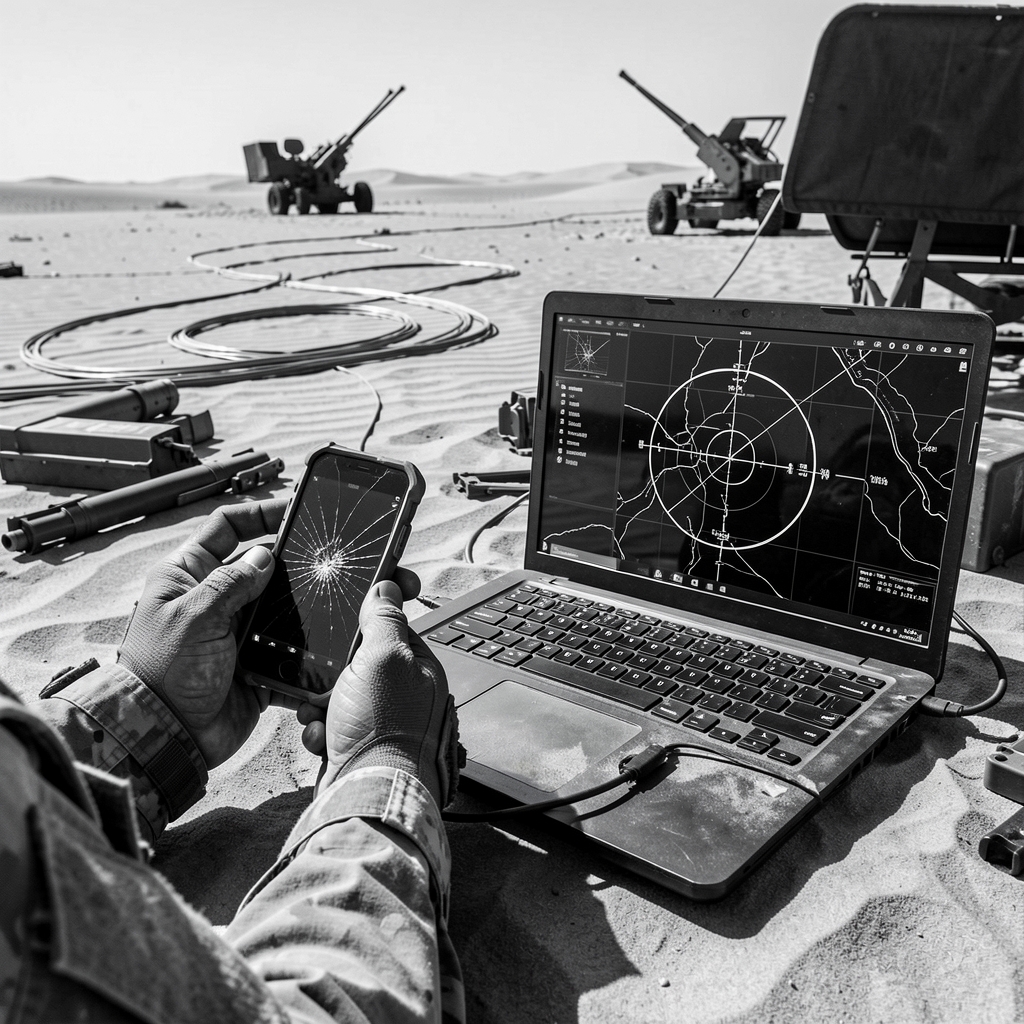
What does it mean for public understanding when a focused analysis of a nation's military networking needs is available only to subscribers? That question sits at the center of a small but telling obstacle: the report titled "Demand Tracker: The Pakistan Army’s Precision-Fire Networking Needs" is accessible in name, but its full substance is gated behind a login prompt.
Background: a titled analysis behind a paywall
The piece in question was published on Quwa and is presented as a "Demand Tracker" — a format that implies a targeted, procurement- and capability-oriented look at requirements. The public landing text on the site asks readers to "Please log in or subscribe to complete the article," and the post is noted as having "first appeared on Quwa." Beyond that landing copy, the hosted content is not visible without subscription access.
The current situation: limited visibility, broad implications
Readers who arrive at the page can confirm two concrete points from the available text: the topic (precision-fire networking needs tied to the Pakistan Army) and the access barrier (a subscription/login requirement). The combination is straightforward but consequential: an item that appears to analyze a specific military capability is publicly identified, yet its analysis, data points, and conclusions are not publicly viewable from that entry.

Audit-ready is a season. It shouldn't be.
Evidence in spreadsheets, controls drifting between audits, frameworks multiplying on flat headcount. Nubivance runs continuous compliance on Rapid7 Cyber GRC - SOC 2, HIPAA, ISO 27001, PCI, CMMC.
End the scrambleWhy this matters: transparency, analysis, and the public record
An article framed as a "Demand Tracker" signals relevance for several audiences — analysts tracking procurement trends, technologists assessing system requirements, policymakers deciding priorities, and open-source researchers seeking to corroborate reporting. When the substantive content is behind a paywall, those audiences face friction in accessing the same baseline information. That barrier affects the public record in three ways:
- Visibility: The existence of an analysis is clear, but its claims, sourcing, and data remain opaque unless a reader subscribes.
- Verification: Other researchers and journalists cannot easily verify or critique specifics without the same access, complicating comparative analysis and follow-up reporting.
- Reach: Policymakers and stakeholders who rely on open discourse may miss insights that could inform discussion, because access requires a paid relationship with the publisher.
Multiple perspectives on a closed analysis
Viewed through different lenses, the same access limitation raises distinct concerns and priorities:
- Technologists might point to the value lost when technical assessments and requirements are not widely disseminated, since cross-checking specifications and interoperability issues often depends on broad peer review.
- Policymakers and budget analysts could note that procurement oversight benefits from wide scrutiny; paywalled analyses concentrate information among a subset of readers rather than the broader stakeholder community.
- Practitioners and local users — those operating or affected by the systems under discussion — may be unable to engage with analysis that shapes procurement narratives, limiting feedback loops between users and analysts.
- Open-source investigators and adversaries alike are affected differentially: restricted access slows transparent verification for some, while motivated actors with resources or intent can still obtain paywalled material, creating asymmetries in who sees what.
Conclusion: a small barrier, a larger question
The presence of a titled analysis on precision-fire networking needs for the Pakistan Army is a signpost that such reporting exists; the paywall is a reminder that access to detailed, specialized coverage often depends on subscription models. That leaves the public with an unresolved tension: specialized reporting can illuminate capability trends, but when access is restricted, who benefits most from that illumination — and who is left out? If in-depth analyses are central to informed debate about military capabilities and procurement, how should the balance be struck between sustainable journalism funding and the need for open scrutiny?