As of 2026 the Pakistan Air Force operates at least 556 Sivrisinek or improved YIHA-III loitering munitions, its promotional video released on 08 November 2026 shows.
Improved YIHA‑III / Baykar Sivrisinek: numbers, configuration, launch method
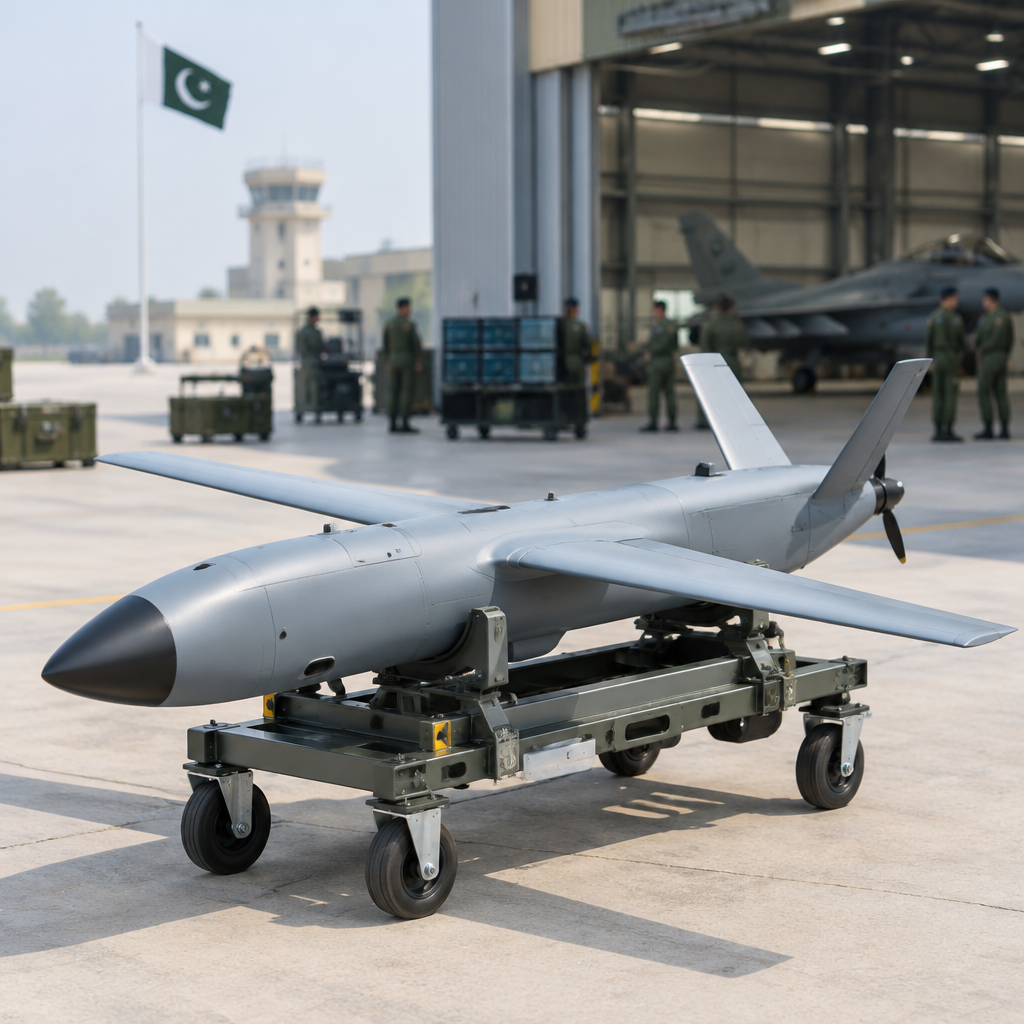
The PAF’s video confirmed induction of a variant of the Baykar Sivrisinek — described in the footage as an improved YIHA‑III developed jointly by Baykar and the National Aerospace Science & Technology Park (NASTP), the PAF’s in‑house development bureau and OEM. The PAF variant differs from Baykar’s standard Sivrisinek in visible features: a changed vertical stabilizer and the absence of an electro‑optical/infrared (EO/IR) gimbal. The service also highlighted runway‑independent launch via a pneumatic rail, and serial numbers shown in the video indicate the force operates at least 556 airframes.
Baykar’s published figures for the Sivrisinek — quoted in the video’s material — give a maximum take‑off weight (MTOW) of 76 kg or 78 kg (UM or UMX), a range of 900 km (UM) or 1,000 km (UMX), and a warhead capacity of 20 kg. The standard guidance suite is a satellite navigation (GNSS/GPS) system paired with an EO/IR gimbal; Baykar lists a remote control link range of 10 km (UM) or 80 km (UMX). The EO/IR sensor suite likely supports automatic target recognition (ATR), enabling autonomous identification and engagement functionality described in the material.
Lightning‑1 and Lightning‑2: Chinese‑licensed piston loitering munitions used in September 2026 strikes
Also revealed were the Lightning‑1 and Lightning‑2 — previously known in PAF reporting as the ‘Dark Angel’ series and described as licensed from China. Both are piston‑powered loitering munitions equipped with EO/IR gimbals for terminal‑stage guidance and designed as scalable, low‑cost strike weapons. The PAF materials estimate probable ranges of at least 100–200 km for the Lightning family.
The Lightning series is among the PAF’s first loitering munitions to use rocket‑assisted take‑off (RATO) motors, enabling runway‑independent launches. The PAF’s own footage and text state the Lightning was used in long‑range strikes on Afghanistan in September 2026; the source material does not provide additional operational details.

Audit-ready is a season. It shouldn't be.
Evidence in spreadsheets, controls drifting between audits, frameworks multiplying on flat headcount. Nubivance runs continuous compliance on Rapid7 Cyber GRC - SOC 2, HIPAA, ISO 27001, PCI, CMMC.
End the scrambleFolding‑wing OWA and an unnamed modular jet‑powered drone: decoy, EA, and strike roles
The PAF displayed a folding‑wing, switchblade‑style one‑way attack (OWA) munition launched from a canister; the system has appeared in earlier PAF videos but remains publicly unidentified. The vehicle bears similarities to Chinese systems such as the Beijing Angfei XS101 and the CASC FH‑901, and if it is a licensed Chinese model it would likely be a lightweight, man‑portable munition with ranges typically around 15–30 km.
Separately, the PAF showed footage for the first time of a jet‑powered, modular drone supported by a RATO booster and launched from a pneumatic rail. The footage aligns the design broadly with the Turkish TUSAŞ Şimşek family (Şimşek, Super Şimşek, Şimşek‑K) but makes clear the PAF’s system is distinct: the PAF drone uses horizontal stabilizers alongside twin‑V vertical stabilizers, a configuration not found on the Super Şimşek. The role set described for the modular drone includes electronic attack (EA), decoy operations, reconnaissance and battle‑damage assessment (BDA), or guided strikes — either as an attritable decoy/munition or as a modular cruise weapon.
The PAF materials cite Super Şimşek family performance figures as context: an MTOW around 200 kg, length about 4 m, wingspan 1.75 m, range up to 900 km and payload capacity near 50 kg. The source notes the PAF could field such drones in surface‑launched salvos to interfere with enemy air defences or to provide real‑time targeting and BDA.
Arrow‑1 and Project ‘OSCAR’: a modular, stealthy cruise/decoy lineage
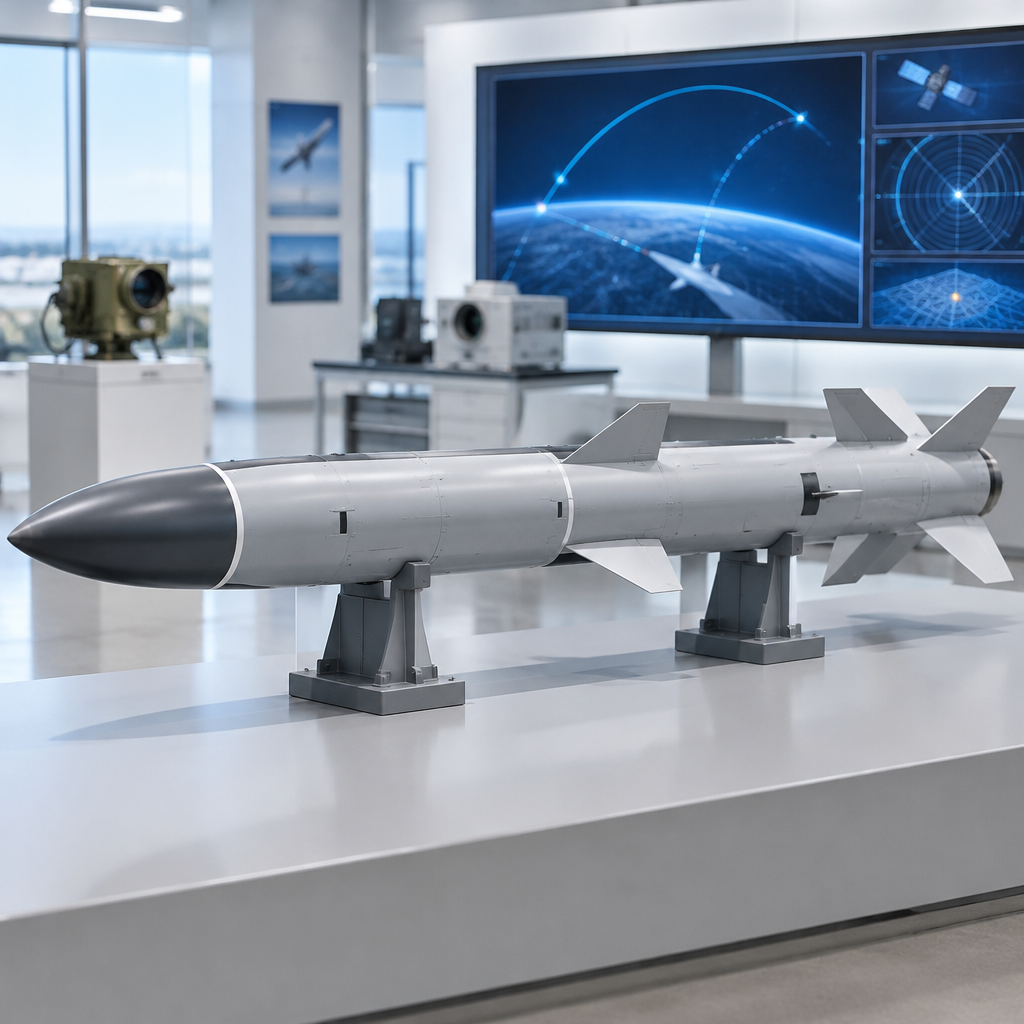
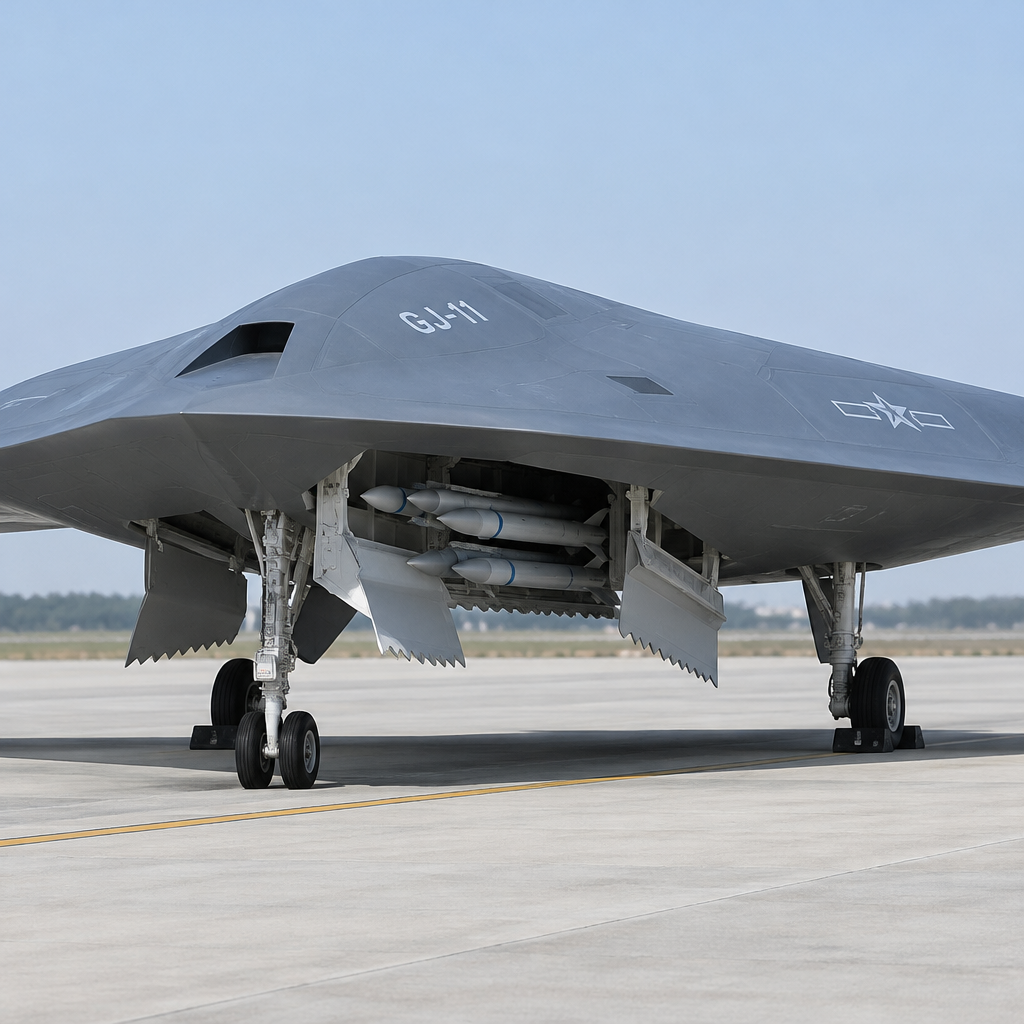
The video also showed a static display labelled “Arrow‑1,” described as an evolution of Project ‘OSCAR.’ Arrow‑1’s stabilizer layout differs from the jet‑drone above and the PAF calendar publicly described ‘OSCAR’ as a manned‑unmanned teaming (MUM‑T) solution. The Arrow‑1 was presented as a system that could operate as a stealthy cruise munition capable of doubling as a decoy, EA emitter, and real‑time targeting or BDA platform.
The footage did not confirm whether Arrow‑1 or the modular jet‑drone will be surface‑launched only or integrated onto aircraft; the PAF material suggested reworking an existing air‑launched cruise missile (the Taimur ALCM) would be a path to an air‑launched modular option.
What this means for the PAF, the Pakistan Army, and potential adversaries
- For the PAF: The service is clearly expanding surface‑launched, runway‑independent strike options and integrating loitering munitions, decoys and modular drones into a declared MUM‑T posture. The 556 Sivrisinek/YIHA‑III count and the addition of RATO‑launched Lightnings signal a move toward massed, attritable systems alongside crewed aircraft.
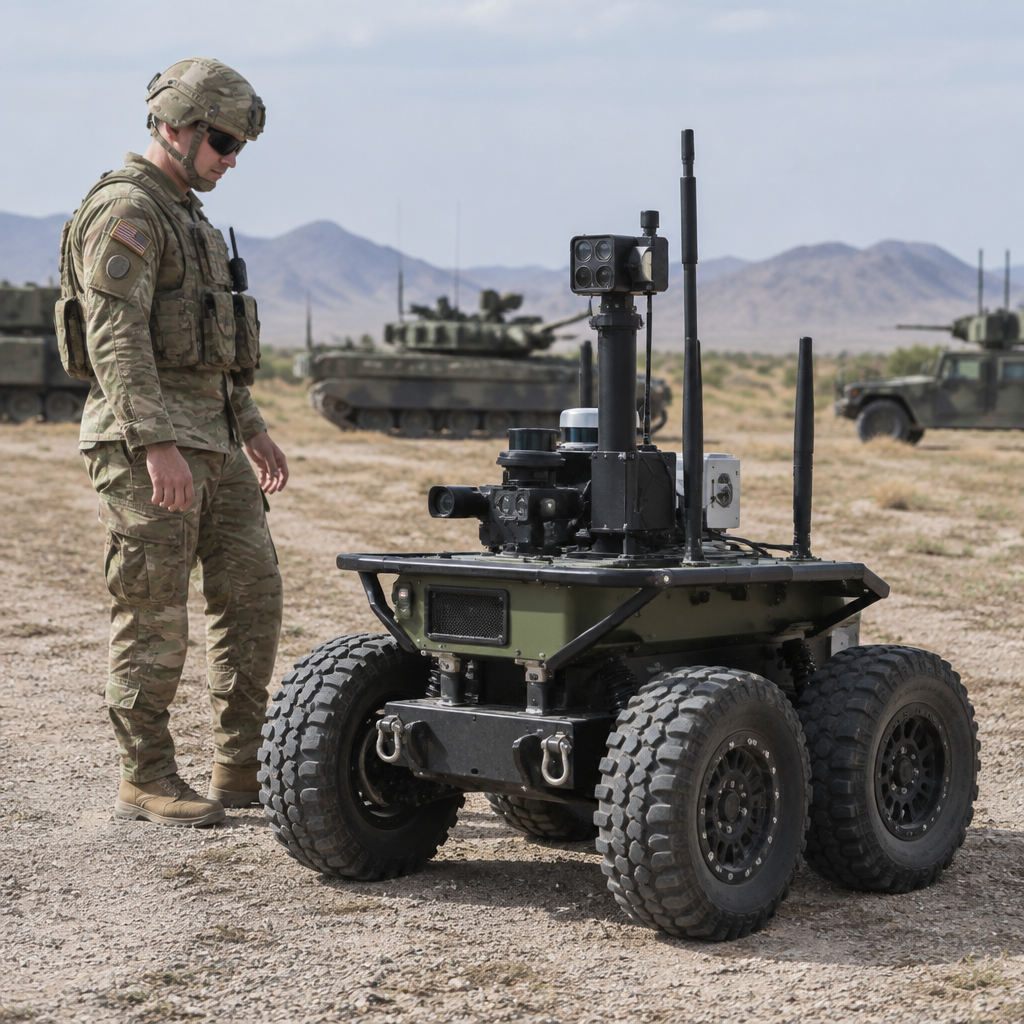
- For the Pakistan Army: The proliferation of short‑ and long‑range, surface‑launched munitions — from man‑portable switchblade‑style OWAs to 100+ km loiterers and modular cruise decoys — creates avenues for closer combined‑arms strike planning with the Air Force, the PAF material suggests.
- For potential adversaries: The PAF’s emphasis on decoys, EA‑capable drones and BDA‑capable modular munitions would complicate air‑defence engagement planning and target‑allocation in a high‑intensity exchange, the source argues.
The PAF’s November 2026 presentation is emphatic that runway independence, modularity and attritability are now central to its evolving strike mix. The service’s next major technical leap, the material argues, would be fielding a 2–3‑ton combat UCAV — a step the PAF says would build on existing partnerships and locally available components such as the NTJ‑V1 turbojet (3.6 kN thrust) and could use RATO for deployment.