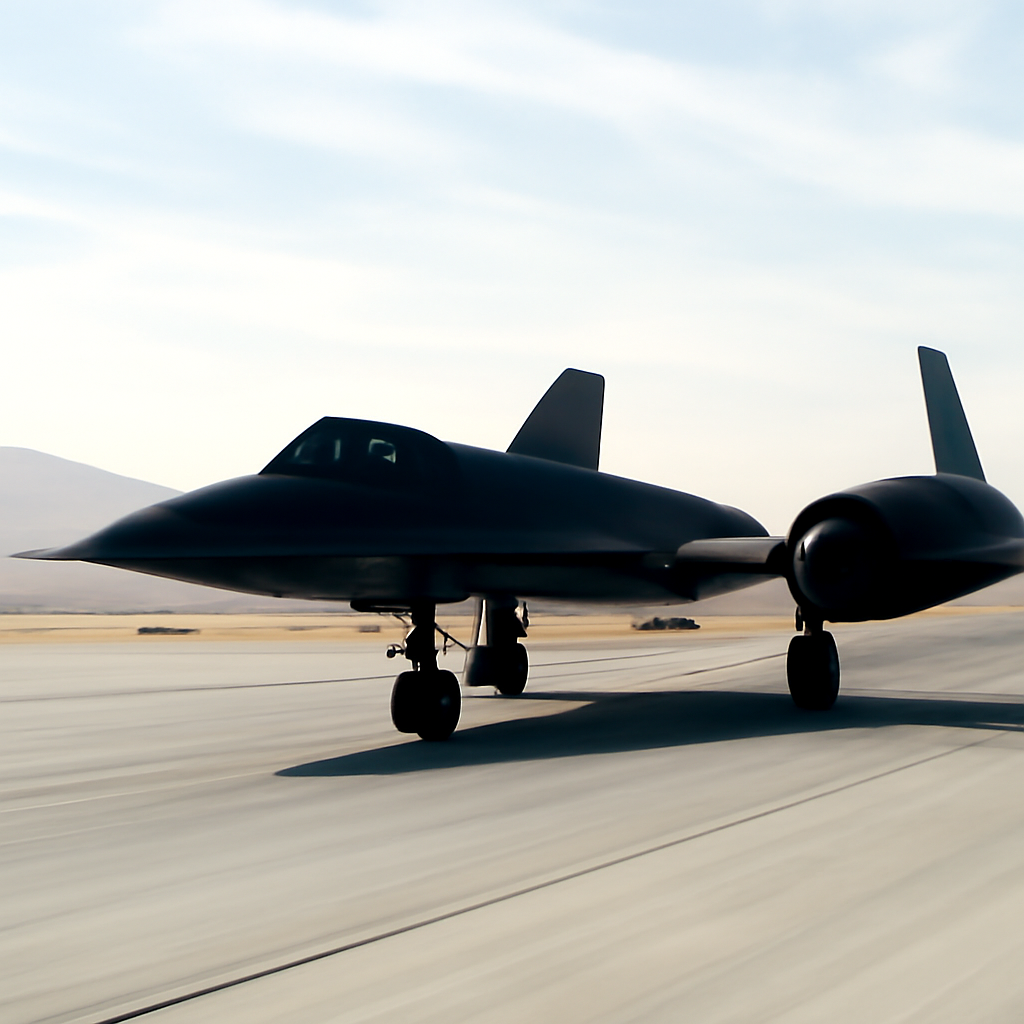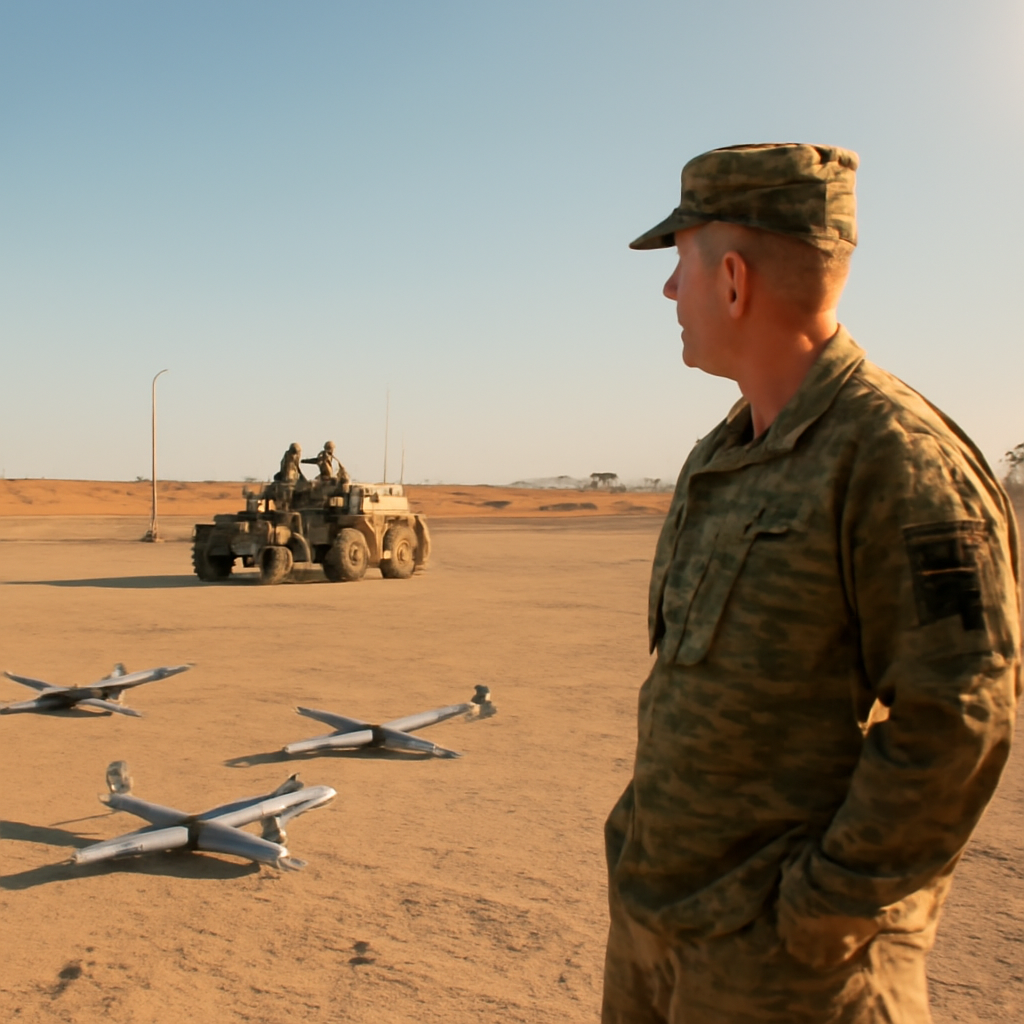
“The image — a four-star air chief standing beside a jet-powered stealth drone that shot down a target with a beyond-visual-range missile just six months ago — is not incidental.”
That moment in Ankara: a visible turning point
On May 22, 2026, Pakistan Air Force Chief of Air Staff Air Chief Marshal Zaheer Ahmed Baber Sidhu was photographed in front of a Bayraktar Kizilelma UCAV at Baykar Technologies’ facilities in Turkey. The image arrives against an established Pakistan–Baykar relationship: the PAF has already inducted the Bayraktar Akinci heavy UCAV and the Bayraktar TB2 medium-altitude drone, and Baykar has created a Pakistan subsidiary, Bayraktar Teknoloji Pakistan, while signing a cooperation agreement with the National Aerospace Science and Technology Park (NASTP).
Bayraktar Kizilelma’s operational credentials and industrial signal
The Kizilelma is not a concept platform. On November 29, 2025, it conducted the first beyond-visual-range air-to-air missile engagement by a jet-powered UCAV, firing a TÜBİTAK SAGE Gökdoğan missile guided by an Aselsan MURAD-100A AESA radar to intercept a high-speed target drone. The afterburning Kizilelma‑B, powered by Ukraine’s Ivchenko‑Progress AI‑322F turbofan, produces roughly 44 kilonewtons of thrust with afterburner, cruises at Mach 0.8, carries up to 1,500 kilograms of payload, and uses internal weapons bays to preserve low observability. Indonesia’s Republikorp Group signed for an initial 12-aircraft batch on May 6, 2026, with options up to 48 more and a local manufacturing facility — a commercial step Baykar says will begin deliveries in 2028 and marks the platform’s first export customer.

This site is the portfolio.
OSINTSights runs on Cloudflare Workers, D1, R2, and Vectorize, with an AI pipeline on Hetzner ARM. Nubivance designed, built, and operates it. We do the same for clients.
See what we buildSovereign integration: NASTP, separate subsystems, and Turkish data links
What makes the Kizilelma attractive to the PAF is not only the airframe but how its subsystems are sourced. Baykar builds the airframe while avionics and mission systems come from separate vendors such as Aselsan, Havelsan, and Milsoft. That separable supply chain creates a pathway for NASTP and Pakistani designers to develop and install domestic AESA radars, electro‑optical targeting systems, electronic warfare suites, and indigenous tactical data links into a Pakistan‑specific variant. Leonardo and Baykar’s LBA Systems joint venture ran man‑unmanned teaming demonstrations in March 2026 using an M‑346 as a mothership controlling two Kizilelma UCAVs, and Turkish Aerospace showed a similar Hürjet–Anka‑3 pairing — both relying on an Aselsan‑centred next‑generation data link backbone. Those demonstrations indicate the Turkish data link architecture has achieved a level of interoperability usable by multiple airframers.
Engine supply and production constraints: Ivchenko‑Progress and TEI’s alternatives
The Kizilelma’s reliance on Ukrainian Ivchenko‑Progress powerplants is a material constraint. The AI‑25 and AI‑322F engines’ availability has been strained by Ukraine’s war, and the PAF’s own procurement choices have previously shifted away from Ukrainian engines. Turkey’s TUSAS Engine Industries (TEI) is developing the TEI‑TF6000 (non‑afterburning, ~6,000 lbf) and the TEI‑TF10000 (afterburning, ~10,000 lbf) from a shared core; the TF6000 ran successfully at Teknofest 2025 but neither TEI engine has been flight‑tested in its intended application. The source identifies contracting options Pakistan would need to consider: licensed production, strategic stockpiling, or accelerated co‑development.
Maritime strike and NESCOM’s complementary pathways
The Kizilelma’s self‑contained sensor‑shooter architecture — its AESA radar, EOTS, internal weapons bay and independent prosecution capability — enables shore‑based long‑range anti‑surface warfare and ISR without a carrier air wing. The Pakistan Navy’s Shahpar‑3 programme, work on payloads such as the Evrak lightweight torpedo and sonobuoy pods, and efforts on Robust ESM create natural coupling points: a Kizilelma fleet carrying weapons like the Roketsan SOM or feeding targeting data to submarines and surface combatants would extend over‑the‑horizon fires as Pakistan fields anti‑ship capabilities including Harbah NG. Meanwhile, NESCOM’s pedigree with the Babur, Ra’ad and Harbah cruise missile families positions it to lead development of a lower‑cost, attritable jet UCAV class — a role analogous to the way cruise‑missile expertise underpinned some Western attritable‑UCAV efforts — and to complement a Kizilelma fleet with mass‑produced strike nodes.
What this means for NASTP, the Pakistan Navy, and the Pakistan Air Force
- NASTP: will have an operational proving ground to test domestic AESA radars, electronic warfare suites, and a next‑generation data link inside a Pakistani‑configured Kizilelma airframe.
- Pakistan Navy: will watch for a shore‑deployable, long‑range maritime strike and ISR node able to feed targeting to Harbah NG and the submarine fleet without a carrier.
- PAF: gains a path to man‑unmanned teaming now — potentially using the JF‑17 Block III and the twin‑seat JF‑17B as a MUM‑T mothership with a modern KLJ‑7A radar — while preserving the option to delay OEM‑locked fifth‑generation buys like the J‑35 or Kaan.
The photograph in Ankara is shorthand for a strategic choice: Pakistan appears to be buying an industrial posture as much as an aircraft. The Kizilelma offers an operationally credible UCAV and, crucially, a modular architecture that can host Pakistan‑developed sensors, data links and weapons. Critical hurdles remain — engine supply, proven TEI replacements, and the challenge of turning demonstrations into sustained production — but Baykar’s industrial footprint in Pakistan and Indonesia’s order both pivot the platform from prototype toward fleet reality. The PAF’s strategy, as laid out in its own publications and reinforced by procurement behavior, is clear: build the sovereign combat architecture first; make the next‑generation fighter the capstone later. The starting gun has been fired.
Source: Quwa — Is the Pakistan Air Force Planning to Buy Türkiye’s Bayraktar Kizilelma Drone?