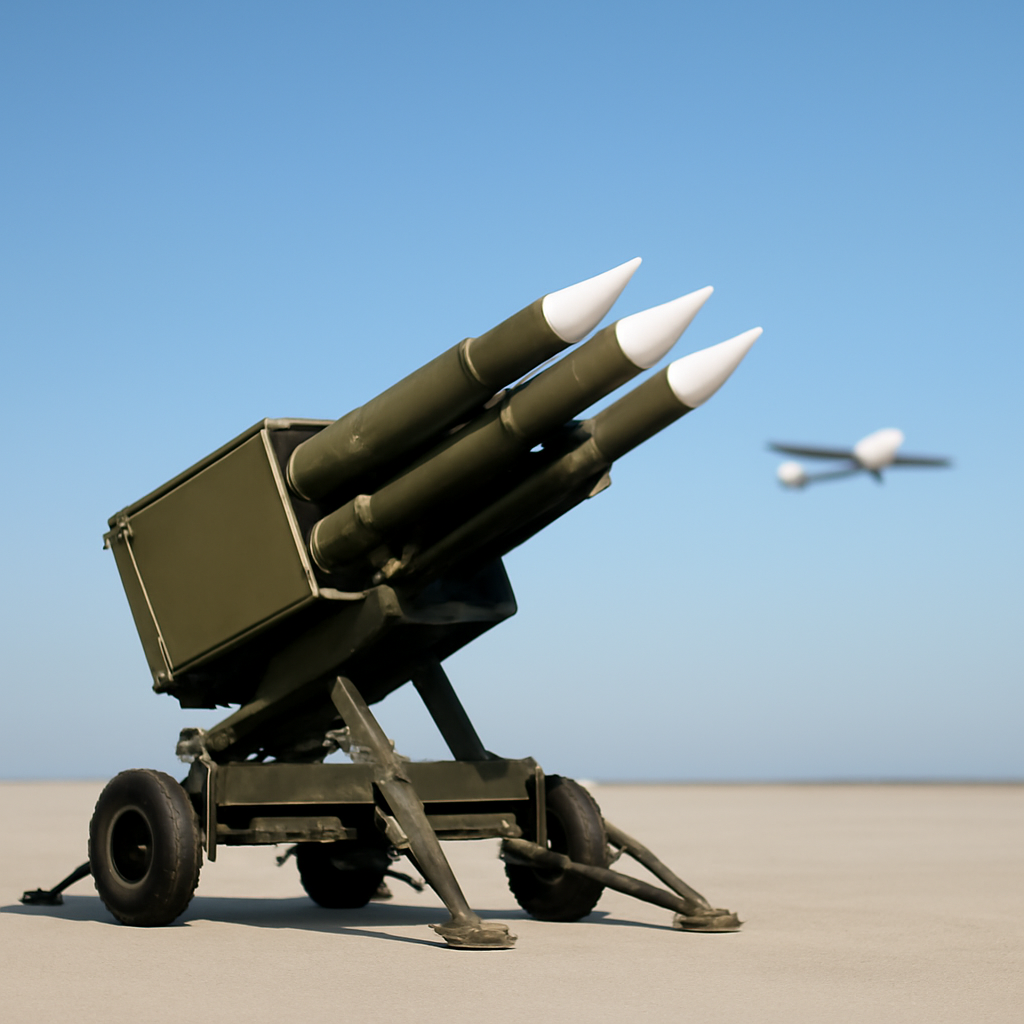
"Woot‑Tech describes it as a 2,500 Ns‑class system built for reliable assisted launch," the company said in a 06 June announcement introducing the RATO‑150. The test confirms that a privately owned Pakistani defence contractor has moved from offering assisted‑launch as an option to marketing a stand‑alone rocket‑assisted take‑off booster intended to let unmanned aerial vehicles (UAVs) fly from sites without long runways or large catapults.
What the RATO‑150 is and how it works
Woot‑Tech’s RATO‑150 is a 2,500 Ns booster — Ns meaning Newton‑seconds, a measure of total impulse rather than instantaneous thrust. The company described the device as a short‑burn solid‑ or hybrid‑rocket motor that accelerates an air vehicle to flying speed from a rail, canister, or zero‑length launcher, then separates once the air vehicle’s own engine takes over. By defining the system in total impulse terms, Woot‑Tech is signaling the momentum the booster can add to a launched air vehicle and therefore the ceiling on the mass and type of UAS it can support.
Why Woot‑Tech is pitching the booster: cost, mass production, and austere launch
In its public materials the company framed the RATO‑150 as both cost‑effective and mass‑producible, designed to let operators dispense with large pneumatic catapults and long runways. Woot‑Tech explicitly positions the booster to support rapid deployment and launch from austere sites, and markets it for tactical, reconnaissance, and defence missions — including zero‑length launch and loitering‑munition use.

Audit-ready is a season. It shouldn't be.
Evidence in spreadsheets, controls drifting between audits, frameworks multiplying on flat headcount. Nubivance runs continuous compliance on Rapid7 Cyber GRC - SOC 2, HIPAA, ISO 27001, PCI, CMMC.
End the scrambleWhere RATO‑150 fits inside Woot‑Tech’s effectors
Founded in 2021, Woot‑Tech began with commercial VTOL drones and has expanded into a defence portfolio that includes target drones, an armed multirotor, loitering munitions, a turbojet one‑way attack (OWA), a cruise missile, and a drone‑swarm system. The company’s jet‑powered effectors include the HiMark‑25 TJ turbojet OWA and the Nimbus 2K cruise missile. Woot‑Tech’s Juggernaut armed multirotor has already entered service with the Pakistan Navy and special operations forces, and the company had previously offered a RATO option on the HiMark‑25 TJ to extend range from mobile launch sites. The RATO‑150 converts that optional capability into a dedicated, marketed product intended primarily as a launch backbone for the loitering and one‑way attack effectors that make up most of Woot‑Tech’s offerings.
How RATO‑150 compares to other RATO approaches and the broader technical range
RATO solutions vary widely in total impulse. Woot‑Tech notes that internal RATO designs span roughly 2.5 kN·s to 200 kN·s, with the RATO‑150’s 2,500 Ns (2.5 kN·s) placing it at the low end of that spectrum. That positioning indicates the booster is aimed at lighter‑weight UAS and expendable EW/strike effectors rather than heavy‑payload or retrievable systems. The company’s description places the RATO‑150 within the well‑established launch practice for loitering munitions and OWAs: examples cited in the same technical family include IAI’s Harpy and Harop, which fire from sealed canisters with rocket assist before unfolding wings, and the Shahed‑136, which launches via RATO from truck‑mounted rails.
What this means for the Pakistan Navy, special operations forces, and procurement/end users
- Pakistan Navy and special operations forces: Woot‑Tech already supplies the Juggernaut armed multirotor to these services; a dedicated RATO product could simplify deploying jet‑powered OWAs or loitering munitions from austere coastal or littoral sites without heavy launch infrastructure.
- Procurement leaders and field operators: The company’s emphasis on cost‑effectiveness and mass producibility speaks to buyers seeking rapid, dispersed launch options and lower logistics footprints — in particular where long runways or pneumatic catapults are unavailable.
- Designers of loitering munitions and OWA systems: With the RATO‑150 positioned at the lower end of total‑impulse scales, designers of light loitering munitions and one‑way attack jets will evaluate whether the booster’s impulse matches their mass and range goals, especially when integrating with turbojet effectors like the HiMark‑25 TJ.
Woot‑Tech’s 06 June test moves an assisted‑launch capability from optional add‑on to dedicated product and frames it as an enabler for lighter, expendable effectors. The immediate, concrete questions the announcement leaves open are whether and how quickly the RATO‑150 will be integrated across Woot‑Tech’s HiMark‑25 TJ and other effectors, and whether future versions will increase total impulse beyond the 2,500 Ns floor the company has chosen to pursue.