"Every day that units aren’t hitting the fleet is a day later that modernization occurs," Logan Jones, chief growth officer for Oshkosh Corporation’s transport segment, told Breaking Defense — a blunt summation of why Oshkosh Defense is pressing the Marine Corps to accept a short-term production offer before an Oct. 31 deadline.
What Oshkosh is offering: a production bridge and the numbers behind it
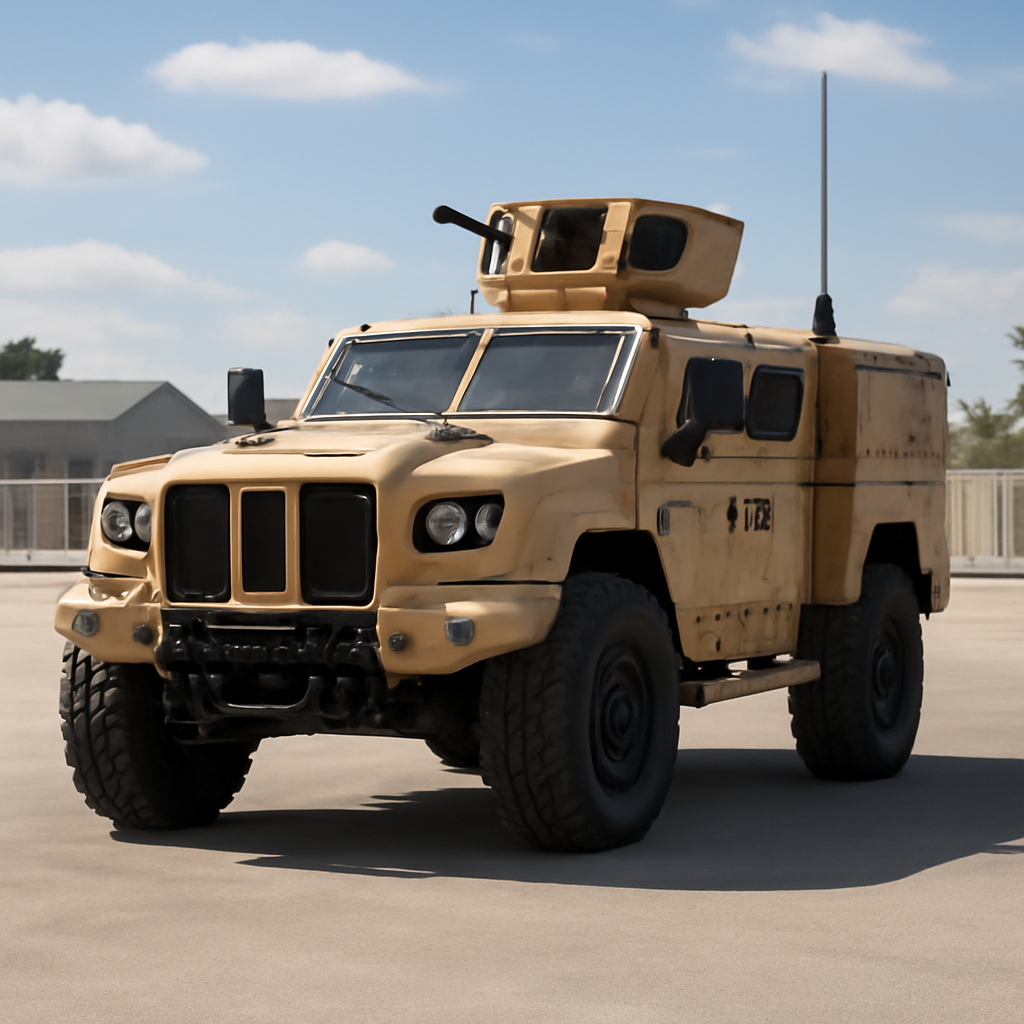
Oshkosh Defense has proposed a “production bridge” to the Marine Corps that it says would deliver the company’s A1 Joint Light Tactical Vehicle (JLTV) to Marines in under a year. The firm says it has allocated more than $50 million in private capital toward production capacity and long‑lead materials and that it can produce 1,200 JLTVs annually, with the first delivery to the Marine Corps in 10 months.
The company frames the bridge as insurance for the service’s modernization timeline: it would supply JLTVs from an active A1 production line — which Oshkosh says remains active for its commercial business — while a competitor’s A2 variant works through production issues. Oshkosh told Breaking Defense that its proposal assumes current workforce, production space, and supplier conditions; if the Marine Corps waits past Oct. 31, those assumptions would need to be reevaluated.
Timeline pressure: the Oct. 31 decision point
Oshkosh set Oct. 31 as the cut‑off for the Marine Corps to accept the production bridge. Company representatives said the Marine Corps has acknowledged awareness of the deadline and the rationale, but Oshkosh has received "no indication of direction or anything like that from them," Jones told Breaking Defense.
Jones also warned of planning consequences if the service does not signal demand: "If there’s no demand signal, we’ll have to figure out what to do with it," he said, listing possibilities including servicing the existing fleet, international partners, or partner programs like ROGUE Fires.

This site is the portfolio.
OSINTSights runs on Cloudflare Workers, D1, R2, and Vectorize, with an AI pipeline on Hetzner ARM. Nubivance designed, built, and operates it. We do the same for clients.
See what we buildAM General’s A2 delays and the politics around production
After Oshkosh was the sole A1 JLTV supplier under a 2015 contract, AM General won a follow‑on production contract in 2023 to produce an A2 JLTV variant. Lawmakers from both parties have raised concerns about AM General’s delivery schedule; Sen. Tammy Baldwin, D‑Wis., wrote in June to then‑Secretary of the Army Dan Driscoll that the delay was "unacceptable performance for one of DoD’s largest vehicles contracts."
AM General did not respond to a request for comment to Breaking Defense; in June, AM General CEO John Chadbourne told the outlet that "complex" transition issues were behind the delays and that the company plans to reach full‑rate production by 2027.
Where the Marine Corps stands: solicitations, budgets, and acquisition goals
The Marine Corps did not respond to a request for comment from Breaking Defense by publication time, but it has taken acquisition steps: in May the service published a solicitation seeking a second JLTV supplier, asking for "mature, production‑ready, rapidly fieldable" commercial or "non‑developmental" JLTV variants. At that time the service told Breaking Defense it "continuously evaluates acquisition options to ensure it can meet approved JLTV requirements, preserve readiness, and reduce fielding risk."
In budget terms, the Marine Corps requested $244.9 million in its fiscal year 2027 submission to procure more than 340 A2 JLTVs. Collectively the service wants 12,500 JLTVs; Oshkosh says the Marine Corps has received less than 60 percent of its acquisition objective.
How the Marine Corps, Oshkosh, and AM General are likely to respond
- Marine Corps acquisition leaders — They have signaled in a May solicitation that they want "mature, production‑ready, rapidly fieldable" options and are weighing a second supplier; their decision by Oct. 31 will determine whether Oshkosh’s bridge can be implemented under current assumptions.
- Oshkosh Defense — The company has shown a readiness to deploy private capital and immediate production capacity, hosted media and officials at its Oshkosh facilities (including a Secretary of Defense "Arsenal of Freedom" tour in August), and is prepared to redeploy effort to fleet support or international partners if the service does not accept the bridge.
- AM General — Facing scrutiny for delivery delays, the company has described transition complexity and set 2027 as the target for full‑rate production; continued congressional pressure and a possible second supplier could influence timelines and oversight.
Oshkosh executives emphasize that the bridge is meant to buy time rather than to undercut AM General. "This could be misunderstood or misconstrued that we have some agenda to push AM General to fail," Pat Williams, chief programs officer at Oshkosh Defense, told Breaking Defense. "That’s actually not the case. I hope that they find a way to make it work. … Our whole goal is to help the Marine Corps find a bridge to buy AM General time."
The coming weeks will determine whether the Marine Corps accepts a near‑term, privately backed production path that promises quick deliveries, or whether it will continue to rely on AM General’s A2 ramp‑up and the solicitation process for a second supplier. The Oct. 31 deadline sets a clear decision point for equipment readiness, company planning, and congressional attention.