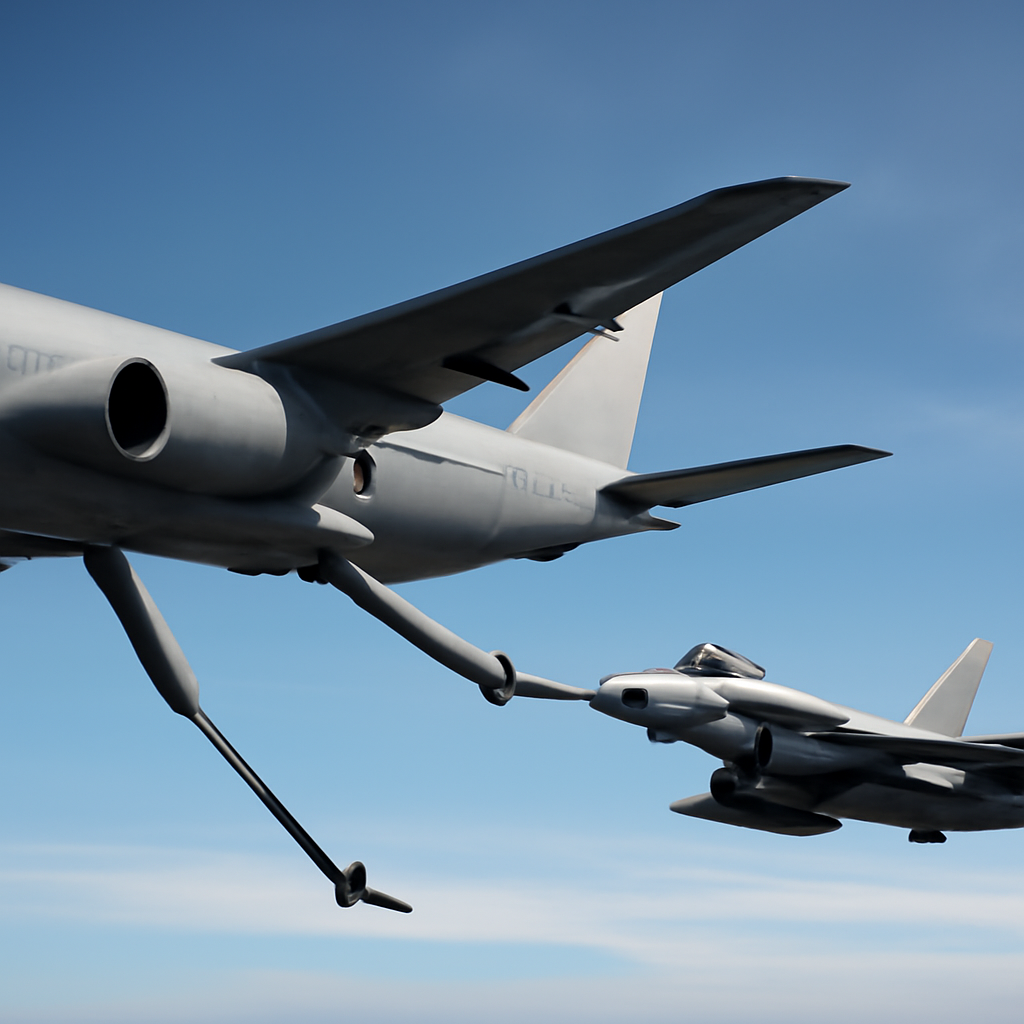
"The Royal Air Force currently operates a probe and drogue air-to-air refueling system and will complement this with the development of a boom system," Defense Minister Luke Pollard wrote in a parliamentary response — the clearest government confirmation yet that the United Kingdom will add a flying-boom refueling capability to RAF tankers.
Luke Pollard’s written reply and the parliamentary trigger
In a written response to opposition MP Ben Obese-Jecty, Defense Minister Luke Pollard confirmed that the RAF’s existing probe-and-drogue aerial refueling capability "will be complemented by the development of a boom system." Pollard framed the development as a means to "ensure we have a sovereign air-to-air refueling capability for the future Royal Air Force fleet that enhances interoperability with NATO allies and partners." The announcement marks the first time a minister has publicly affirmed a boom capability for RAF tankers; the timeline and acquisition approach remain unspecified.
Why Tempest and GCAP are driving the requirement
The immediate requirement for a boom stems largely from the Tempest combat jet, being developed under the Global Combat Air Program (GCAP). Tempest is being designed with a fuselage-mounted receptacle for boom refueling, a configuration incompatible with the RAF’s current hose-and-drogue-only tanker fleet. A senior RAF official told Janes in July that the service "currently do not have boom [-equipped tankers] in the UK" and that the RAF "has a requirement for a boom from GCAP" which they are now looking at resolving.

Audit-ready is a season. It shouldn't be.
Evidence in spreadsheets, controls drifting between audits, frameworks multiplying on flat headcount. Nubivance runs continuous compliance on Rapid7 Cyber GRC - SOC 2, HIPAA, ISO 27001, PCI, CMMC.
End the scrambleVoyager fleet, configuration choices, and contract constraints
The RAF’s principal tanker fleet consists of Airbus A330 Multi-Role Tanker Transport (MRTT) Voyagers, operated by the AirTanker consortium under a private finance initiative. Unlike many A330 MRTT operators, the British Voyagers were configured exclusively for hose-and-drogue refueling when ordered; the baseline A330 MRTT design does include a provision for a flying boom but that capability was deleted in the UK purchase to save weight, complexity, and cost.
Current Voyager variants include the K2, equipped with two wing-mounted Cobham 905E hose-and-drogue units, and the K3, which adds a Cobham 805E fuselage refueling unit (FRU) at the rear of the aircraft for a higher fuel-transfer rate. Up to 14 Voyagers are available to the RAF under the existing arrangement; the private-finance contract runs until 2035, when the airframes will be significantly older.
Those facts shape the practical options: one path would be to modify some Voyagers by installing a boom system in the rear fuselage — a conversion that the A330 MRTT platform can accommodate — but such work would raise engineering, certification, ownership, and contractual questions because the RAF does not directly own the fleet. The alternative is to acquire new A330 MRTTs or another boom-equipped tanker type from the outset, avoiding heavy investment in airframes nearing the end of their contracted service.
Podded-boom concepts, uncrewed "buddy" refueling, and tanker-to-tanker refueling
The report canvasses other technical possibilities. A podded boom arrangement — a boom carried externally in a pod — remains a concept under consideration and is "gaining traction with the U.S. Air Force" as it weighs options for future tanker capabilities, though the source notes uncertainty about whether a podded boom would meet Tempest’s performance and integration needs. TWZ has also flagged a more novel approach: drones equipped with buddy stores operating in a hub-and-spoke model to ferry fuel from tankers outside the threat envelope to aircraft at the tactical edge. The source describes this as a potential option as the U.K. Ministry of Defence "increasingly looks to unlock the potential of uncrewed capabilities," while also calling it less likely as a primary solution.
Additionally, some A330 MRTT operators equip their tankers to receive fuel, enabling tanker-to-tanker refueling to extend reach. The source notes a potential requirement for RAF tankers to have receiver systems to allow this flexibility; the current Voyager configuration does not include boom-equipped tankers to support existing and incoming RAF boom receivers.
What this means for the RAF, AirTanker, and the GCAP Tempest program
- Royal Air Force: The RAF will need to resolve how to provide a sovereign boom capability for aircraft already or soon-to-be equipped with boom receptacles — including P-8A Poseidon, RC-135W Rivet Joint, C-17A Globemaster III, E-7A Wedgetail, the forthcoming F-35A fleet, and Tempest — because current Voyagers cannot provide boom refueling.
- AirTanker / Ministry of Defence procurement: Contractual and ownership issues tied to the private-finance Voyager fleet, and the existing contract that runs until 2035, create a choice between modifying leased Voyagers, buying new boom-equipped tankers, or pursuing alternate technologies such as podded booms or uncrewed buddy refueling.
- GCAP / Tempest program: Tempest’s fuselage-mounted boom receptacle makes a sovereign boom solution operationally important for the platform’s interoperability with NATO and allied air forces; resolving tanker compatibility will be a prerequisite for fully exploiting Tempest’s design.
Ministerial confirmation ends the debate over whether the UK will pursue a boom capability; the core questions now are how it will be delivered and on what timetable. Will the government retrofit Voyagers, buy new boom-equipped aircraft, accept a podded boom compromise, or lean on uncrewed refueling concepts? For now, as Pollard acknowledged, the when and the how "remain very much up in the air."