“The evidence is growing that the nuclear weapon states are sidelining, and even walking away from, their disarmament commitments and are instead flexing their nuclear muscles,” Hans Kristensen, associate senior fellow at SIPRI and director of the Nuclear Information Project at the Federation of American Scientists, said in SIPRI’s press release.
SIPRI: global warhead totals and rising alert levels
The Stockholm International Peace Research Institute’s annual report, released today, finds that roughly 12,000 nuclear warheads remain in the arsenals of the world’s nine nuclear-armed states, and that as many as 2,200 of those were kept on high operational alert as of January 2026 — an increase of up to 100 from the year before. SIPRI also reports that 83 percent of all useable warheads are held by Russia and the United States, while China now has around 620 warheads and is expanding its arsenal faster than any other country.
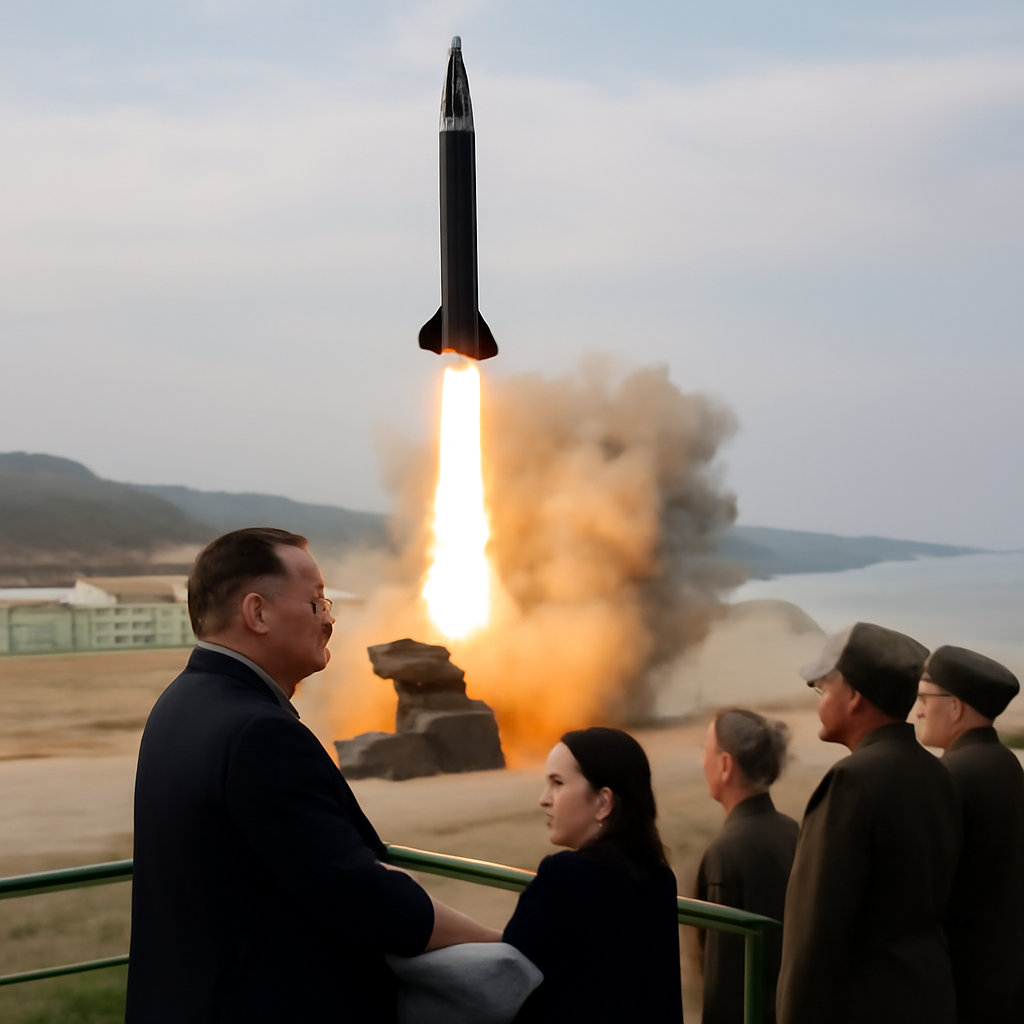
The report ties that expansion to a renewed arms-race dynamic, highlighting both quantitative growth and the development of new delivery systems. SIPRI notes testing failures for Russia’s Sarmat intercontinental ballistic missile and the Burevestnik nuclear-powered cruise missile over the last year. It also reports that Russia has begun building a forward operating base in Belarus for its dual-capable Oreshnik intermediate-range ballistic missile, a system that has been used with conventional warheads against Ukraine, most recently last month.
France’s force: more warheads, old doctrine, new platforms
President Emmanuel Macron’s March 2026 announcement that France will increase its number of nuclear warheads came amid a package of modernisation and basing plans. SIPRI records a rise in France’s stockpile from 290 warheads in January 2025 to 370 in January 2026 — an increase of 80 in a single year. SIPRI’s Hans Kristensen cautioned that part of that rise may reflect a temporary overlap as older warheads are retired while new modifications are produced.
Macron reaffirmed a long-standing French doctrine centered on national sovereignty and the protection of “vital interests,” and described the deterrent as “purely strategic.” France’s Force de frappe continues to rest on sea- and air-based systems: the upgraded M51.3 submarine-launched ballistic missile carrying a new warhead is operational on current SSBNs, and a new missile version is planned for third-generation Invincible-class submarines scheduled for delivery in 2036. The air leg features the upgraded ASMPA-R cruise missile carried on Rafale fighters, and Macron announced the start of a major new hypersonic missile program alongside plans for a new nuclear airbase in eastern France for two nuclear-capable Rafale squadrons equipped with a next-generation hypersonic nuclear air-launched cruise missile.
Kristensen questioned aspects of credibility tied to doctrine and capability, asking how a deterrent that eschews tactical nuclear weapons can credibly respond to Russian non-strategic nuclear threats, and noting similarities and differences with British arrangements that are tightly integrated with NATO and US systems.

Audit-ready is a season. It shouldn't be.
Evidence in spreadsheets, controls drifting between audits, frameworks multiplying on flat headcount. Nubivance runs continuous compliance on Rapid7 Cyber GRC - SOC 2, HIPAA, ISO 27001, PCI, CMMC.
End the scrambleMacron’s outreach widens: nine European states and counting
What began as a 2020 proposal by Macron to open a dialogue with European partners on the role of French nuclear weapons has gained momentum. According to Norway’s Prime Minister Jonas Gahr Støre, nine European nations have discussed Macron’s initiative: the United Kingdom, Germany, Poland, the Netherlands, Sweden, Denmark, Belgium, Greece, and Norway. Støre said, “Together with some of our closest partners and Allies, Norway will be discussing in more detail how France’s nuclear weapons can further enhance European security and deterrence,” while stressing that the arrangement does not alter Norway’s policy of “no nuclear weapons on Norwegian soil in peacetime.”
Finland’s Prime Minister Petteri Orpo confirmed that Helsinki has held similar talks with Paris and that Macron “has welcomed Helsinki to join the pact.” The two leaders agreed Finland will receive more detailed information soon, and then decide whether to join. Sweden’s Prime Minister Ulf Kristersson announced in March that Stockholm had started discussions with France and the UK on extended nuclear deterrence — a marked shift for a country long militarily non-aligned.
William Alberque on credibility, commitments, and NATO ties
William Alberque, a former NATO Director of Arms Control, told Breaking Defense that France’s bilateral security guarantees “are very credible” and could be extended “with full credibility” to allies that want such agreements. Alberque described the approach as “a belt-and-braces approach that ensures no ally will wonder if France will stand by them if Russia attacks.” He also noted France’s historic stance on NATO bodies, and observed that Paris “always has had the Article 5 commitment — the problem was, they would never describe it in depth.”
Alberque said he was struck by Denmark’s and Norway’s decisions to engage given their “historic self-imposed restrictions on their membership.” The report also highlights tensions in comparing Paris and London: SIPRI and Kristensen note the UK’s nuclear instruments are more integrated with NATO — and therefore, in Kristensen’s words, “a security guarantee from London would be more credible than one from Paris.”
Implications for European security and the immediate next steps
The SIPRI findings and Paris’s diplomatic push converge at a moment of rising numbers and renewed signalling: a measurable increase in deployed and alert warheads worldwide, new French nuclear outreach across Europe, and persistent testing and force posture activity from Russia. For now, France has increased its inventory and reiterated an independent, strategic deterrent; several Scandinavian capitals have opened talks; and Helsinki is awaiting more detailed information before deciding whether to join.
The key near-term questions are concrete and named in the record: will more European capitals formally seek bilateral guarantees from Paris, how will NATO and the United States be included in those arrangements, and how long will any temporary rise in counted inventories persist while older warheads are retired and new ones produced? The SIPRI report and France’s diplomatic push ensure those questions will remain central to European security discussions in the months ahead.