"True autonomy is more than remotely piloted systems or basic automation," Craig Woolston, vice president and general manager for research and advanced design at Northrop Grumman, told Breaking Defense. That sentence frames a deliberate break from the familiar — not incremental automation, but systems that "perceive, decide, and act" against mission objectives without continuous human control.
What Northrop Grumman says true autonomy looks like
Woolston draws a line between remotely piloted or conventionally automated aircraft and what he calls fully autonomous systems: platforms that handle perception, decision-making, and tactical action within the constraints set by human operators. In his description, autonomy shifts operator roles from direct vehicle control to mission management — specifying goals and constraints while the aircraft executes tactical work in real time.
He argues this is necessary for operations beyond visual line of sight and in contested electromagnetic environments where continuous control is "impractical or impossible." The claimed upside: force multiplication, operational flexibility, and the ability for human crews to focus on higher-level coordination rather than single-vehicle piloting.
Talon IQ, Prism, and the Model 437: a flight-proven testbed
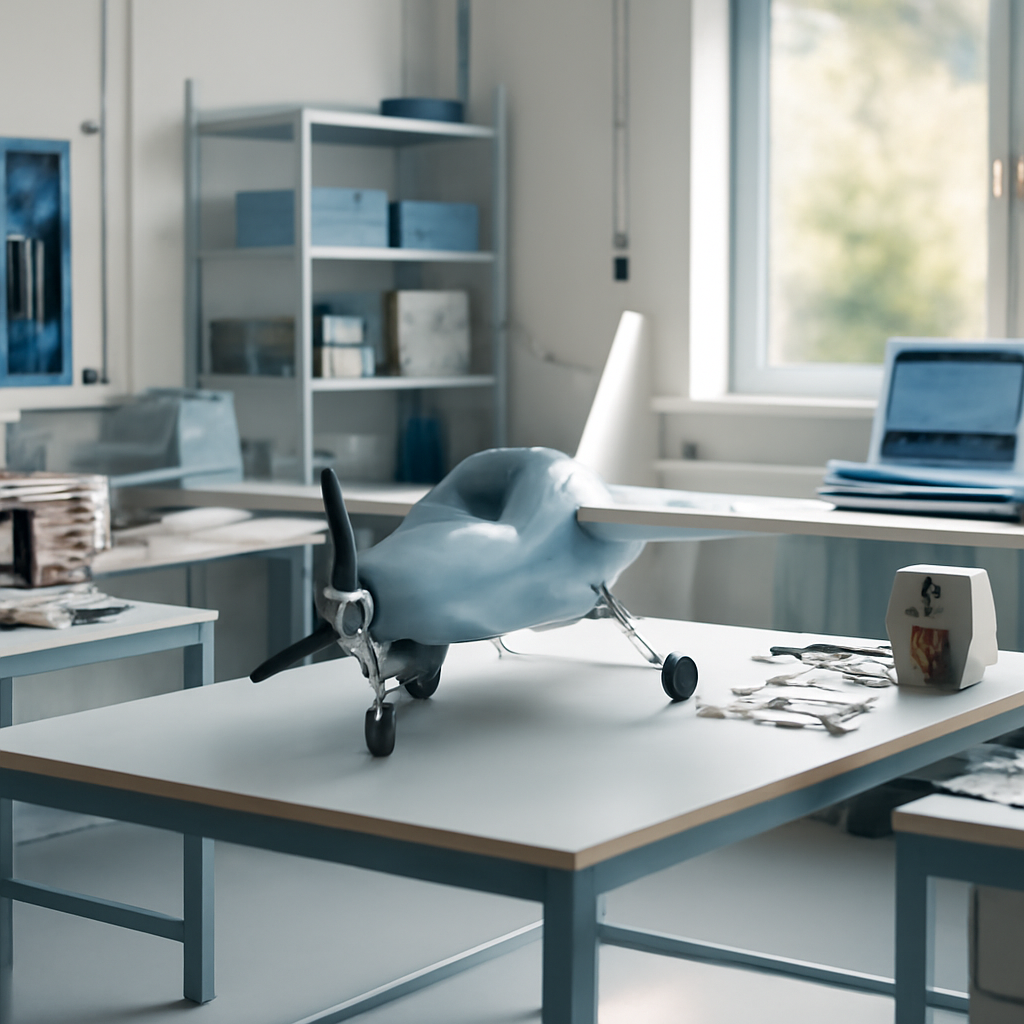
Northrop Grumman presents Talon IQ as an open-architecture testbed that converts the Model 437 airframe into an "optionally autonomous" platform for rapid experimentation and integration. The company says its Prism Mission Autonomy software has already commanded the Model 437, and that Talon IQ supports plug-and-play autonomy stacks, in-flight hot-swaps, and "hours of physical AI plugging directly into the Model 437 aircraft."
According to the company, these flight-proven demonstrations are intended to reduce risk, accelerate algorithm refinement, and validate mission behaviors beyond simulation — key selling points for maturity and transition into operational platforms. Woolston also emphasized that Prism was selected as one of the autonomy software solutions for the Air Force’s CCA marketplace, positioning Prism and Talon IQ as complementary elements in moving autonomy from lab to flight.

Audit-ready is a season. It shouldn't be.
Evidence in spreadsheets, controls drifting between audits, frameworks multiplying on flat headcount. Nubivance runs continuous compliance on Rapid7 Cyber GRC - SOC 2, HIPAA, ISO 27001, PCI, CMMC.
End the scrambleTalon Blue: a fully autonomous demonstrator
Talon Blue is described as a self-funded, CCA-class demonstrator that starts from a fully autonomous baseline rather than a remotely piloted model. Northrop Grumman says the program has completed plug-and-play mission autonomy demonstrations on Talon IQ and "fully autonomous taxi testing" to accelerate an "path to operational capability."
The intent, per Woolston, is to validate independent mission execution, advanced sense-and-avoid, and human-autonomy teaming so the aircraft can act as a "trusted wingman and force multiplier" in contested scenarios. Northrop frames Talon Blue, Talon IQ, and Prism as an integrated Project Talon Portfolio intended to speed technology maturation, prove interoperability, and support scalable integration into future collaborative combat aircraft.
Engineering and operational hurdles Northrop Grumman identifies
Woolston lists several hard problems that remain before autonomy is broadly scalable and trusted across platforms. They include:
- real-time collaborative decision making between autonomous and crewed assets;
- robust sense-and-avoid capabilities to maintain safe separation in mixed airspace;
- secure, resilient communications in contested electromagnetic environments;
- advances in AI predictability, trustworthiness, and verification for real-world operations;
- standardizing autonomy interfaces and data models; and
- certifying AI-driven systems for safety and reliability.
Northrop also calls out the need to build operator trust through "transparent, explainable autonomy behaviors" and to foster agile development cycles and cross-domain cooperation across the defense industrial base.
What this means for the US Air Force, technologists and procurement leaders
- The US Air Force: Talon IQ and Prism are presented as paths to mature autonomy software for the Air Force’s CCA marketplace; the Talon Blue demonstrator is pitched to validate fully autonomous mission behaviors in operationally relevant conditions.
- Technologists and security teams: the company’s emphasis on open architecture, in-flight hot‑swaps, and extensive autonomous flight hours (Northrop cites "seven decades of autonomy work and more than half a million autonomous flight hours") signals opportunities — and responsibilities — to refine interoperability, verification, and contested-environment resiliency.
- Procurement and manufacturers: Northrop highlights modular, scalable design and "state-of-the-art manufacturing innovations" as part of Project Talon, framing the portfolio as a way to reduce integration risk and accelerate delivery to domestic and international markets.
Northrop Grumman positions Project Talon as a tightly coupled set of tools: a flight demonstration platform (Talon Blue), an open testbed (Talon IQ), and a mission autonomy stack (Prism). Together, the company argues, they reduce risk and speed the march from algorithm to operational behavior. The remaining questions — standardization, certification, resilient communications, and operator trust — are not framed as technical impossibilities but as the industrial and regulatory work left to make the claimed capabilities interoperable and trusted.
Whether Project Talon’s self-funded demonstrator and its Talon IQ proving ground change procurement calculus will depend on answers to those engineering and certification challenges, and on how rapidly the Air Force and partners adopt open interfaces and common data models.