"AI is now financed across almost every line of the Australian defence budget," writes Aina Turillazzi — "It is not, however, governed across them."
Drone warfare on the front lines: David Kirichenko on Russia and Ukraine
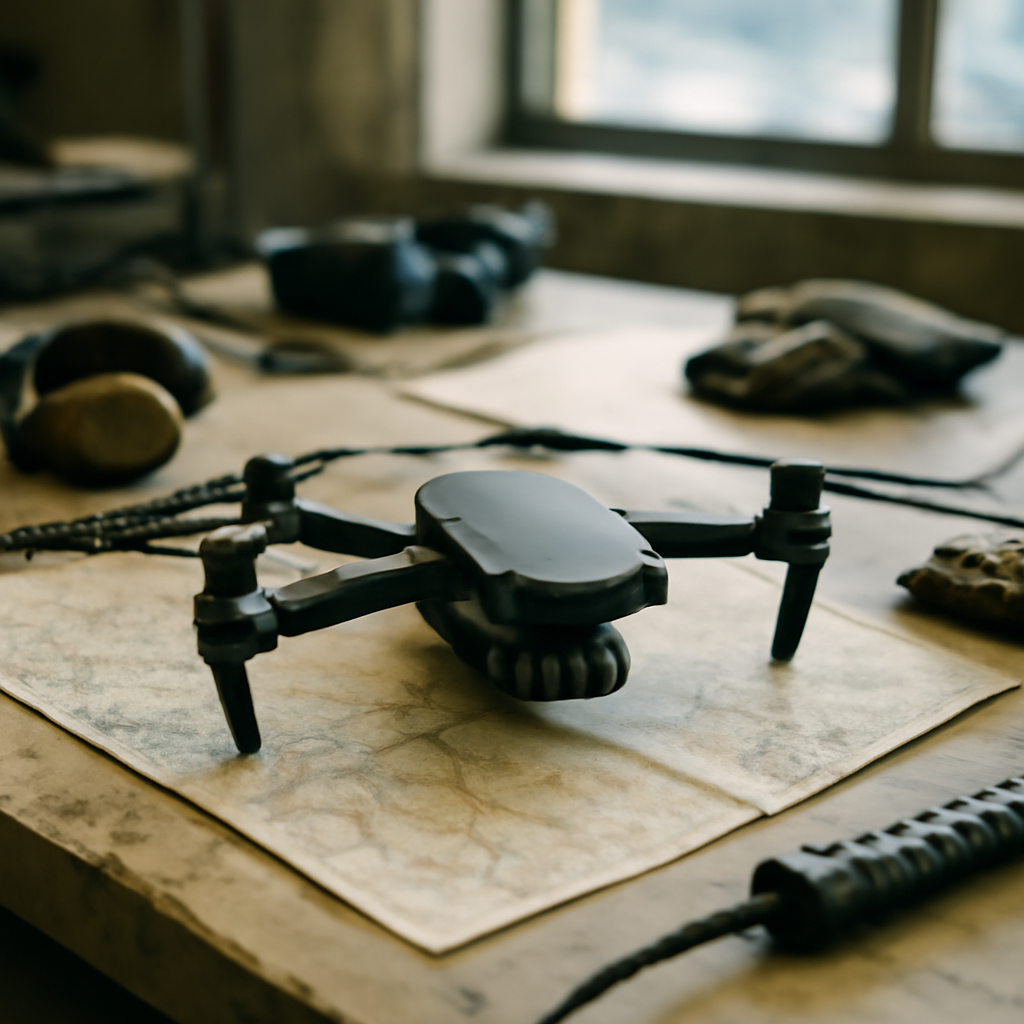
Autonomous systems are not a distant prospect; they are active in today's battles. David Kirichenko reports that autonomous drones and uncrewed ground vehicles are already shaping operations in the Russia–Ukraine war. Ukraine is equipping uncrewed ground vehicles with AI-powered targeting that extends range and accuracy, and its mid-range drones — named Hornet, Darts and RAM-2X — use autonomous terminal lock guidance to resist electromagnetic disruption.
Russia has matched that trend. Kirichenko notes Geran Seeker and Molniya strike drones employ mesh networking and onboard AI for autonomous terminal guidance and are widely deployed. He sums up the combat environment bluntly: "robot versus robot battles are common." Looking ahead, Ukrainian planners envision autonomous robots leading assaults to clear positions before troops move in, rapid deployment of drones to hunt targets, naval drones lying in wait to be activated remotely and then strike autonomously, and AI fusing battlefield data to identify targets and calculate optimal flight paths for long-range strikes.
Australian Defence Force procurement and the case for semi-autonomy — Malcolm Davis
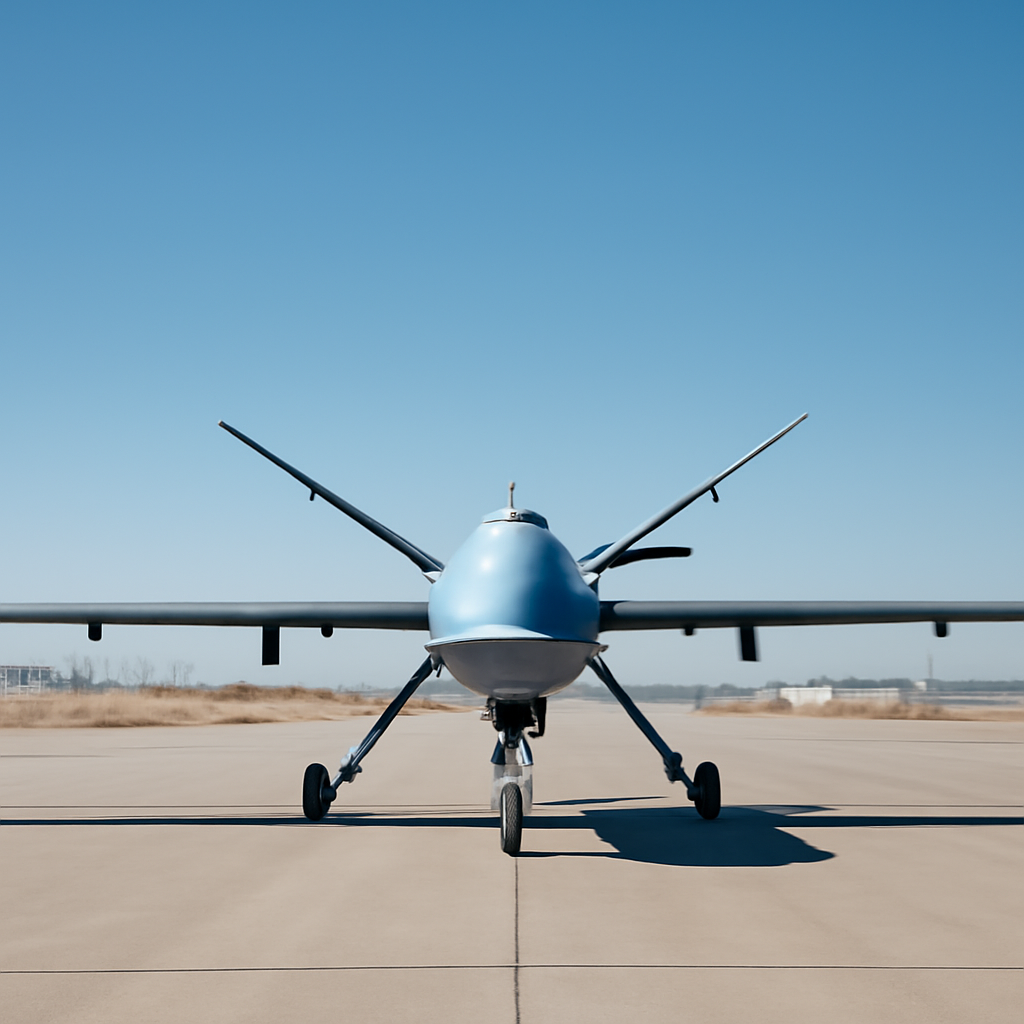
Malcolm Davis argues the Australian Defence Force's reliance on "small numbers of costly crewed platforms" is out of step with the rapid innovation cycles of uncrewed systems. His prescription is not wholesale autonomy but semi-autonomous systems bought "at low cost, in volume and at a rapid pace" to build combat mass across the region's distances.
Davis says the ADF may need to move from keeping humans "in the loop" to keeping them "on the loop" — operators would oversee machine behaviour rather than remotely pilot every action, leaving more immediate decisions to AI so operations can continue when communications are degraded.

Audit-ready is a season. It shouldn't be.
Evidence in spreadsheets, controls drifting between audits, frameworks multiplying on flat headcount. Nubivance runs continuous compliance on Rapid7 Cyber GRC - SOC 2, HIPAA, ISO 27001, PCI, CMMC.
End the scrambleAUKUS Pillar Two and autonomous submarines — Davis and Justin Bassi
Davis and Justin Bassi highlight a May announcement by Australia, Britain and the United States to equip autonomous submarines such as Anduril’s Ghost Shark with the sensors and weapons needed to navigate, detect and attack. The partners set a 2027 delivery target, which the authors call "a big if"; if met, they write, AUKUS Pillar Two could move from research into operational military capability.
They tie this capability to a concrete national vulnerability: Australia must protect its subsea critical infrastructure, including the 15 cables that carry almost all of its internet traffic. Davis and Bassi propose patrolling submarine cables with swarms of uncrewed autonomous vessels, freeing crewed submarines to operate forward in maritime approaches and beyond.
Human control, governance, and adaptive systems — Aina Turillazzi and Ayeza Areej
Turillazzi warns integration cannot outrun governance. She asks Canberra to build pauses for human review at key escalation points, to audit AI's role in high‑stakes choices, and to publicly commit that AI will not be given final authority over the most consequential decisions. Without such safeguards, she cautions, those meant to oversee AI may become "little more than a rubber stamp."
That risk is amplified by automation bias: AI systems are probabilistic and often opaque, and under pressure operators tend to defer to their outputs, shifting from assessing evidence to confirming a recommendation — a dynamic Turillazzi says sits awkwardly against the legal requirement for informed human judgement in targeting.
Ayeza Areej adds a technical and accountability wrinkle. She notes future systems may use continual learning — updating after deployment — which makes behaviour harder to predict when conditions change and creates new attack surfaces where adversaries could feed misleading data through camouflage, deception or electronic warfare. If an adaptive weapon misidentifies a civilian vehicle as a military target, Areej warns, responsibility could be difficult to locate among commanders, operators, developers, engineers and certifying authorities: "The machine may have made the immediate decision, but it cannot bear legal or moral responsibility for the consequences."
What this means for the ADF, AUKUS partners, and coalition commanders
- ADF procurement leaders should weigh rapid, low-cost acquisitions of semi-autonomous systems to build combat mass while embedding mandated human-review points, as Turillazzi and Davis advise.
- AUKUS partners must confront a technical and timetable reality: translating the May announcement into an operational 2027 capability for platforms like Anduril’s Ghost Shark is uncertain — "a big if" — yet it directly affects how Australia protects 15 subsea cables and projects maritime defence.
- Coalition commanders should plan for doctrinal mismatches Samuel White describes: even with shared platforms or data, differing legal expectations and demands for human verification or explainability can cause friction when an AI system recommends engagement.
The military uses of AI now combine tactical advantage with strategic complications. Systems that can hunt, lock and strike with limited human input are multiplying on present battlefields and in procurement plans; at the same time, governance gaps, automation bias and the prospect of continuously learning weapons make control, predictability and accountability difficult to guarantee. Policymakers and militaries are left with parallel pressures: accelerate to keep pace with adversaries, and pause to prevent losing the human judgement that law and ethics still require.