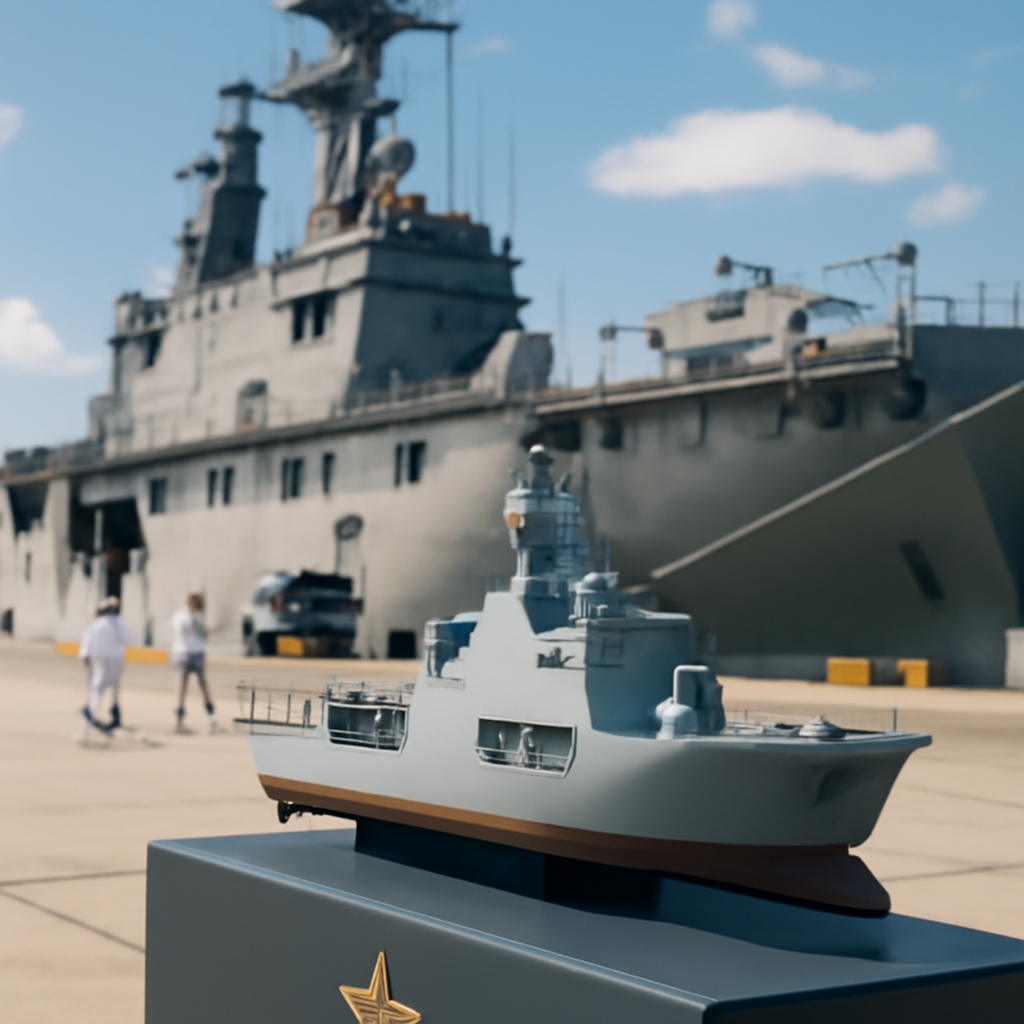
“The course of action that we would like to pursue would be able to extend the OFRP to 56-months, allowing us to have two workup cycles, two integrated training cycles, as well as two deployments for every ship,” Acting Secretary of the Navy Hung Cao told lawmakers on the Senate Armed Services Committee on May 20, 2026.
What Cao proposed: a 56-month amphibious readiness cycle and more hulls
Acting Secretary Cao recommended altering the Navy’s current 36-month Optimized Fleet Response Plan (OFRP) for amphibious vessels to a 56-month model. Cao said the longer cycle would provide two workup cycles, two integrated training cycles and two deployments for each amphibious ship. He also said the recommendation, forwarded to Secretary of Defense Pete Hegseth, includes increasing the amphibious fleet to 40 ships — up from a congressionally mandated force of 31.
The Amphibious Force Readiness Board and earlier signals from naval leaders
The recommendation follows work by the Amphibious Force Readiness Board (AFRB), which began in March 2026 and has been evaluating force generation options and ship requirements. The move reflects signals from senior leaders earlier in April at the Modern Day Marine Exposition: Chief of Naval Operations Adm. Daryl Caudle and Marine Corps leaders said they were weighing changes to the 36-month cycle. Adm. Caudle observed that altering the model could “kill the overhead of the phases of the force generation cycle that don’t add significantly to getting it ready for its next deployment.”

Audit-ready is a season. It shouldn't be.
Evidence in spreadsheets, controls drifting between audits, frameworks multiplying on flat headcount. Nubivance runs continuous compliance on Rapid7 Cyber GRC - SOC 2, HIPAA, ISO 27001, PCI, CMMC.
End the scrambleARG-MEU structure, current posture, and sustainability concerns
Amphibious forces typically deploy as Amphibious Ready Groups (ARGs) that include an assault ship, a transport dock and a support vessel, with an embarked Marine Expeditionary Unit (MEU) of at least 2,200 Marines. Together the services describe these formations as an “ARG-MEU,” and the Marine Corps has a stated aim to maintain a 3.0 ARG-MEU presence globally. Cao and other leaders noted that, while three ARG/MEUs are currently deployed, Commandant of the Marine Corps Gen. Eric Smith has repeatedly said recent presence levels are not sustainable.
Ship count debate and the arithmetic of persistence
Marine Corps leaders and Adm. Caudle have signaled that 40 amphibious ships is likely the right fleet size to generate the necessary operational friction for a persistent 3.0 ARG-MEU posture. “Forty just makes a lot of sense that it’s going to take that to give me the friction in there necessary to have a persistent 3.0, sir,” Adm. Caudle told Sen. Dan Sullivan at the Senate hearing, adding that the number would be refined as the AFRB’s work continues.
Maintenance shortfalls and the GAO finding
The drive to rework the force generation model and expand hull numbers is linked to long-standing readiness problems. The Government Accountability Office found in December 2024 that half of amphibious vessels were in “poor condition,” citing maintenance challenges driven by spare parts shortages and canceled maintenance periods. Leaders have described several complementary approaches under consideration to increase amphibious availability: optimizing maintenance schedules and force generation models, procuring new ships and extending the service lives of existing vessels.
How the Marine Corps, the Navy, and Combatant Commanders are responding
- Marine Corps: The Corps is pressing for more persistent ARG-MEU presence and has signaled that current presence levels are unsustainable; it is exploring force generation changes, ship procurement and service-life extensions to increase availability.
- Navy leadership: The Navy is supporting a change to a 56-month OFRP and is using the AFRB to quantify how many ships will be needed and how force-generation phases should be structured to reduce nonessential overhead.
- Combatant commanders: According to senior leaders, combatant commanders continue to request additional ARG-MEUs, a demand the services say cannot be met without more hulls or changes to maintenance and generation cycles.
Cao has formally sent the 56-month proposal and the 40-ship recommendation to Secretary of Defense Pete Hegseth; Adm. Caudle and Marine leaders say the AFRB will continue to refine the recommendations. The combination of a longer force-generation cycle, an expanded hull count and maintenance reforms frames the Navy and Marine Corps’ immediate approach to an amphibious force that senior leaders say must be both more available and more sustainable.



