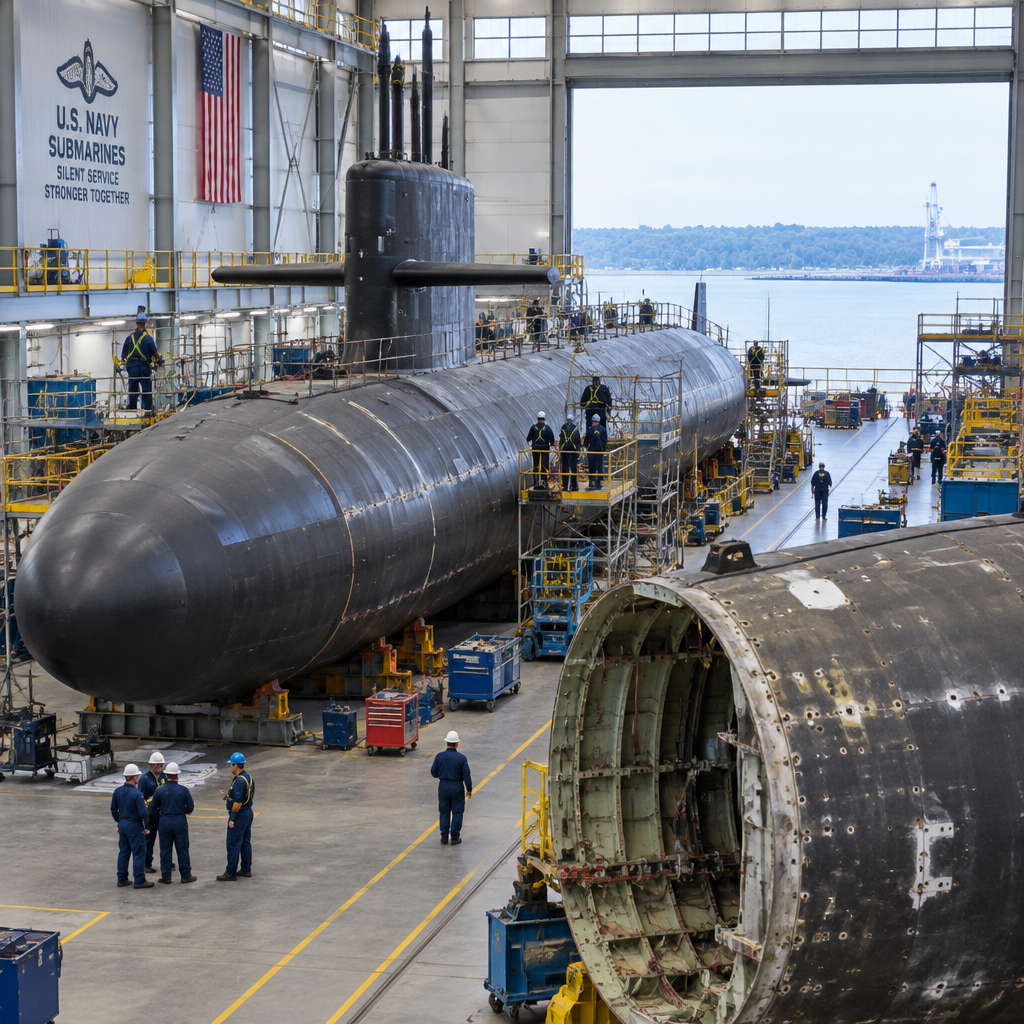
"I’m incredibly proud to be part of this team,” Cmdr. David Nicolas told reporters, summing up a deployment that stretched 346 days and tested the endurance of sailors, ships and families alike.
The homecoming at Pearl Harbor
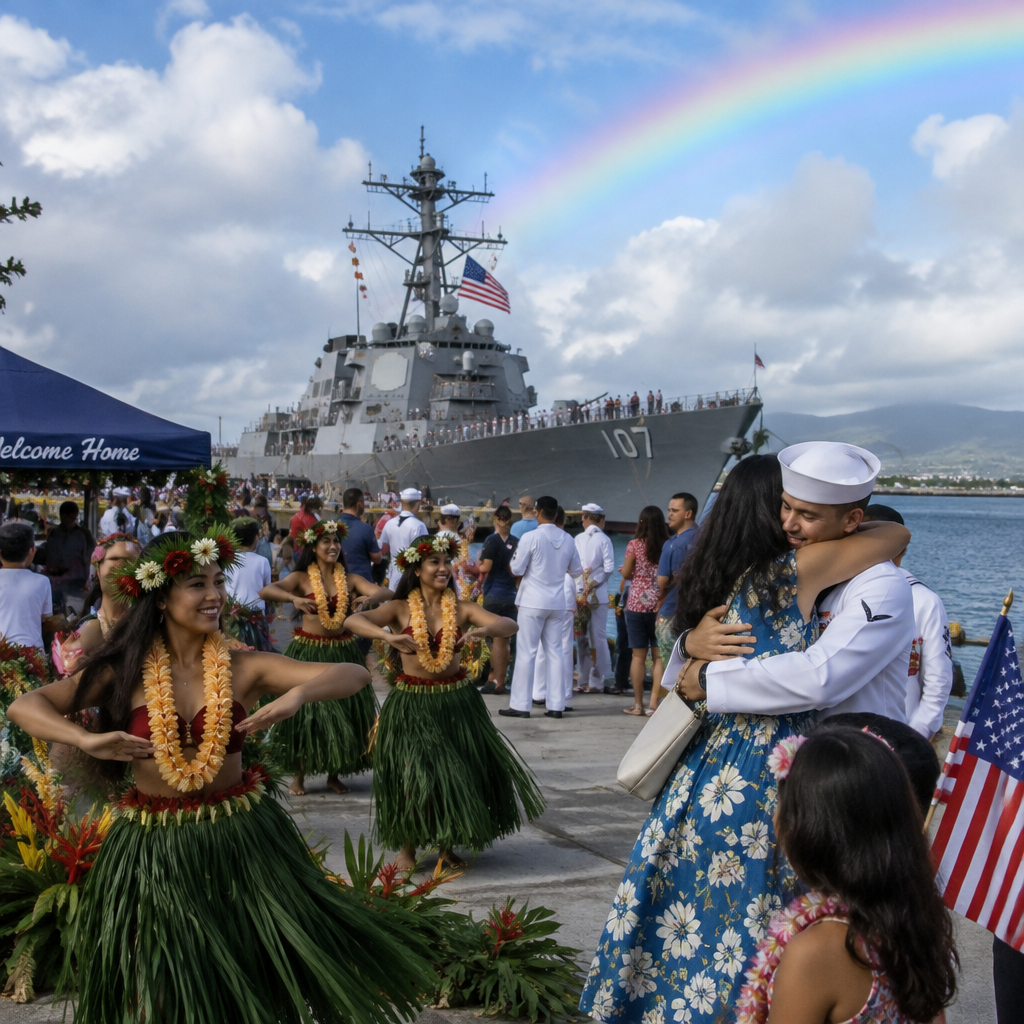
The guided-missile destroyer Michael Murphy returned to Pearl Harbor Thursday after a 346-day deployment, greeted by hula dancers and a rainbow over the channel. Petty Officer 3rd Class Jesse Bryson, the winner of the ship’s “first kiss” raffle, was the first sailor off the ship and stood with his wife, Arianna Rios. Bryson joked, “Join the Navy, see the world—but the world is 70-percent water,” and praised the crew’s performance: “I think you could put anyone from this ship on any other ship and they’d stand out.”
Where the ship went and what it did
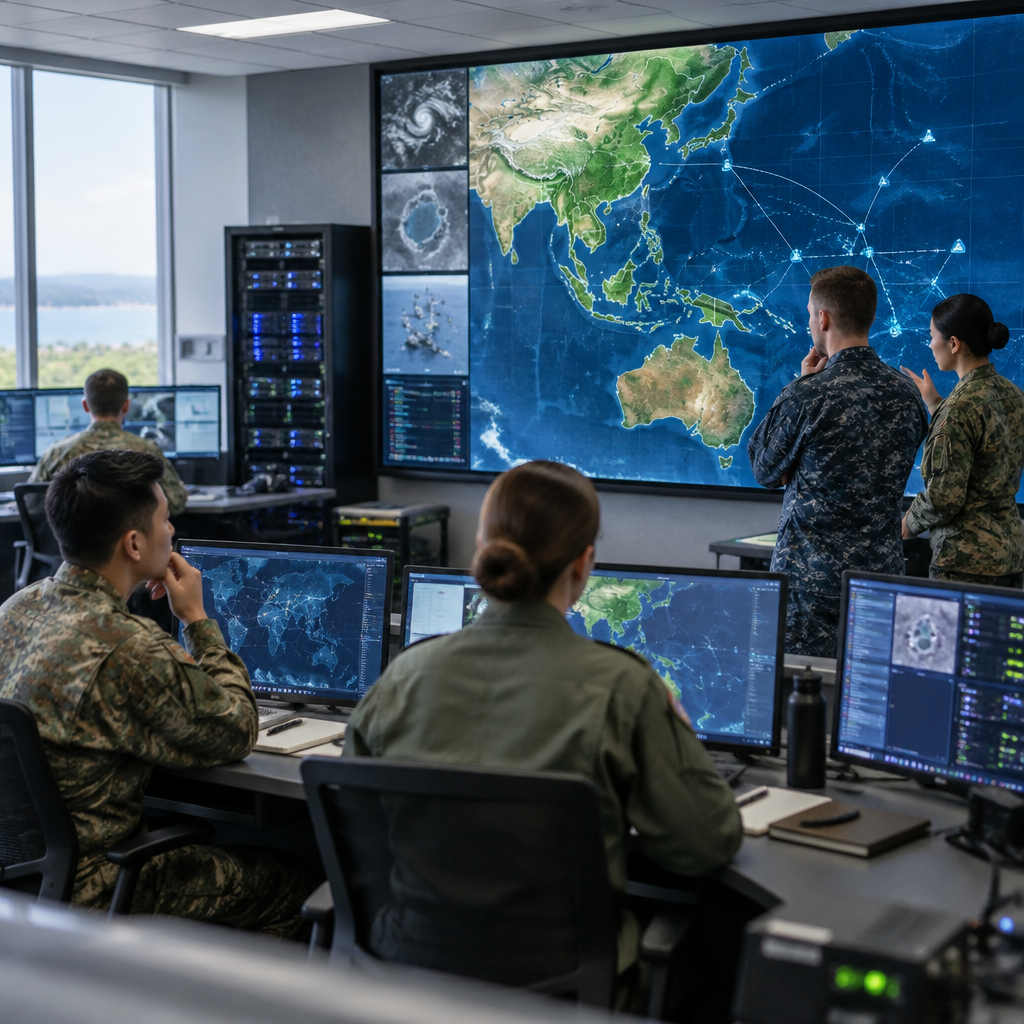
The Michael Murphy left Hawaii on Dec. 1, 2025, sailed through the South China Sea and the Strait of Malacca, and spent the bulk of its time in the North Arabian Sea, Cmdr. David Nicolas said. During that period the ship carried out 12 contested transits of the Strait of Hormuz, conducted 43 replenishments at sea and launched Tomahawk missile strikes during Operation Epic Fury. The destroyer also took part in the blockade of the Strait of Hormuz, Nicolas said.

This site is the portfolio.
OSINTSights runs on Cloudflare Workers, D1, R2, and Vectorize, with an AI pipeline on Hetzner ARM. Nubivance designed, built, and operates it. We do the same for clients.
See what we buildCommand changes and on-deck leadership
Ten months into the deployment the ship experienced a leadership change. Cmdr. Caitlin Cunningham, the ship’s previous commanding officer, was relieved on Sept. 27 due to a “loss of confidence” after roughly 11 months in charge, according to the report. Cmdr. David Nicolas, who took command a month ago, had previously commanded the guided-missile destroyer Oscar Austin; when he handed over that command on Sept. 10 he had been slated to become an instructor at Surface Warfare Schools in Rhode Island, according to a Navy press release. A Navy official confirmed to Defense One that those plans were altered when the Michael Murphy’s prior commander was relieved.
How this deployment fits fleet-wide tempo
The Michael Murphy was attached to the Abraham Lincoln carrier strike group for much of the deployment; the aircraft carrier returned to its home port in San Diego on Oct. 8. As the Michael Murphy arrived home, other destroyers were completing or preparing for extended deployments: the Spruance returned home the same day after a 12-month deployment, and the Japan-based John Finn crew has been told to expect a 13- to 14-month deployment. Defense One reported on Oct. 22 that Navy officials have told families to expect 10- to 10-month deployments for the foreseeable future, and the Navy’s top enlisted sailor, Master Chief Petty Officer of the Navy John Perryman, confirmed a week later that 10-11 months will be the norm for at least a few years. Navy officials say this will be the norm for some time.
What this means for Navy families, ship crews, and Navy planners
- Navy families: Expect longer separations. The Navy has told families to plan for deployments in the 10–11 month range, and some crews are already serving 12-month or longer rotations.
- Ship crews: Extended time at sea has translated into more contested transits, frequent underway replenishments (43 for the Michael Murphy), and combat operations such as the Tomahawk strikes during Operation Epic Fury.
- Navy planners and commanders: The attachment to a carrier strike group, the Abraham Lincoln’s Oct. 8 return to San Diego, and multiple ships undertaking 12–14 month deployments illustrate a sustained operational tempo that Navy officials say will continue “for some time.”
The Michael Murphy’s return provides a vivid snapshot of that tempo: a ship that sailed from Hawaii on Dec. 1, 2025, engaged in contested waters, launched strikes, endured a mid-deployment change of command and completed 346 days at sea. As other ships complete or prepare for year-long rotations, the Navy’s stated expectation of 10–11 month deployments — and the families and crews living under that schedule — will be the immediate measure of whether this new operating rhythm is sustainable.