"The FAA issued a nationwide ground stop for all U.S. airports following communication issues impacting multiple Air Route Traffic Control Centers," the agency said in a statement.
The FAA’s nationwide ground stop
The Federal Aviation Administration halted departures across the United States on November 13, citing communications failures that affected multiple Air Route Traffic Control Centers (ARTCCs). Nationwide ground stops are rare: the source notes comparable events in January 2023 and after the Sept. 11, 2001 attacks. FAA technicians were dispatched to investigate, and the agency said it would provide updates as they became available.
Air Route Traffic Control Centers and Chicago Center
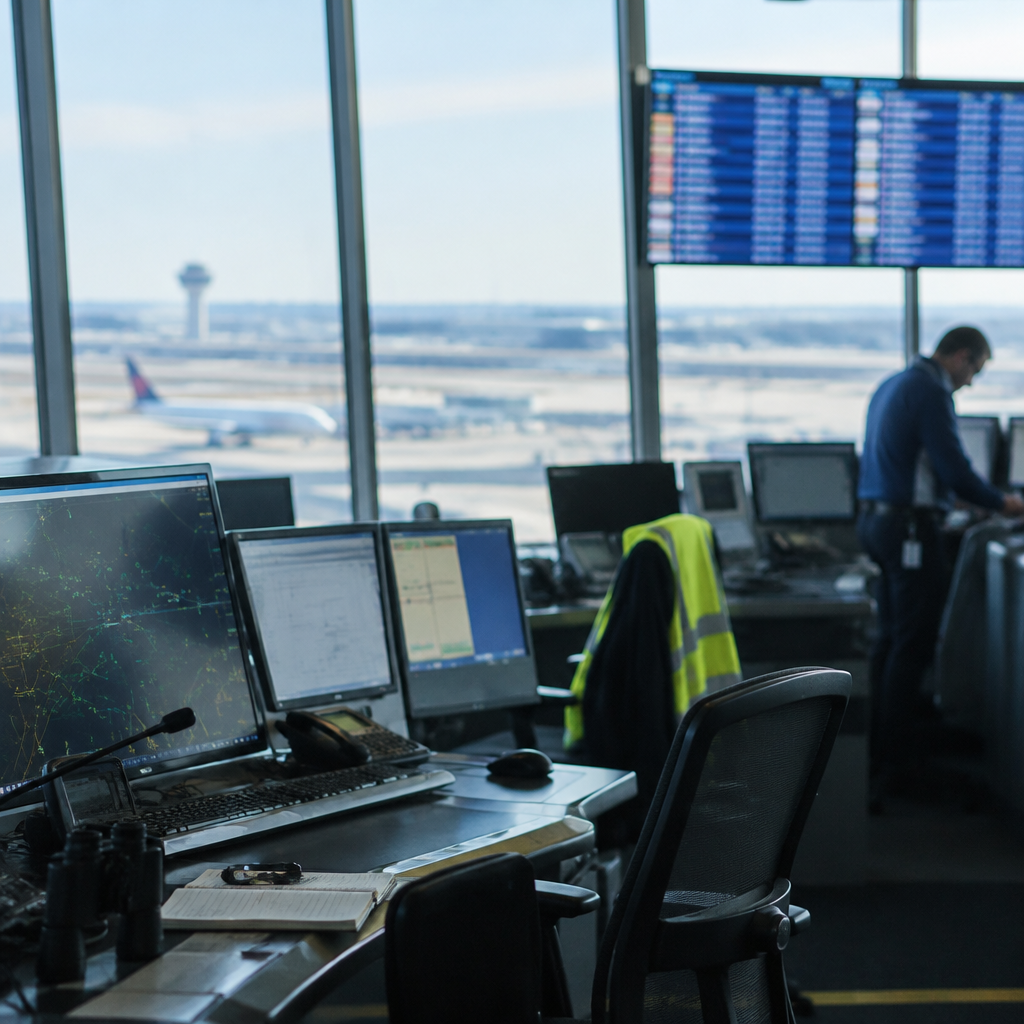
Reporting and on-the-record comments focused the disturbance on the ARTCCs — regional centers that coordinate aircraft traveling between airports. Chicago Center, according to a recorded message, told staff it had “lost all frequencies and automation for handoff and strips.” The outage cascaded over roughly an hour. Flightradar24 published last-recorded take-off times at selected airports showing the stepwise shutdown: Denver (DEN) 13:38 MT, Chicago O’Hare (ORD) 14:15 CT, Houston (IAH) 14:39 CT, New York JFK and Newark (JFK/EWR) 15:35 ET, Washington Reagan (DCA) 15:35 ET, Atlanta (ATL) 15:37 ET, and Miami (MIA) 15:36 ET (all local times).

This site is the portfolio.
OSINTSights runs on Cloudflare Workers, D1, R2, and Vectorize, with an AI pipeline on Hetzner ARM. Nubivance designed, built, and operates it. We do the same for clients.
See what we buildPrivate communications network, routers, and L3Harris reports
Reporting by the Wall Street Journal and CBSNews cited multiple sources who said the disruption appeared to affect a private telecommunications network overseen by L3Harris Technologies. The Journal reported that the network handles the radio frequencies air-traffic controllers use to talk to pilots. CBSNews sources told reporters that an update to that private communications network caused a reboot; when the FAA’s telecommunications infrastructure attempted to reboot, it crashed, producing the communications outage.
CNN published an airline-source update saying the FAA told carriers the outages stemmed from a problem with network routers, and that the issue was believed to have started at Chicago Midway International Airport before cascading nationwide. It remained unclear in contemporaneous reporting whether radar feeds were affected; the National Weather Service confirmed its own radars and radar.weather.gov remained operational.
SMART system, ASI, and official statements on cause
Officials and vendors moved quickly to differentiate the incident from the FAA’s recent AI-related modernization efforts. ASI (AirSpaceIntel) posted that the ground stop “is not based on or a result of the SMART system, any product of ASI or our integration with FAA and ATC.” The SMART system — which the FAA had announced for wider deployment on November 10 — provides prompts to human operators to manage trajectories and weather; Secretary Sean Duffy and Secretary Markwayne Mullin said SMART is not plugged into the FAA’s STARS and ERAM automation systems and therefore could not have directly caused the outage.
Sources cited by CNN and by officials at a White House press conference indicated preliminary reporting pointed away from a cyberattack: CNN quoted two law enforcement officials saying initial indications were that the outage was not a cyberattack, and FBI personnel were monitoring the situation. At the press conference, Secretary Mullin said there was “no chatter” or footprints indicating intrusions and described the event as appearing mechanically driven, though he and Secretary Duffy said they were not ruling anything out while investigations continued.
What this means for policymakers, technologists, and travelers
- Policymakers and budget planners: Secretary Duffy used the incident to call for emergency congressional funding, asking for $50 billion to modernize aging towers, facilities, and telecommunications — describing worn infrastructure, leaky roofs, and failing elevators as examples of the FAA’s needs.
- Technologists and security teams: Officials described a legacy telecommunications architecture vulnerable to failure when new equipment or patches are introduced. Reporting pointed to router and private-network updates that rebooted and crashed, a pattern technologists will scrutinize as investigations proceed.
- Travelers and airlines: The operational impact was immediate. FlightAware tallied 26,097 total delays, 10,243 delays within/into/out of the U.S., and 3,947 cancellations (3,288 within/into/out of the U.S.) for the day. CNN reported carriers were considering suspending operations overnight. The FAA lifted the ground stop at 8:15 p.m. Eastern and said some departures would resume after systems were tested; passengers were advised to contact their airlines for updates.
The ground stop was lifted after FAA officials said they deployed fixes that reduced overload on network switches and brought centers and TRACONs back online. Secretaries Duffy and Mullin characterized the most likely proximate cause as a fault exposed when new equipment or patches interacted with decades-old telecom infrastructure — a diagnosis that aligns with multiple contemporaneous news reports pointing to a router or communications-network reboot. Federal investigators and national cybersecurity and law-enforcement teams remained engaged, and the final determination of cause — mechanical failure, configuration error, or malicious action — was left to ongoing probes.