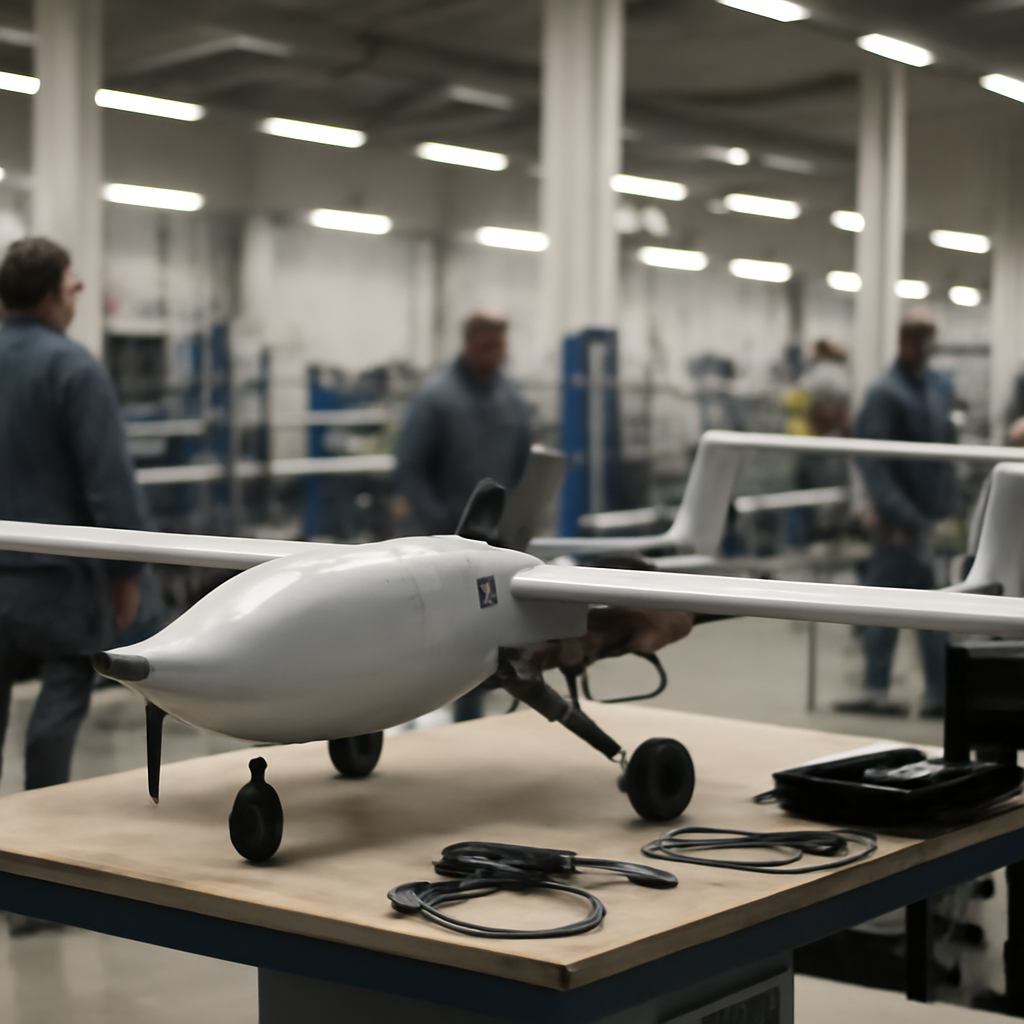
“I don’t know what’s in the mind of Putin or his fielded forces about those one-way attack drones or even cruise missiles, like we’ve seen enter Polish airspace just a few months ago. In July, we had an AS-23 cruise missile enter Poland,” Lt. Gen. Jason T. Hinds said.
What Lt. Gen. Jason T. Hinds has been ordered to implement
Hinds, the commander of U.S. Air Forces in Europe/U.S. Air Forces Africa (USAFE) and the Allied Air Command leader, described a clear operational mandate: fully implement EVA Eastern Sentry and Standing Defense Plan 12000. He said U.S. Air Force Gen. Alexus G. Grynkewich, NATO’s Supreme Allied Commander Europe (SACEUR), tasked him to put those plans into practice so “the nations” have the capabilities to defend their airspace against one-way attack drones and cruise missiles.
Hinds laid out the sequence he’s been ordered to achieve: detect the threat — ideally before it enters NATO airspace — determine origin and trajectory, have command-and-control systems able to decide a response, and field the “right kit” to act. He emphasized that some responsibilities remain national — for example, small UASs “is typically a national responsibility” — even as NATO shifts to a more integrated posture.
EVA Eastern Sentry and Standing Defense Plan 12000 explained
Hinds framed the work as the operational follow-through to recent alliance decisions. EVA Eastern Sentry is a NATO mission stood up in September 2025 after “an unprecedented number of Russian drones and planes violated the airspace of several NATO Allies,” the alliance stated. NATO described allies contributing more fighter jets, helicopters, transports, air defense systems, surveillance aircraft and frigates, and improving coordination of those assets.
Standing Defense Plan 12000 is a new plan for integrated air and missile defense across the alliance; according to the reporting, Gen. Grynkewich introduced the concept during testimony to Congress in March. Hinds has been charged with putting both the EVA posture and Standing Defense Plan into operational effect across NATO’s dispersed forces.

This site is the portfolio.
OSINTSights runs on Cloudflare Workers, D1, R2, and Vectorize, with an AI pipeline on Hetzner ARM. Nubivance designed, built, and operates it. We do the same for clients.
See what we buildHow NATO is fighting drones and cruise missiles today — and why that's changing
Today, Hinds said, NATO is “primarily using air power” against drones and cruise missiles, supported by an integrated air and missile defense architecture that includes Patriot surface-to-air missile batteries. He called shooting these threats down with jets “very effective,” citing the recent NATO shootdown after a drone entered Lithuanian airspace overnight and several prior engagements in the Baltic region.
But Hinds warned that relying on fighters is “not putting us on the right side of the cost curve.” He noted at least five other cases of allied nations providing air power to shoot down one-way attack drones. His preference is to move toward lower-cost interceptors — ground-based where possible, and some air-based interceptors that are cheaper to employ.
Weapons and sensors moving into service
Hinds said NATO wants “the right kit” to act. The article notes a trend toward lower-cost, laser-guided air-to-air and air-launched rockets as an interim, cost-effective counter to small attack drones. TWZ reported U.S. forces using 70mm Advanced Precision Kill Weapon System (APKWS) rockets; the U.K. Royal Air Force announced in May that its Typhoons were equipped with APKWS. France has tested its own 68 mm laser-guided rockets from Rafale fighters: the Defence Procurement Agency completed integration testing on the Rafale and reported that the time between contract award and initial operational capability was less than eight months.
What this means for Baltic nations, NATO air forces, and intelligence organizations
- Baltic nations: Hinds said the alliance has transitioned from air policing to air defense, placing “the right kit, multi-domain, to be able to be put in the right place” so Baltic states can respond decisively to incursions like the recent Lithuanian airspace violation. He also cited a deterrence value intended to signal that incursions will be detected and met.
- NATO air forces: Expect a continued reliance on fighters for now but a policy push toward cheaper interceptors and tighter integration of sensors and C2 under Standing Defense Plan 12000. Hinds described readiness and assurance as drivers for the shift away from traditional air policing.
- Intelligence organizations: Hinds said intelligence agencies will be responsible for determining the intent behind incursions; “intelligence organizations are going to provide us with that intelligence later on,” he said. Their assessments will inform whether encounters are probing actions, law-enforcement matters, or military threats that risk escalation.
The operational picture Hinds sketched is blunt: small, episodic drone and cruise-missile incursions have become a regular challenge — he called them “limited incursions” and “hybrid activities” — and NATO is retooling its posture to detect, command, and act in an integrated way. European leaders have framed at least some of those incidents as provocations: European Commission President Ursula von der Leyen called a recent drone incursion “part of a broader pattern of Russian aggression and provocation against Europe,” and the German Embassy in Washington asserted that Russia was responsible for the attempted explosive attack at Leipzig airport.
Hinds warned of a second risk: that hybrid activities, though below the level of armed conflict, “could lead to escalation.” His remedial approach is practical and operational: better sensing, tighter C2, more cost-effective shooters, and visible deterrence — a set of measures he’s been ordered to put in place under EVA Eastern Sentry and Standing Defense Plan 12000, and for which he said he “owes General Grynkewich” results.
Original story: https://www.twz.com/air/top-u-s-air-force-officer-in-europe-implementing-new-nato-air-defense-plans