What Jared Isaacman showed at the All‑In Summit
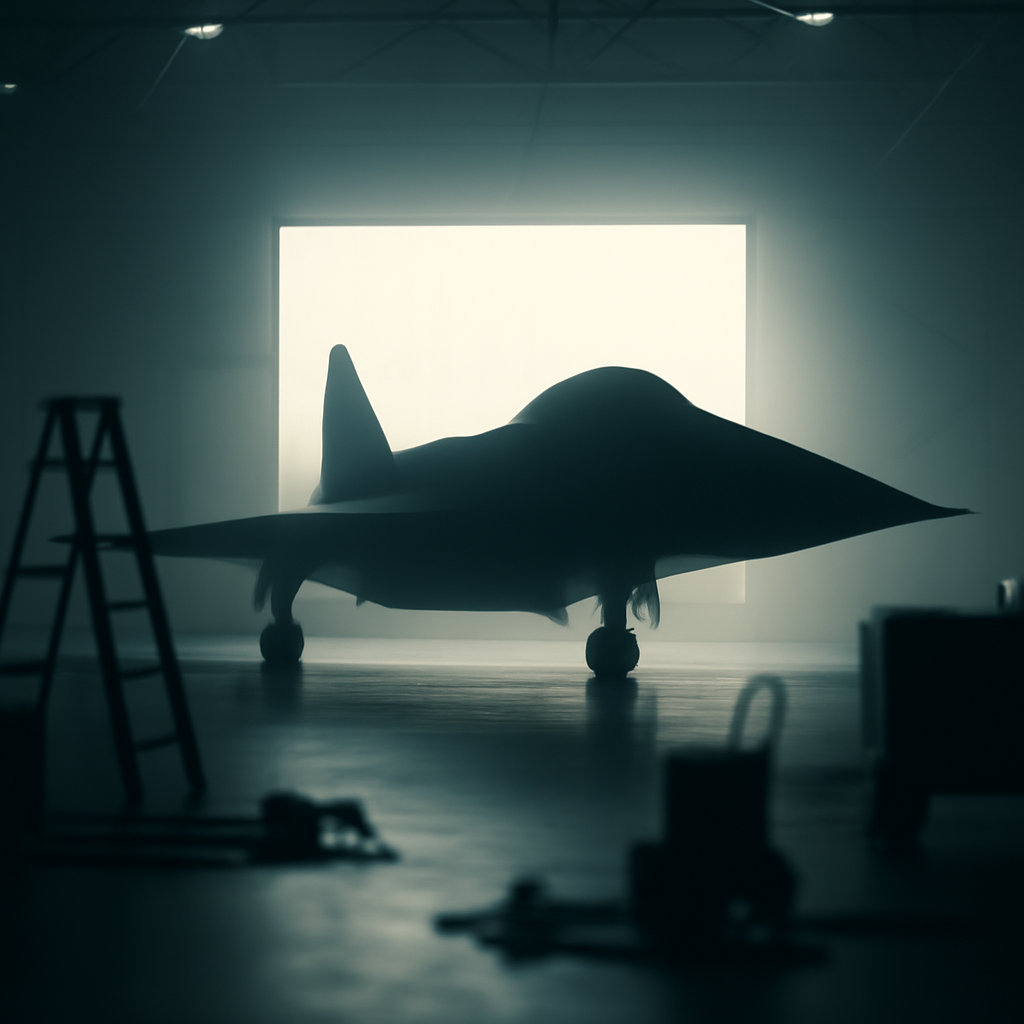
Last week at the annual All‑In Summit in Los Angeles, NASA Administrator Jared Isaacman displayed a silhouette of a high‑speed, high‑altitude X‑plane that immediately invited comparisons to the SR‑71 Blackbird. During the presentation Isaacman said, “In the service of the first A [aeronautics] in NASA, we are rebuilding our X‑plane fleet. The X‑59 is researching quiet supersonic flight, but it’s just the beginning.” In a live interview immediately after that presentation he quipped, “You sure that’s a Blackbird?” but offered no further clarification.
The missing SR‑71: tail number 844
Steve Trimble, Aviation Week’s defense editor, was first to report that the former NASA SR‑71, known by tail number 844 and originally carrying U.S. Air Force serial number 61‑7980, is no longer visible at NASA’s Armstrong Flight Research Center, which is collocated with Edwards Air Force Base in California. Satellite imagery shows the jet had not been seen since at least May 17. A 2018 Google Earth image showed 844 on display outside the Armstrong facility; Aviation Week’s reporting and sources indicate the aircraft may have been moved into a hangar earlier this year for inspection.

Audit-ready is a season. It shouldn't be.
Evidence in spreadsheets, controls drifting between audits, frameworks multiplying on flat headcount. Nubivance runs continuous compliance on Rapid7 Cyber GRC - SOC 2, HIPAA, ISO 27001, PCI, CMMC.
End the scrambleWhy 844 would matter to a return‑to‑flight or design effort
Tail number 844 is notable for several reasons that Aviation Week highlighted: it was the last Blackbird produced, the last to fly (its final flight was in 1999), and NASA previously upgraded it with “an automated digital flight and inlet control system to virtually eliminate the Blackbird’s problem of violent engine unstarts at high speed.” Those attributes make 844 a logical candidate should any organization pursue reconstitution, retrofit, or use of the airframe as a testbed.
Technical, logistical, and historical constraints specific to the SR‑71
The SR‑71 class poses distinct hurdles. Only 32 were ever built, and their operation historically depended on a support ecosystem that has not been maintained for decades. The aircraft’s Pratt & Whitney J58 turbojets ran on JP‑7 fuel, which the source says is no longer in regular production. After the September 11 attacks, the possibility of returning an SR‑71 to service was raised; at that time the projected cost was between $40 million and $45 million — and that estimate came just two years after 844’s last flight. In short, reconstituting even one SR‑71 would demand specialized supply, fuels, and personnel that have not been sustained since retirement.
What this means for NASA, the Pentagon, and private restoration efforts
- NASA: Administrator Isaacman has made expanding the X‑plane fleet a stated priority, and NASA told TWZ that it “wants to see more X‑planes flying in the years ahead” and looks forward to sharing more as efforts progress. If 844 has been moved for inspection, it could inform NASA’s design and test choices—either as a direct airframe to refurbish or as a physical reference for new demonstrators.
- The Pentagon: Aviation Week’s reporting notes that the Pentagon could technically reclaim SR‑71 airframes from loan status, implying a role for the Department of Defense if a return‑to‑flight were pursued; doing so would nonetheless confront the same ecosystem and sustainment challenges described above.
- Private restorers and air‑combat contractors: Isaacman’s personal record — founding Draken International, owning a demilitarized ex‑Ukrainian two‑seat MiG‑29UB that he flies, and working to restore a Royal Air Force Panavia Tornado F2 interceptor — illustrates that complex restoration projects are within the scope of some private actors. Yet the SR‑71’s unique technical and logistical demands place it in a different category from the types of jets commonly restored by private firms.
Paths forward: restoration, retrofit, or design inspiration
The Aviation Week account, echoed by TWZ reporting, lays out three non‑exclusive possibilities for the missing 844: it could be undergoing inspection and routine maintenance while remaining a display asset; it could be the subject of an effort to return a Blackbird to flight; or it could be examined and used to inform a new, modern X‑plane that takes SR‑71 “DNA” without reactivating a Cold War airframe. The latter option aligns with Isaacman’s public framing that NASA may push “higher, farther, and faster than we have in decades,” and with the source’s observation that a new demonstrator could leverage decades of advances in materials, avionics, controls, and propulsion.
The aircraft’s months‑long absence from public view is, as TWZ put it, “a curious development” given NASA’s renewed emphasis on X‑planes. Whether tail number 844 reappears as a restored, reworked, or purely inspirational artifact will be a concrete early indicator of how NASA and others intend to pursue high‑speed flight testing in the years ahead.