NASA unveils a new X‑plane at the UP.Summit
NASA unveiled the X-70 “Fractal” today at the UP.Summit at Kennedy Space Center after Administrator Jared Isaacman had teased the program last week. The agency’s release describes Fractal as a crewed experimental aircraft with “rapidly reconfigurable flight control capabilities,” intended to “explore aircraft maneuverability in ways never before demonstrated in crewed flight.” Isaacman framed Fractal as part of “this new beginning for aeronautics,” and said the aircraft will keep teams “flying, learning, and moving quickly from one experiment to the next.”
Performance parameters: 10,000 lbs takeoff weight, 45,000 ft ceiling, Mach 0t.75 cruise, 1,500 nm range
NASA’s release lists a set of concrete performance numbers: a takeoff weight of 10,000 pounds, a service ceiling of 45,000 feet, a cruise speed given as “Mach 0t.75,” and a range of approximately 1,500 nautical miles. Those figures, the agency says, are intended to allow the aircraft to “fly across a wide spectrum of conditions and over longer distances and durations,” enabling a wide set of flight-test profiles.

Audit-ready is a season. It shouldn't be.
Evidence in spreadsheets, controls drifting between audits, frameworks multiplying on flat headcount. Nubivance runs continuous compliance on Rapid7 Cyber GRC - SOC 2, HIPAA, ISO 27001, PCI, CMMC.
End the scramblePayload and modularity: 2,000 pounds internal and external experimental capacity
Fractal is described as a modular, reconfigurable platform that can carry up to 2,000 pounds of experimental payloads in both internal and external locations. NASA emphasized that modularity and rapid payload swaps will be central to the program’s operational tempo: “Its modular design and ability to rapidly swap internal and external payloads will keep our teams flying, learning, and moving quickly from one experiment to the next,” Isaacman said in the release.
Design clues and provenance: an evocative image and open questions about the builder
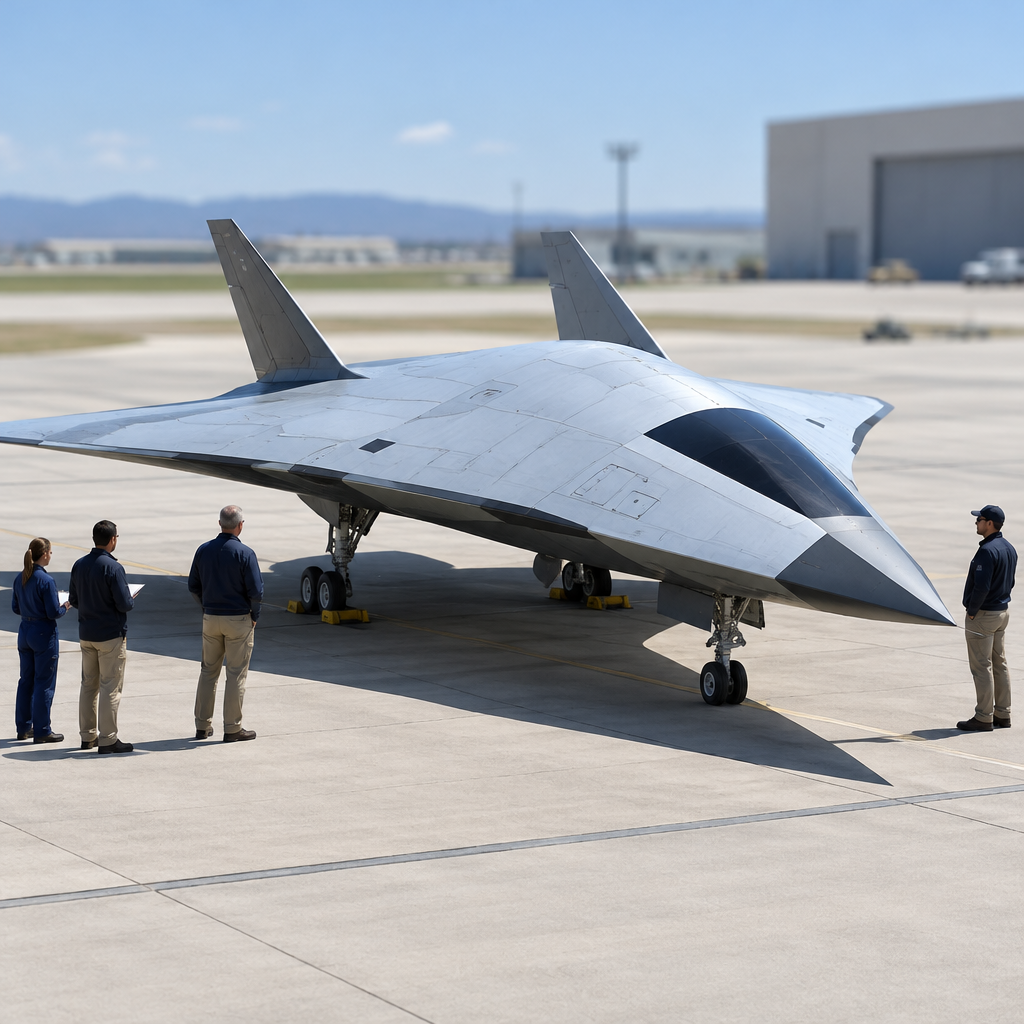
The agency released a concept image that it labeled as “generated content.” The illustration shows an aircraft with splayed tails, a bubble canopy, and fighter-like wings, much of the form cloaked in clouds. The release notes surface similarities to recent experimental testbeds — explicitly calling out Scaled Composites’ Beacon testbed aircraft — while distinguishing Fractal’s stated focus on flight controls rather than autonomy and drone-related technologies. The release also raises two possible provenance paths: that NASA will take delivery from a manufacturer, or that the aircraft could be “being pulled from the classified realm and ported over to NASA.” At the time of the announcement, NASA did not name a builder; the agency said more information is expected at NASA’s Max Power air show at the Shuttle Landing Facility at Kennedy this weekend.
How aerospace researchers, aircraft builders, and procurement officials are likely to respond
- Aerospace researchers and flight‑test teams will watch for flight‑control openness and payload interfaces. The aircraft’s combination of crewed operation, rapid payload swaps, and up to 2,000 pounds of experimental capacity is targeted explicitly at testing “advanced flight-control, maneuverability, and other cutting-edge technologies in real flight.” These capabilities would let researchers run more varied, human-in-the-loop experiments than many unmanned platforms permit.
- Aircraft manufacturers and contractors will be scrutinized for the platform’s provenance and architecture. The release left the builder unnamed and suggested delivery or a classified transfer as possible paths, so companies with “open architecture” experience and modular testbed work — the release referenced Beacon as a comparator — are likely to draw attention at the upcoming air show.
- Procurement officials and program managers will note the stated timeline and operational claims. NASA set an expectation that it “expects her first flight under the NASA banner within the next two years,” a firm milestone that will influence scheduling, budgeting, and decisions about where to allocate flight-test resources.
Administrator Isaacman — described in the release as someone who “flies a private MiG-29 and owned a contractor aggressor squadron” — framed the X-70 Fractal as part of an agency priority to push aeronautics forward through new X‑planes. The immediate next milestone the release singled out is public: more details at the Max Power air show this weekend, and an anticipated first flight “under the NASA banner within the next two years.” One concrete question the announcement leaves on the table is straightforward: who built Fractal, and under what arrangement will NASA operate it? The agency’s own calendar suggests we will get an answer very soon.
Read the original announcement: https://www.twz.com/space/nasa-announces-x-70-fractal-experimental-aircraft