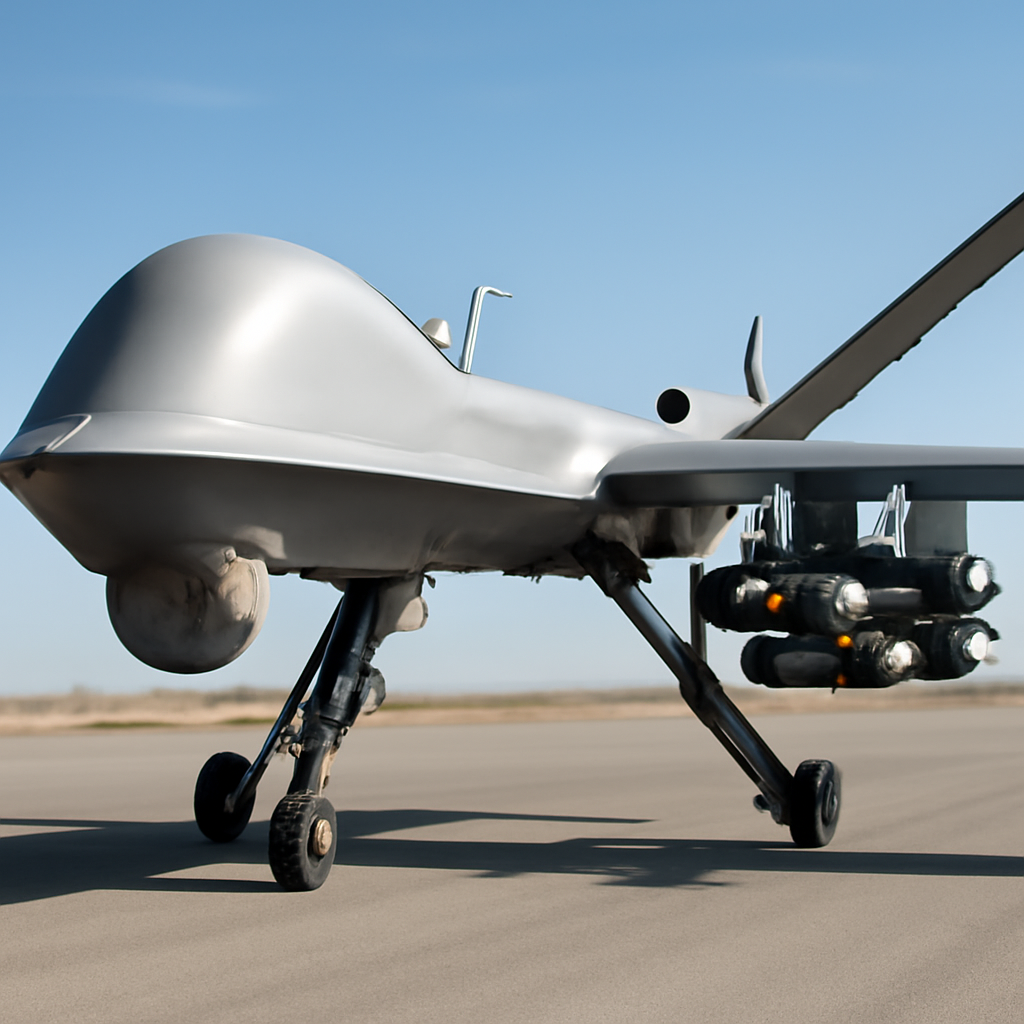
“The demonstration featured multiple types and variations of shot profiles, including aerial targets. All shots were executed flawlessly by the MQ-9A crews using laser-guided rockets and a specialized launcher,” GA‑ASI said in a press release describing recent live-fire trials.
GA‑ASI at the Nevada Test and Training Range
General Atomics Aeronautical Systems, Inc. (GA‑ASI) confirmed it conducted flight tests of an Air Force MQ‑9A armed with Advanced Precision Kill Weapon System (APKWS) rockets at the Nevada Test and Training Range (NTTR). According to GA‑ASI, the trials included both the MQ‑9’s original air‑to‑ground employment and shots against aerial targets using a “specialized launcher.” Company materials describe the campaign as accelerated to meet “real‑time technological adaptation requirements” driven by urgent counter‑uncrewed air system (C‑UAS) needs.
APKWS, AGR‑20 FALCO, and the air‑to‑air variant
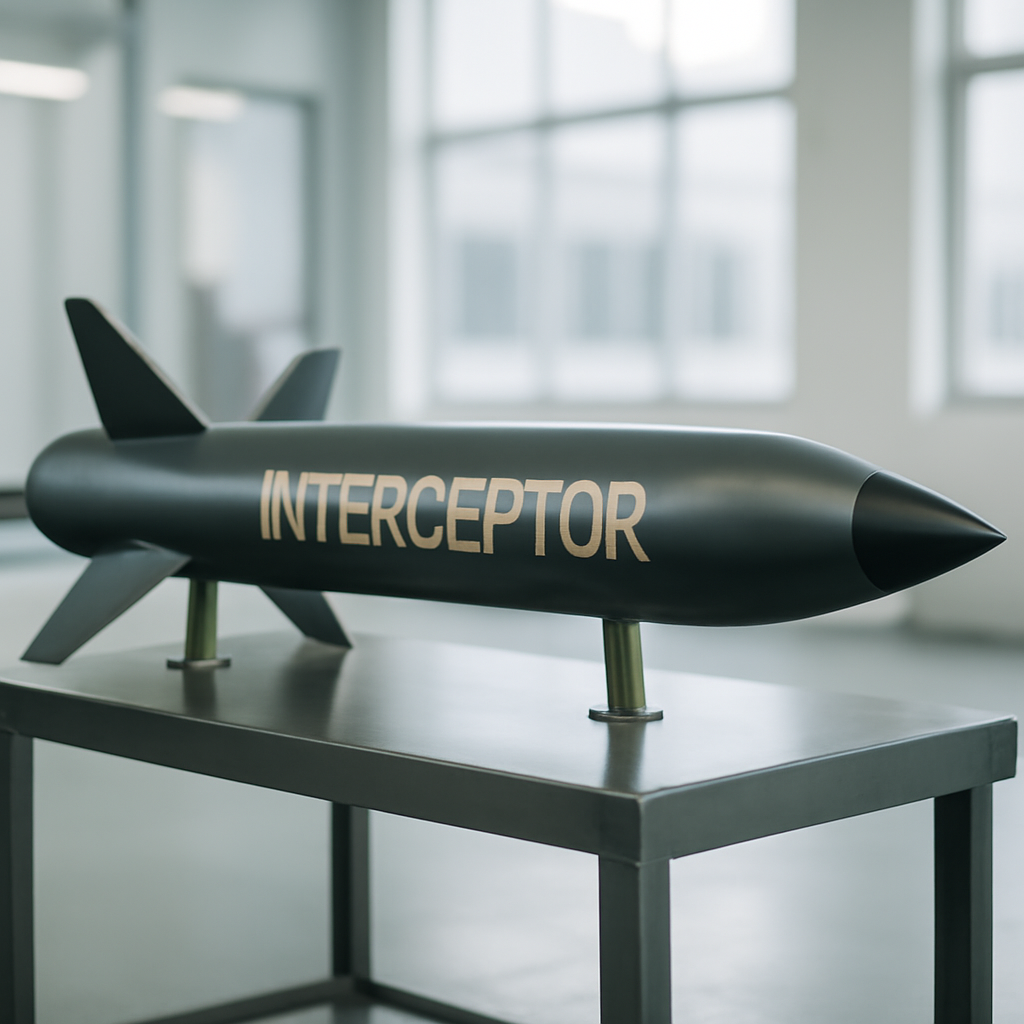
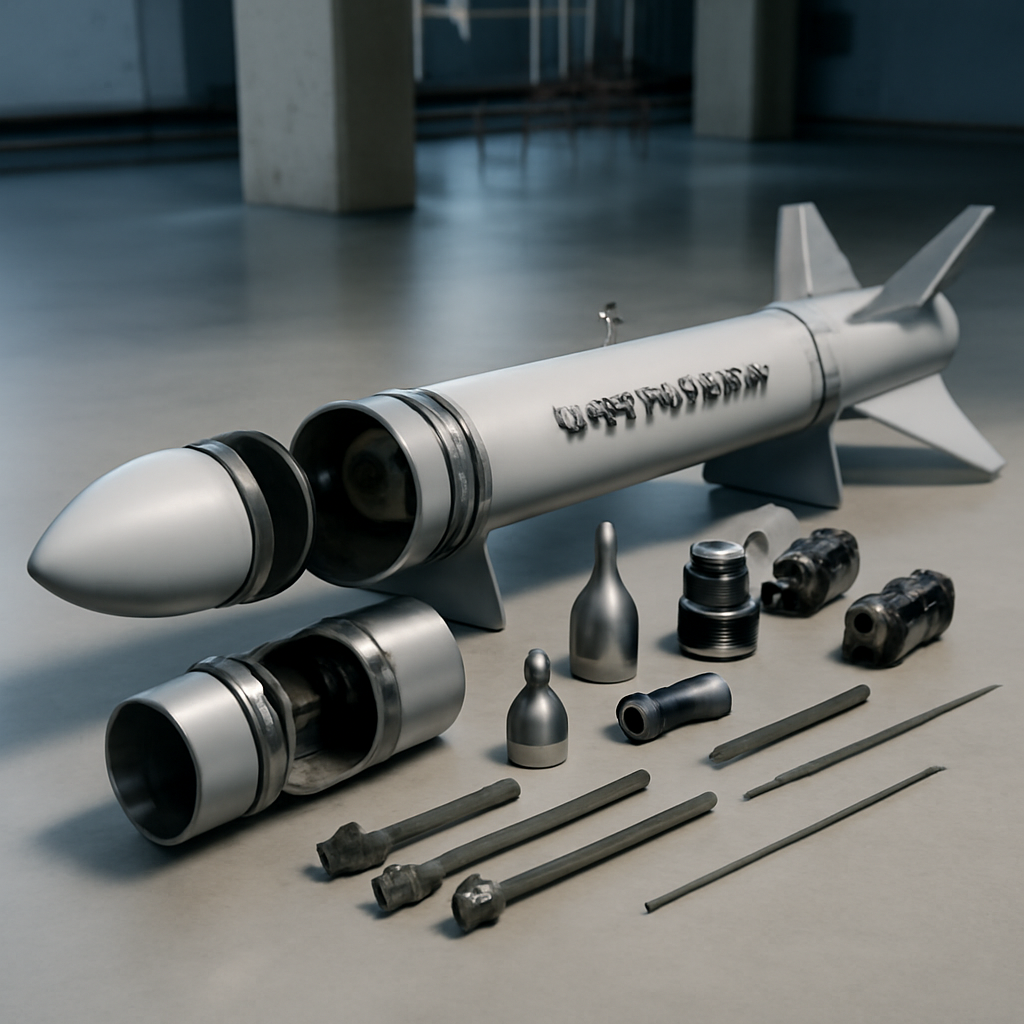
The rockets used in the tests are referred to in GA‑ASI’s press release simply as APKWS. The source material explains the air‑to‑air optimized variant is known in U.S. military service as AGR‑20F, also called FALCO — Fixed Wing, Air Launched, Counter‑Unmanned Aircraft Systems Ordnance. FALCO includes a modified laser‑guidance and control section plus a proximity fuze intended for smaller aerial targets; it can also be used against soft ground targets such as light vehicles and fast boats.

This site is the portfolio.
OSINTSights runs on Cloudflare Workers, D1, R2, and Vectorize, with an AI pipeline on Hetzner ARM. Nubivance designed, built, and operates it. We do the same for clients.
See what we buildLoadouts, hardpoints, and magazine depth
GA‑ASI noted standard APKWS pods are typically loaded with seven rounds — the MQ‑9A used in the live‑fire trials was seen with seven‑shot pods — and that 19‑round pods are also a possibility. The MQ‑9 in its standard configuration has seven hardpoints, with six main underwing pylons usually utilized for weapons, giving flexibility in how many APKWS rockets a single aircraft could carry. GA‑ASI President David R. Alexander emphasized APKWS can “increase the number of weapons the MQ‑9A is able to carry, as well as being able to carry new, lower‑cost weapons,” and framed the integration as an example of rapid government‑industry collaboration to equip warfighters.
MQ‑9, Mojave STOL, and sensor suites
The tests follow GA‑ASI’s earlier demonstrations and public messaging about using APKWS on other company aircraft. GA‑ASI spokesperson C. Mark Brinkley told TWZ the company has shown APKWS mounted to the Mojave short takeoff and landing (STOL) demonstrator at U.S. Army events and described integration as a multi‑part process involving fit tests, weight considerations, captive‑carry airworthiness checks, software work, and live‑fire. Brinkley said, “For Mojave STOL and other GA‑ASI aircraft, we’re inside that process now with APKWS,” adding “it’s flying and firing soon, [in] weeks, not months.”
GA‑ASI’s CGI video scenarios depict a Mojave using an EagleEye multi‑mode radar and an infrared turret to spot and track kamikaze drones modeled on the Shahed‑136 pattern, sending alerts via satellite to a forward outpost and then destroying threats with two 19‑shot rocket pods. The report also notes MQ‑9 sensor employment: onboard radar with air‑to‑air modes and infrared search and track (IRST) sensors can provide detection, with the MQ‑9’s MTS electro‑optical/infrared (EO/IR) turret supplying target identification and engagement functions.
Operational trade‑offs and context
The source explicitly frames APKWS‑armed MQ‑9s and Mojave STOLs as tradeoffs: slower and less survivable in high‑end engagements than fighters, but far cheaper to operate and able to loiter much longer. The report points to the rising priority of C‑UAS tasks “since the war with Iran,” and notes APKWS has been used in the air‑to‑air C‑UAS role by U.S. Air Force F‑16s in combat against Houthi drones in 2024 — a development TWZ first reported. The source further notes MQ‑9s and related drones have previously demonstrated the ability to destroy airborne targets with AIM‑9X and Hellfire missiles during testing, underscoring multiple options for aerial target engagement.
What this means for the U.S. military, GA‑ASI, and forward outposts
- U.S. military and export customers: With hundreds of MQ‑9s in service and exported to foreign operators, the ability to field APKWS on that airframe could enable broader, lower‑cost C‑UAS coverage across large areas, including “picket line” concepts to thin incoming drone waves over maritime or land approaches.
- GA‑ASI and procurement leaders: GA‑ASI has accelerated integration work and stressed rapid test cycles; procurement managers will watch for fit, software and airworthiness clearance milestones as APKWS moves from demonstration to operational clearance on multiple platforms.
- Forward outpost commanders and operators: Mojave STOL attributes — short‑ and rough‑field capability and potential to operate from austere strips or big‑deck ships — make it particularly relevant for local air‑defense roles and forward basing in dispersed environments, according to GA‑ASI materials and the company’s scenarios.
The NTTR live‑fire campaign demonstrates a deliberate move to expand low‑cost, high‑magazine‑depth options for countering small airborne threats. The tests leave open concrete questions the source itself raises: how many APKWS an operational MQ‑9 will carry in standard war plans, which variants will be certified for service, and how quickly fielded versions will appear across U.S. and allied fleets. GA‑ASI’s statement and the accelerated timeline it describes, however, make clear the company and its customer are treating APKWS integration as an urgent, actionable step in the evolving C‑UAS toolkit.
https://www.twz.com/air/mq-9-reaper-slings-drone-killing-laser-guided-rockets-in-tests