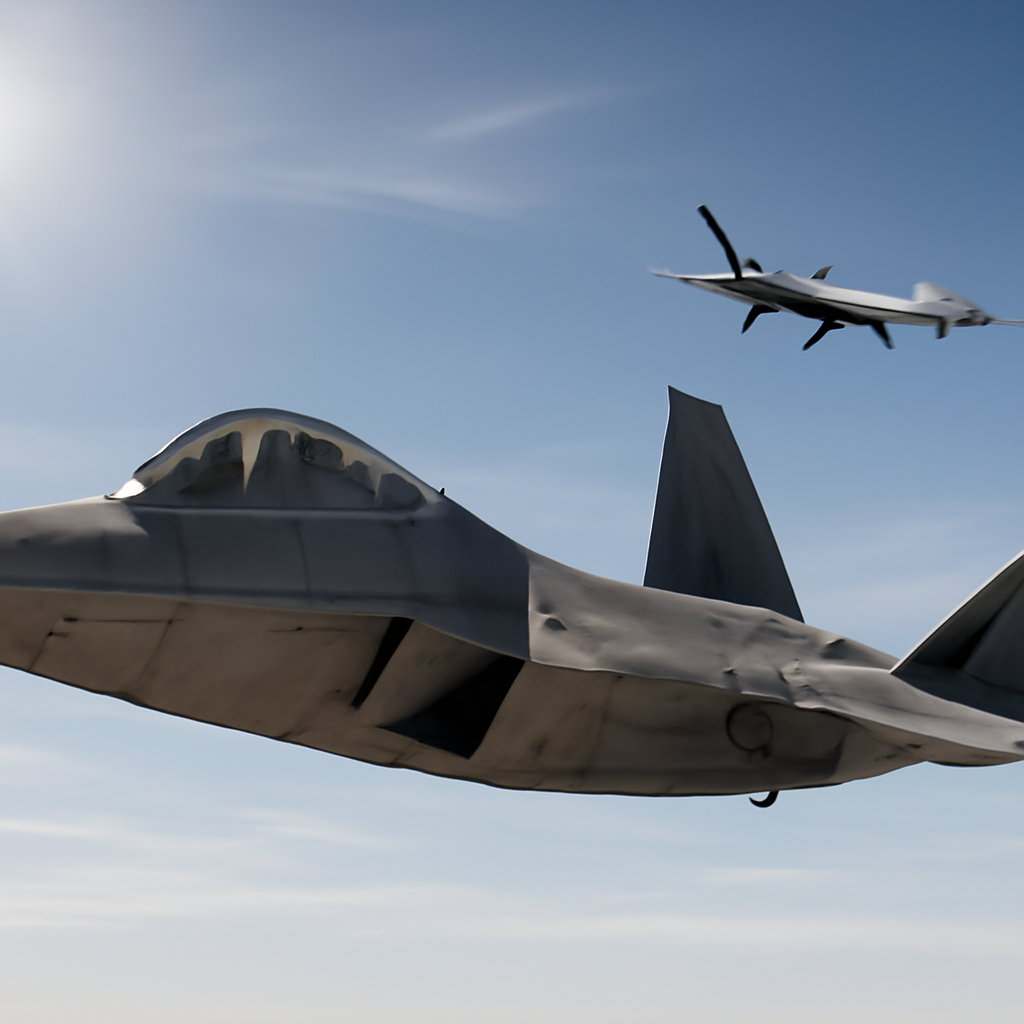
"The future force won't be defined by autonomous systems alone, it will be defined by the trusted information infrastructure that connects them," Everfox writes — and that claim now structures how Western defense plans are being justified and funded.
An Everfox assertion: the infrastructure defines the future force
Everfox positions trusted information infrastructure as the decisive element enabling autonomous military capability. The company argues that as autonomous aircraft, uncrewed maritime vessels, ground systems, satellites and AI-enabled mission applications become more connected, the telemetry, ISR, command data, AI outputs and sensor-to-shooter workflows that power them must move “securely and efficiently across the entire operational architecture.” Everfox offers a platform that, it says, combines "hardware-enforced separation with trusted cross-domain information sharing" to let autonomous and coalition missions exchange mission-critical information across systems, classifications, and partners.
U.S. momentum: Department of War leadership, NSPM-11, and the FY27 budget
The source text records an acceleration of U.S. activity on autonomy. It says the "U.S. Department of War has established dedicated leadership to accelerate unmanned capability" and points to NSPM-11 as reinforcing the strategic importance of AI across the national security enterprise. It also cites the proposed FY27 defense budget as continuing "significant investment in autonomous capability and defense modernization." Taken together in the source, those initiatives are cast as part of a new phase in defense planning where speed of fielding is a strategic advantage.

The cyber insurance questionnaire just landed. Now what?
SOC 2, HIPAA, insurance renewals - someone has to own security strategy. Nubivance provides fractional CISO leadership without the full-time salary.
Get a security leadUK and allied investments: £5 billion, AUKUS Pillar II, and NATO initiatives
Across the Atlantic, the source notes the UK’s Strategic Defence Review and Defence Investment Plan “place autonomous systems at the center of the future force design, backed by more than £5 billion of investment over the next four years.” The piece also highlights allied programs expanding autonomous testing and experimentation and explicitly cites AUKUS Pillar II and NATO initiatives as drivers of accelerated collaboration on autonomy and advanced defense technologies.
Hardware-enforced separation (hardsec): rethinking the trust boundary
The story foregrounds a technical approach it calls "hardware-enforced separation (hardsec)" as a means to establish trust in mission-critical environments. Rather than relying solely on software controls, hardsec “establishes trust within hardware logic,” the source explains, and by "removing the operating system from the trust boundary" the approach reduces architecture complexity while supporting the movement of trusted information across secure environments. The source frames hardsec as a long-used protection in the defense sector that now "provides a foundation that aligns naturally with the speed and scale of autonomous transformation."
How program leaders, defense organizations, and allied forces respond
- Program leaders: The source tells program leaders the direction is clear — "field capability faster, integrate commercial innovation sooner and deliver operational advantage without compromising mission effectiveness." It urges that trusted information infrastructure be designed to move mission information across platforms, classifications, and coalition environments from the outset, rather than being added later as a separate integration effort.
- Defense organizations: According to the source, organizations will adopt commercial technologies through "rapid acquisition pathways, adaptive procurement and iterative delivery models," and will need information architectures that permit commercial-speed adoption without bespoke, years-long integrations.
- Allied forces: The piece stresses coalition interoperability, saying the next-generation force will be measured by "how confidently allied forces can collaborate across security domains," and highlights AUKUS Pillar II and NATO activity as mechanisms to accelerate that collaboration.
The source positions a clear trade: rapid, commercially paced fielding of autonomous systems promises operational advantage, but that advantage depends on a parallel acceleration in how trusted mission information is shared. Everfox presents its platform — built around hardsec and cross-domain sharing — as a solution that can be integrated at "commercial speed" to preserve tempo, interoperability and assurance. The account closes on a pointed proposition: if autonomous systems are to operate together "at mission speed," the trusted information infrastructure that connects them must be purpose-built for defense from the start.
Read the original Everfox piece here: https://thehackernews.com/2026/07/the-race-to-field-military-autonomy-is.html