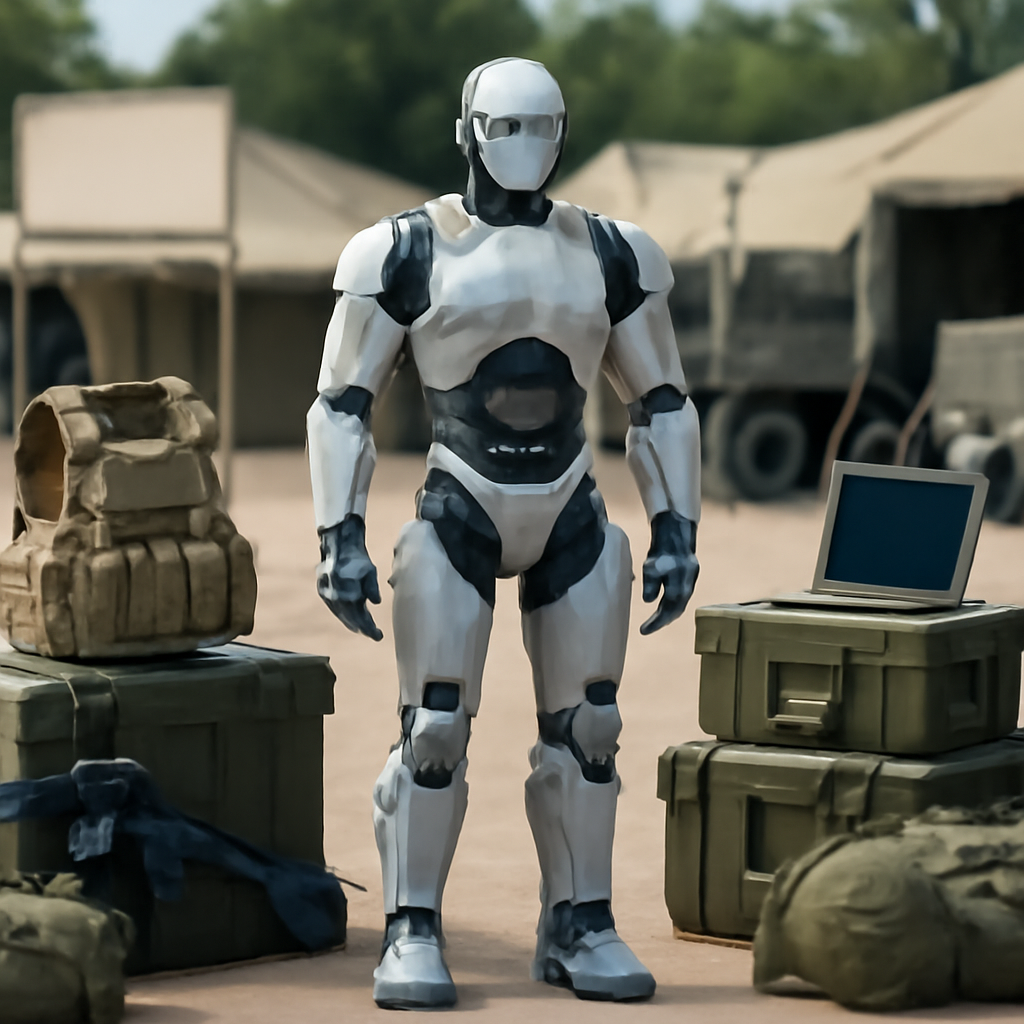
"We're building a plane as we're flying it," Maj. Gen. Jason Morris said, capturing the urgency behind a Marine Corps effort to reshape how it fights on land in an era of drones and great-power competition.
Ground Combat Element 2040: a near-term doctrine update
The Marine Corps will release an updated approach to ground combat called Ground Combat Element 2040 in the coming weeks, Col. Erick Clark, director of future operations and plans, said Tuesday during the Modern Day Marine conference in Washington, D.C. The framework follows the service’s latest aviation plan, released in February, and is intended to keep the Corps focused on the ground combat element as it continues broader force changes.
Force Design 2030 and the seagoing reorientation
The Corps is halfway through a decade-long project to re‑imagine itself for the next generation of warfare, refocusing as a seagoing service with Force Design 2030. Leaders have balanced that reorientation with a commitment not to abandon traditional ground capabilities: Maj. Gen. Kyle Ellison, who commands 3rd Marine Division, said the new Ground Combat Element 2040 will “make sure that we are staying focused on the ground combat element” and ensure the service “was not losing track of our core capabilities to conduct offensive, defensive, and expeditionary operations within the ground combat element.”

The cyber insurance questionnaire just landed. Now what?
SOC 2, HIPAA, insurance renewals - someone has to own security strategy. Nubivance provides fractional CISO leadership without the full-time salary.
Get a security leadPreparing for a near-peer, multi-domain fight
The update is being driven by an expectation that future combat could involve peer or near‑peer adversaries operating across contested domains. “When you envision the type of fight we're preparing for, where we face a peer or near‑peer adversary in a high‑end fight, where all domains are contested—and then in some, the adversary will have an advantage—that's not a battlefield we have fought on, at least since I've been in the Marine Corps,” Maj. Gen. Farrell Sullivan, who commands 2nd Marine Division, said at the panel.
The source material also notes that experts and recent national defense strategies have identified China as the U.S.’s most likely future opponent, though it adds that the Trump administration’s most recent doctrine seeks to cocoon the U.S. in the Western Hemisphere. Sullivan said the war in Ukraine offers concrete lessons that the Corps must study: “I don't want to have a bias toward that conflict and say that the future will look exactly like that, because it won't, but we would be criminal not to be paying attention to that.”
Counter‑UAS and ground‑based air defense at echelon
The Corps is accelerating efforts to counter widespread unmanned aerial system (UAS) threats. Maj. Gen. Jason Morris, who directs the operations division at Marine Corps headquarters, said “ground‑based air defense at echelon is something that we are very much focused on, based off of the UAS threat right now that you're seeing on the modern day battlefield.”
Although Force Design fielded “a number of systems,” Morris acknowledged a remaining “shortfall for maneuver coverage at the [ground combat and logistics] level.” To close that gap, the service is taking action to field dismounted, organic counter‑UAS kits to lower‑level formations, including infantry battalions and combat logistics battalions, and to bases and stations, with the stated goal of handling Group 1 and Group 2 UAS threats.
Morris emphasised the tempo of change: the Corps cannot wait for the standard acquisitions timeline—“five to seven years”—for fielding, because “things are changing on the battlefield so much and so quickly that we've got to be able to adapt, to adapt faster than that, in the weeks and months timeframe.”
What this means for infantry battalions, Marine littoral regiments, and acquisition planners
- Infantry battalions and combat logistics battalions: Expect to receive dismounted, organic counter‑UAS kits to defend maneuver units and logistics nodes against Group 1 and Group 2 UAS threats, closing a current shortfall for maneuver coverage at lower echelons.
- Marine littoral regiments: Force Design 2030 investments already focused on Marine littoral regiments and capabilities to enhance the Marine Air‑Ground Task Force will be considered alongside the new ground‑combat framework, as leaders seek to preserve core offensive, defensive, and expeditionary skills.
- Acquisition planners and force designers: Leaders have signaled a need to accelerate procurement and fielding timelines—shifting from a five‑to‑seven‑year acquisitions cycle toward adaptation on “weeks and months” timescales to keep pace with rapidly evolving battlefield threats.
Leaders described Ground Combat Element 2040 as an attempt to thread a difficult strategic needle: continue Force Design 2030’s seaborne emphasis while ensuring that Marines retain the capacity to fight, move and sustain themselves ashore against sophisticated, drone‑enabled adversaries. As Maj. Gen. Morris put it, “this is a work in progress”—and the Corps will publish the new ground‑combat approach in the weeks ahead.