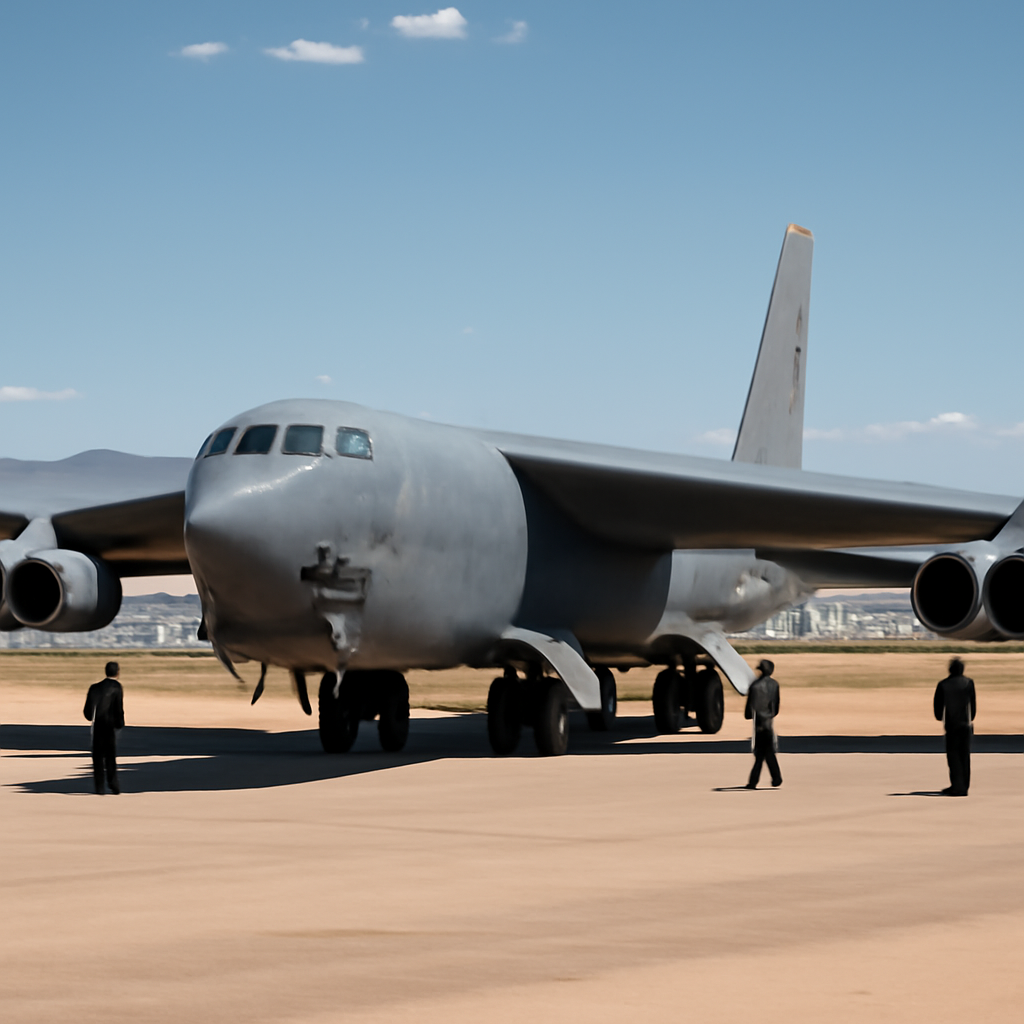
"We can and have looked at bringing B-52s out of Arizona," Col. Timothy Spaulding said, summing up a practical — and tentative — option the Air Force is weighing as demand on the bomber force continues to rise.
Col. Timothy Spaulding on reviving B-52s
Speaking at a media roundtable in Dayton, Ohio, during the Life Cycle Industry Days conference, Col. Timothy Spaulding, the Air Force’s portfolio acquisition executive for bombers, framed the idea of returning scrapped B-52s from the boneyard as a live but cautious consideration. He said Arizona — home to Davis-Monthan Air Force Base where divested aircraft are sent for retirement — contains aircraft the Air Force “can and have” examined for restoration. Spaulding called the option a "maybe," noting it is "not a necessarily easy thing to do," and that there are "some limitation to how far you might go on that number."
B-52 fleet size, demand, and the Middle East
The Air Force’s bomber fleet — the Eisenhower-era B-52, B-1 Lancer and B-2 Spirit — has been in high demand in recent years and is now, Spaulding said, under particular strain amid war with Iran. The current operational inventory of the B-52 fleet stands at 76 aircraft. Spaulding emphasized that pulling aircraft out of retirement has been a continuous question for planners and that the service is weighing the cost-benefit rather than pursuing a sweeping revival.

Audit-ready is a season. It shouldn't be.
Evidence in spreadsheets, controls drifting between audits, frameworks multiplying on flat headcount. Nubivance runs continuous compliance on Rapid7 Cyber GRC - SOC 2, HIPAA, ISO 27001, PCI, CMMC.
End the scrambleRadar Modernization Program, the June 15 crash, and program response
The B-52’s long-term service life depends on modernization. The Air Force plans to keep the B-52H flying at least until the 2050s by equipping the fleet with a new radar and updated engines; once those upgrades are complete the aircraft will be redesignated as the B-52J. That Radar Modernization Program has already experienced delays and cost growth, and it suffered a tragic setback on June 15 when a test aircraft for the effort crashed shortly after takeoff at Edwards Air Force Base in California, killing all eight crew on board.
The fleet was not grounded after the crash. Col. Spencer Turner, the B-52 system program manager, told reporters that any indication of a fleet-wide problem would trigger "immediate actions." Turner also said the program’s immediate focus is supporting the mishap investigation and that a second aircraft is undergoing modifications expected to be completed this year. He acknowledged the crash altered original plans: "Obviously, the crash was not in our original schedule," and the program will "need to look at our schedule and adjust as necessary."
Precedents for returning mothballed aircraft and practical limits
Reviving a B-52 is not unprecedented. The Air Force returned a mothballed B-52H to service in 2016, and a second was resurrected in 2021. Those restorations demonstrate that regeneration is possible, but Spaulding’s remarks underscore that doing so is complicated and bounded by costs, logistics and the condition of the retired airframes. He described the process as involving a continuous assessment of "the cost-benefit of what it takes to regenerate" additional bombers rather than a simple flip of a switch.
What this means for the Air Force, bomber program managers, and Middle East operations
- For the Air Force: planners must balance near-term operational demand — highlighted by conflicts in the Middle East — against the financial and logistical burden of reconstituting retired aircraft from Davis-Monthan and the longer-term modernization path toward the B-52J.
- For bomber program managers: the mishap investigation and its findings will shape scheduling and modernization priorities; Turner emphasized that the program will adjust schedules as necessary while supporting the safety review.
- For Middle East operations: increased reliance on the bomber fleet has already entered the calculus for whether to revive scrapped aircraft, making operational tempo a direct influence on sustainment and procurement conversations.
The Air Force is, in short, weighing a familiar but fraught choice: press to extract more capability from the past, or accelerate investment and modernization that ensure future capability. The June 15 crash has tightened that calculus by inserting an urgent safety review and schedule disruption into a program already coping with delays and cost growth. With a second modified aircraft due this year and investigators still at work, leaders say the answer to whether more B-52s will return from Arizona remains deliberate and conditional — a "maybe" until the cost-benefit and safety picture clears.
Source: Air Force eyes ‘maybe’ pulling B-52s from retirement — Breaking Defense (July 2026)