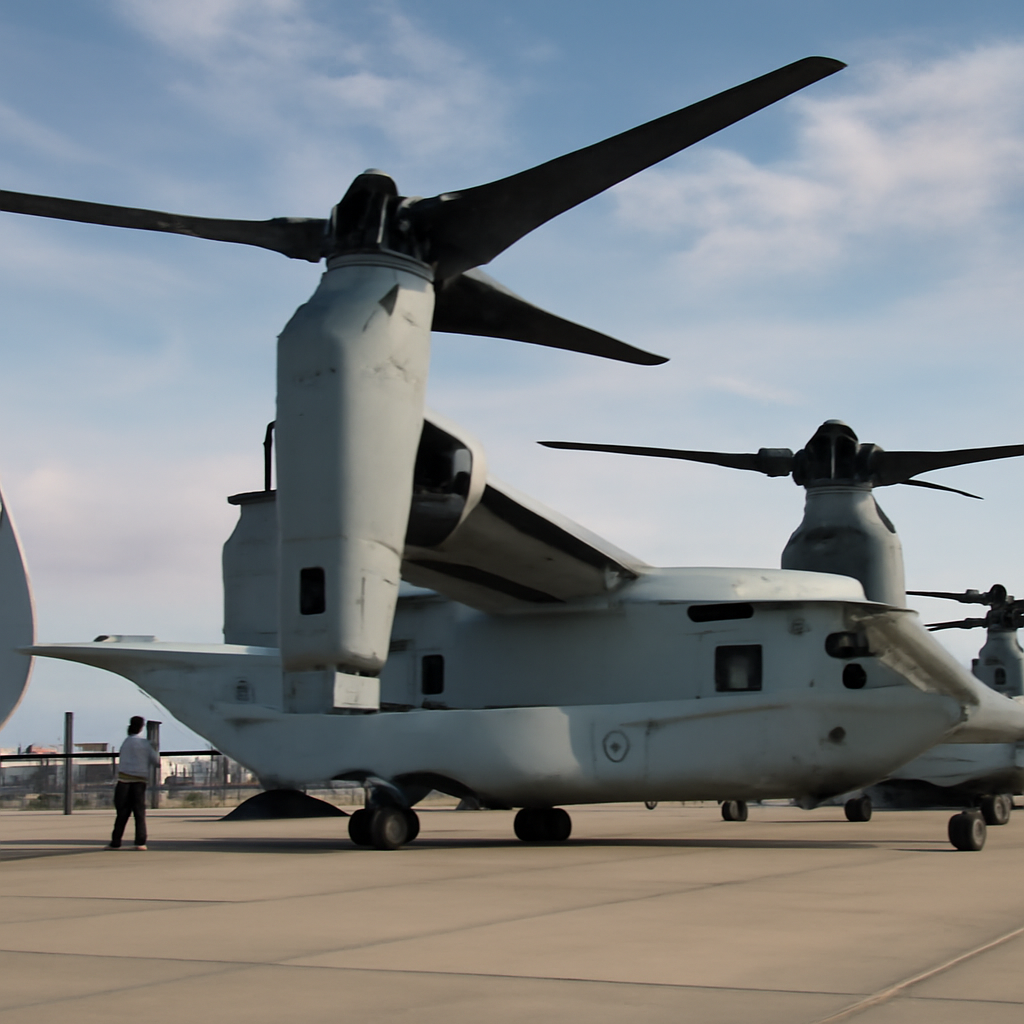
"The MV-22B didn’t just join our fleet; it fundamentally changed the way the Marine Air-Ground Task Force generates combat power," Lt. Gen. William Swan, deputy commandant for aviation, said in a statement.
359th MV-22 completes program of record; operational record in service
The Marine Corps welcomed its final MV-22 Osprey into its fleet today, marking the 359th Osprey delivered and completing the program of record, according to a Marine Corps news release. The fleet reached initial operating capability in 2007 and has logged more than 686,500 flight hours across 114 operational deployments. Naval Air Systems Command (NAVAIR) describes the aircraft as capable of taking off and landing vertically and designed to ferry troops, equipment, and supplies across ships and land bases.
Modernization initiative aimed at sustaining the MV‑22B through 2055
With production complete, the Marine Corps is turning to modernization to ensure the MV‑22B remains operational through 2055. The service listed specific efforts including improvements to nacelle wiring to reduce maintenance hours, standardizing aircraft configurations, and revamping components to bolster safety and sustainability. "We cannot assume that because the MV-22B transformed Marine aviation once, its evolution is complete," Swan said. "It is our responsibility to carry this legacy forward and ensure this aircraft remains ready, relevant, safe and lethal for the fight ahead."

The cyber insurance questionnaire just landed. Now what?
SOC 2, HIPAA, insurance renewals - someone has to own security strategy. Nubivance provides fractional CISO leadership without the full-time salary.
Get a security leadFatal crashes and formal causes identified
The Osprey fleet across the services has experienced several fatal crashes in recent years. In June 2022, a crash that killed five Marines was attributed by a Marine Corps investigation to a hard clutch engagement — an episode where the clutch temporarily slips and then reengages. In November 2023, an Air Force Osprey suffered a fatal crash off the coast of Japan that killed eight airmen; an Air Force investigation determined a gearbox failure caused that mishap. Following the November 2023 crash, the Pentagon grounded all Ospreys in December 2023.
NAVAIR inspections, continuing restrictions, and undisclosed thresholds
NAVAIR, which oversees the V‑22 joint program office, lifted the fleet-wide grounding in March 2024 but issued additional constraints afterward. In December 2024 NAVAIR ordered gearbox inspections of the aircraft prior to each flight and placed limitations on aircraft until the gearbox is upgraded or the aircraft reaches a "predetermined flight threshold," according to NAVAIR; that restriction remains in place. NAVAIR has not disclosed the specific flight-hour thresholds or the number of aircraft affected, citing security reasons.
How the Marine Corps, NAVAIR, and aircrews are responding
- Marine Corps: The service is prioritizing modernization work and a targeted hardware fix to address clutch issues. Marine Corps spokesman Capt. Jacob Sugg told Breaking Defense the service is developing a redesigned input quill assembly (IQA), which houses the clutch and connects the aircraft’s engine to the drive system.
- NAVAIR: After lifting the December 2023 grounding in March 2024, NAVAIR has maintained a regime of preflight gearbox inspections and operational limits until upgrades or predetermined flight thresholds are met — details it has declined to disclose for security reasons.
- Aircrews and commanders: Lt. Gen. Swan framed operational expectations around the MV‑22B’s presence, saying commanders "build operations around the assumption that the MV-22B will be there." At the same time, flight-hour and hardware restrictions remain in force for components tied to safety issues.
Acceptance of the 359th MV‑22B closes the production chapter and shifts the program to sustainment and upgrades. The public record in the Marine Corps and NAVAIR statements makes clear the service intends to keep the aircraft flying into the mid‑century, but also that limits tied to gearbox and clutch concerns remain in place. The immediate practical questions left on the table are concrete: when will the IQA redesign and gearbox upgrades be fielded fleetwide, and at what "predetermined flight threshold" will current limitations be lifted?