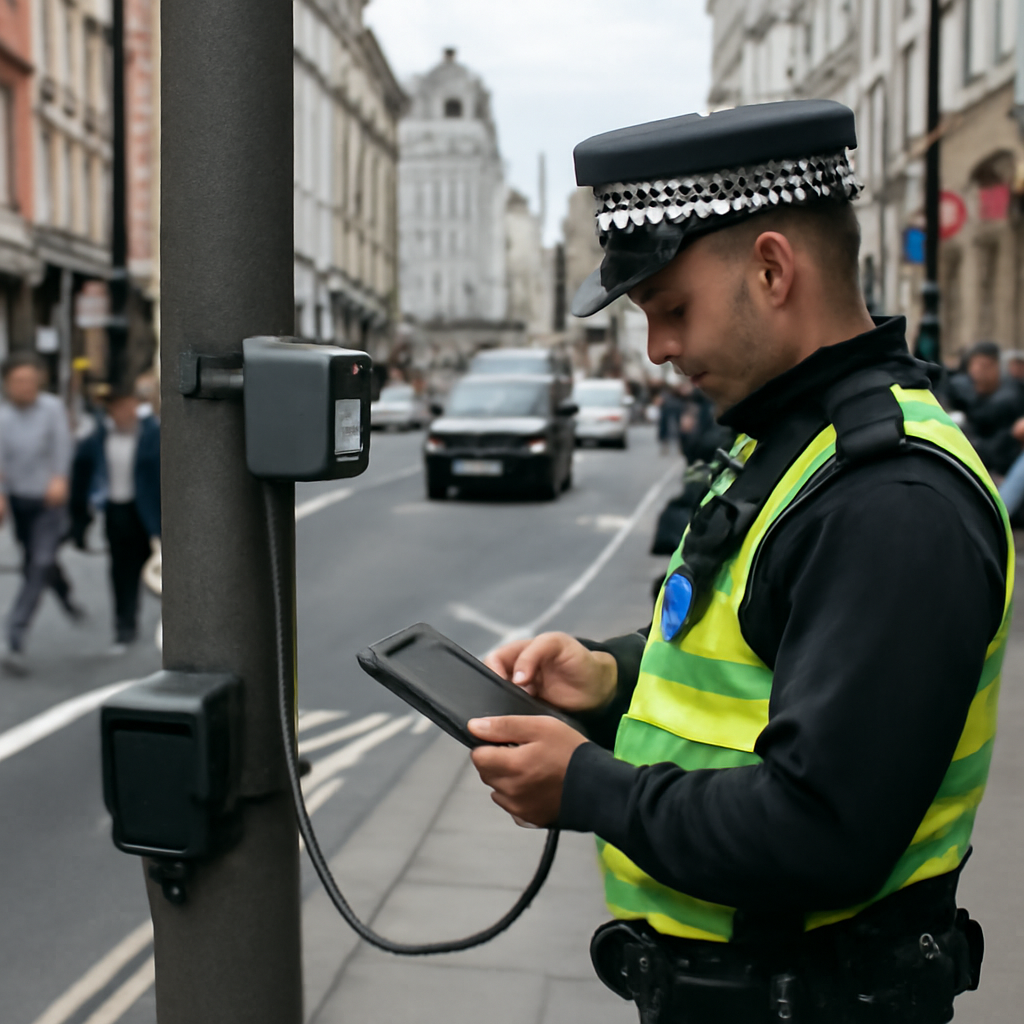
"We plan to significantly step up our use of technology to fundamentally change how we protect the public," Metropolitan Police Service Commissioner Mark Rowley said on June 24.
Metropolitan Police Service to deploy static live facial recognition in West End and Soho
The Metropolitan Police Service (MPS) announced it will begin using static live facial recognition (LFR) cameras in London's West End and Soho by the end of this year. The move follows a six-month pilot in Croydon, in south London. The force described static LFR as temporarily attaching cameras to lampposts or similar infrastructure, with the feeds monitored remotely and officers on the ground stopping people whom the technology matches to images on its watchlist.
Croydon pilot: scale, watchlists and outcomes
Between October 2025 and March 2026 the MPS carried out 24 deployments of static LFR in central Croydon. According to the force, more than 470,000 people walked past the LFR cameras during those operations. The MPS said deployments used a bespoke watchlist created up to 24 hours in advance and deleted afterward.
From those deployments the force reported 173 arrests and one false alert. The false alert, the MPS said, resulted in officers stopping someone without making an arrest, realizing the mistake and letting the individual go. The force also noted that one person arrested during the pilot — a registered sex offender who was communicating with a child under 16 — was subsequently sentenced in May to two years in prison for breaching a sexual harm prevention order and making indecent images of children.

Your town's IT department is one person. Maybe.
Ransomware crews target small municipalities because nobody's watching. Nubivance gives Maine and New Hampshire towns a security program sized to a town budget.
Protect the town officeBig Brother Watch challenge and the Alvi Choudhury example
Civil liberties campaign group Big Brother Watch, which lost a High Court challenge to police use of LFR in April, criticised the MPS announcement. In a press release the group said the force was rushing ahead with deployment before Parliament has passed legislation regulating the technology's use. "We are calling on the Met to stop this experiment until, at least, Parliament has spoken," Jack Coulson, the group's head of advocacy, said.
Coulson highlighted a case he said illustrated the technology's risks: Alvi Choudhury, described in the release as a Southampton man who was arrested and held for ten hours in January after a retrospective LFR system run by Thames Valley Police matched him to a crime committed in Milton Keynes, a city he had never visited. Coulson added, "It is predictable, given the technology's racial bias, that Mr Choudhury was confused for another Asian man."
Rowley frames LFR within a wider technology push and budget constraints
On June 24 Commissioner Mark Rowley set the LFR rollout in the context of a broader technology strategy. He said the MPS will combine live LFR with a city-wide emergency services drone network and AI to analyse footage from "the capital's one million CCTV cameras." Rowley also argued the force needs to spend more on technology but said its budgets for doing so have been repeatedly cut; he cited spending of around £6,000 per person compared with budgets "more than double that" at some government agencies.
Rowley has previously warned that the force would need to cut frontline posts after London's deputy mayor for policing and crime, Kaya Comer-Schwartz, refused to approve its plan to award a major contract to US supplier Palantir. Earlier this month the commissioner said the MPS would have to cut around 700 frontline posts as a result.
What this means for the Metropolitan Police Service, Big Brother Watch, and Parliament
- Metropolitan Police Service: The MPS is moving from a Croydon pilot to wider rollouts in high-footfall central areas, and intends to augment LFR with drones and AI analysis of CCTV. The force is presenting these tools as central to a plan to "fundamentally change how we protect the public."
- Big Brother Watch and the public: The campaign group is urging a moratorium until Parliament legislates, and has pointed to the Choudhury case and alleged racial bias as grounds for concern. The group’s public challenge followed a High Court loss in April but signalled continued pressure on the force to halt deployments.
- Parliament and local oversight (including the deputy mayor): Parliament has not yet passed legislation governing LFR, and the deputy mayor's refusal to approve a contract with Palantir has already had budgetary consequences the commissioner says will force cuts to frontline roles. Those decision-makers now sit at a practical crossroads between approving procurement and accepting projected personnel reductions.
The MPS plans to roll static LFR into some of London’s busiest entertainment districts before the year is out, presenting a concrete timetable for a technology that has already generated contested outcomes in pilots and legal challenges. The force frames the rollout as part of a wider technology-led strategy; civil liberties advocates insist deployment should wait for parliamentary regulation. Which path Parliament and local decision-makers take next will determine whether the capital sees an accelerated expansion of biometric surveillance or an enforced pause while new rules are debated.
Original story: https://www.theregister.com/security/2026/06/24/london-cops-bring-live-facial-recognition-to-west-end/5261031