“The Secretary [of the Navy] shall provide excess spare parts to make one of the F-14D aircraft flyable or able to complete a static display,” reads the Senate text — a single sentence that has turned a two‑decade fantasy into a real legislative path.
The Maverick Act: Sheehy, Kelly, Hamadeh
Legislation nicknamed the “Maverick Act” is moving through Congress with bipartisan sponsorship and momentum. Senator Tim Sheehy introduced the Senate version on March 23; Senator Mark Kelly is a co-sponsor. In the House, Representative Abe Hamadeh introduced a companion bill on April 16 with nine co-sponsors, including one Democrat. The Senate cleared the matter by unanimous consent on April 28, and the bills now sit with the House.
Davis‑Monthan boneyard: Bureau Numbers 164341, 164602, 159437
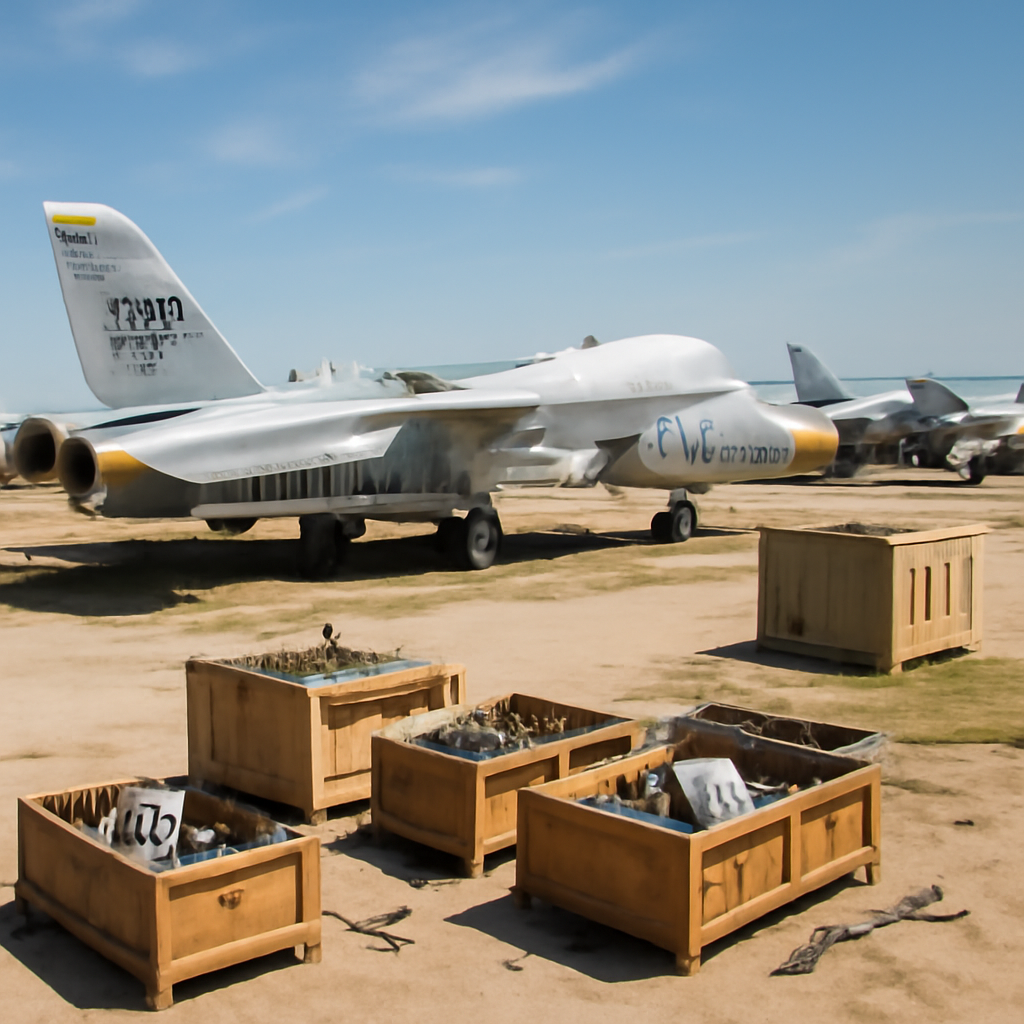
The three Tomcats identified for transfer are named by their Navy Bureau Numbers: 164341, 164602, and 159437. According to U.S. Air Force records cited in the bill, those three are the only F-14D airframes currently in storage at the Davis‑Monthan Air Force Base “boneyard” in Arizona. The same records also show three F-14A variants and two F-14B models in storage there. A satellite image in the reporting corroborates the presence of those aircraft among other stored airframes.

The cyber insurance questionnaire just landed. Now what?
SOC 2, HIPAA, insurance renewals - someone has to own security strategy. Nubivance provides fractional CISO leadership without the full-time salary.
Get a security leadLegal limits and conditions in the bill
The Senate text lays out tight conditions for any transfer to the U.S. Space & Rocket Center museum in Huntsville, Alabama. The bill would permit the Navy to convey the aircraft at no cost to the government, with “any costs associated with such conveyance, costs of determining compliance with terms of the conveyance, and costs of operation and maintenance of the aircraft conveyed” borne by the Commission that runs the museum. The text explicitly forbids returning combat capability: the aircraft “will not have any capability for use as a platform for launching or releasing munitions or any other combat capability that it was designed to have.”
The bill also states the Secretary of the Navy would not be obligated to restore or modify the jets before transfer, but would provide maintenance and operations manuals and any excess spare parts from existing Navy stock. It adds that “the Secretary will not be responsible for transferring any additional parts or providing any additional support beyond what is stated in this section,” and reserves the Navy’s right to repossess the aircraft immediately if the Commission conveys ownership or fails to comply with conditions.
Technical, regulatory, and financial hurdles
Even under the bill’s spare‑parts provision, turning a stored F-14 into a flying Tomcat would be difficult. The reporting emphasizes that aircraft long stored in the desert require deep inspections to verify structure and critical subsystems are compliant with Federal Aviation Administration certification requirements. The F-14 is described as “notoriously maintenance‑heavy,” with high recurring costs to keep one airworthy.
Fuel alone is expensive: the Tomcat holds roughly 2,280 gallons internally, and “filling up the jet with a single tank of gas would run around $14,500 at today’s jet fuel prices,” the article states; using external tanks adds another 534 gallons and substantially increases the fuel bill. High fuel burn during high‑performance airshow routines would add to operating expense. The piece also highlights real‑world precedents and risks: a privately owned MiG‑23UB crashed during an airshow in 2023, underscoring the operational challenges of swing‑wing, supersonic jets in private hands.
What this means for the U.S. Space & Rocket Center, the Navy, and aviation enthusiasts
- U.S. Space & Rocket Center: If the bill becomes law, the Commission would inherit three F-14Ds with the obligation to bear conveyance, maintenance, and operation costs; it would receive manuals and any excess spare parts from Navy stock but could not compel the Navy to procure additional items.
- The Navy: The service would retain control mechanisms — including repossession rights and strict transfer conditions — and would not be required to restore the jets prior to conveyance.
- Aviation veterans and the public: Representative Hamadeh’s office framed the bill as preserving naval aviation heritage, noting it “creates a narrow exception to the post‑retirement restrictions that have destroyed nearly all F-14s.” The article notes that retired F-14s already appear on static display at bases and museums, but none are currently flyable.
The legislation also intersects with long‑standing export and security concerns tied to Iran. The F-14’s post‑retirement controls were imposed because the type continued in service with Iran — a situation the reporting links to why many retirements left frames destroyed. The article further reports that joint U.S. and Israeli strikes between February and April 2026 may have degraded the Islamic Republic of Iran Air Force’s remaining Tomcat capability, and includes a satellite image dated March 9, 2026, showing Iranian F-14s targeted at the 8th Tactical Air Base in Isfahan.
Passage of the Maverick Act would clear one procedural hurdle: legal authorization for a transfer under strict conditions. It would not remove the practical barriers that have kept Tomcats grounded for two decades — structural inspections, FAA compliance, the availability of parts beyond existing Navy stock, the high cost of operation, and the Navy’s retained oversight. With the Senate’s unanimous consent already recorded on April 28, the next concrete step is House action; beyond that, whether one of the three Davis‑Monthan D models ever actually leaves the desert and flies again will depend on a long list of technical, regulatory, and financial decisions.