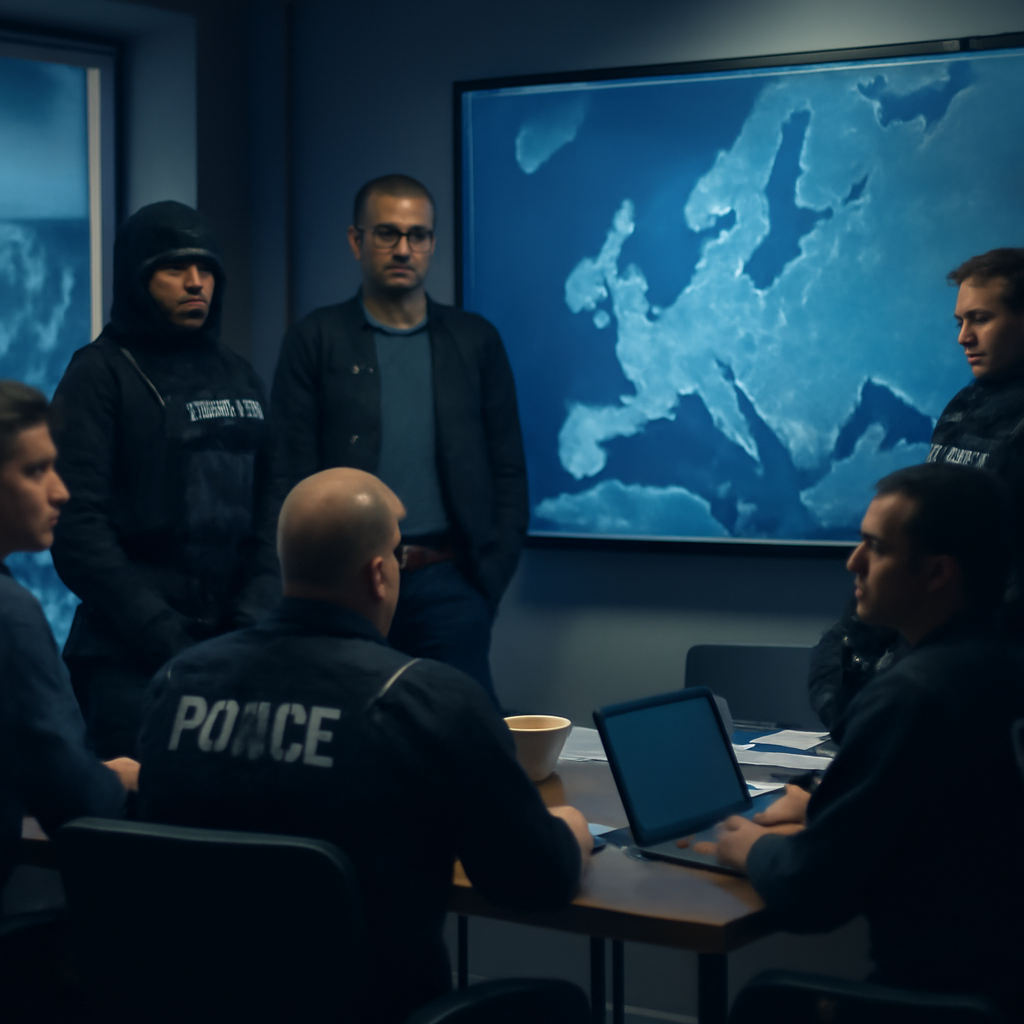
"Rather than focusing solely on taking down websites, investigators targeted the wider criminal ecosystem supporting these services," Europol said on Wednesday.
Operation KRATOS 2: scope, timing, and immediate outcomes
Over seven months, a coordinated effort labeled Operation KRATOS 2 dismantled nine organized crime groups and resulted in 29 arrests, authorities said. The action identified 86 suspects in total, carried out 148 house searches, and referred 59 cases to judicial authorities while continuing to work on 72 other criminal investigations.
Bulgaria and Europol coordinating a 13-country effort
Bulgaria led the operation with support from Europol and involvement from law enforcement in 13 countries: Belgium, Bulgaria, Croatia, France, Greece, Ireland, Italy, the Netherlands, Poland, Romania, Spain, the United Kingdom, and the United States. Europol described the activity as an international collaboration that moved beyond site takedowns to build intelligence on the organized crime groups operating the platforms.

Your town's IT department is one person. Maybe.
Ransomware crews target small municipalities because nobody's watching. Nubivance gives Maine and New Hampshire towns a security program sized to a town budget.
Protect the town officePrivate-sector cooperation and the technical trail
Investigators worked with private-sector partners to trace the technical infrastructure behind illegal streaming services. That cooperation helped them link more than 18,000 IP addresses to illegal services and identify 4,370 domains associated with piracy. Investigators also flagged nearly 400,000 additional URLs for suspension or removal and cataloged more than 126,000 additional infringing objects.
From those technical leads, law enforcement removed more than 27,000 illegal streaming URLs tied to unauthorized distribution of sports, film, and television content.
How the criminal model complicates enforcement
Europol warned that criminal operators deliberately separate customer-facing websites from the servers that host the illegal content, a structure that lets them run services across multiple jurisdictions and makes detection and prosecution more difficult. That fragmentation, the agency said, is why investigators widened their focus to the broader ecosystem — management and technical operation — rather than only pursuing visible front-end sites.
Related international actions: KRATOS (2024), Switch Off, and CINEMAGOAL
Europol framed KRATOS 2 as part of a continuing international campaign. In summer 2024, an earlier Operation KRATOS, led by Bulgaria's Ministry of the Interior with Europol and Eurojust support, shut down an illegal streaming network reported to have more than 22 million users worldwide, with 11 arrests, 102 suspects identified, and 112 searches carried out.
In January, Europol, Eurojust, and Interpol coordinated Operation Switch Off and seized three industrial-scale illegal IPTV services. In May, Italian authorities dismantled the CINEMAGOAL piracy platform, which the report says provided illegal access to streaming services including Netflix, Disney+, and Spotify.
What this means for end users, law enforcement, and criminal groups
- End users: Europol highlighted direct risks to consumers who use illegal streaming services, warning of major cybersecurity threats including malware infections, spyware, and data theft in addition to exposure to pirated content.
- Law enforcement and prosecutors: The operation demonstrates a shift toward disrupting the supporting infrastructure and management of illegal services — using cross-border intelligence, private-sector technical leads, and multi-agency referrals to build prosecutable cases.
- Organized crime groups: Authorities signaled continued pressure on the business model that separates front-end sites from hosting servers; the concerted focus on the wider ecosystem aims to identify key suspects involved in management and technical operation rather than only removing visible sites.
Operation KRATOS 2 illustrates an enforcement strategy built on technical tracing, cross-border coordination, and private-sector cooperation. For now, law enforcement reports measurable removals and arrests while continuing dozens of parallel investigations — a reminder that takedowns of visible services are only one front in a broader campaign to dismantle the criminal ecosystems that support illegal streaming.